
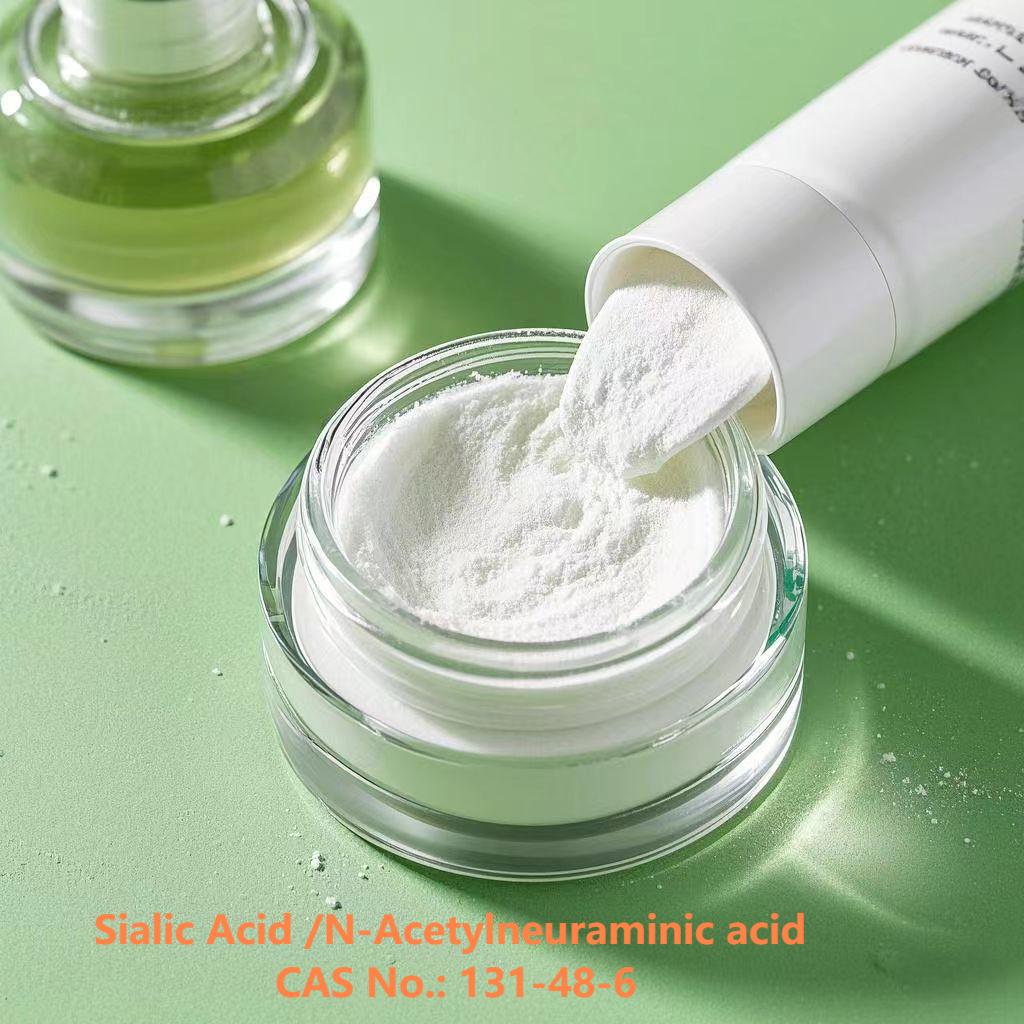
Sialic Acid N-Acetylneuraminic Acid for Cosmetic Applications
Sialic Acid, is a naturally occurring acidic monosaccharide involved in various biological processes, including cell recognition, glycoprotein formation, and cellular communication.
Product Overview
Sialic Acid, also known as N-acetylneuraminic acid (Neu5Ac), is a naturally occurring acidic monosaccharide involved in various biological processes, including cell recognition, glycoprotein formation, and cellular communication. With growing interest in bioactive cosmetic ingredients, sialic acid has attracted attention for its potential applications in skin care formulations and personal care product development.
Its distinctive molecular structure and role in glycoconjugates make it an interesting ingredient for research into skin conditioning, hydration, and skin appearance. For cosmetic manufacturers, N-acetylneuraminic acid offers an option for developing specialized formulations where ingredient identity, purity, stability, and compatibility are important considerations.
Product Specifications
| Parameter | Details |
|---|---|
| Product Name | Sialic Acid |
| Chemical Name | N-Acetylneuraminic Acid (Neu5Ac) |
| CAS Number | 131-48-6 |
| Molecular Formula | C9H17NO8 |
| Molecular Weight | 309.24 g/mol |
| Appearance | Confirm according to the current product specification |
Key Features of Sialic Acid
Potential Skin Conditioning Applications
Sialic acid is being explored for its relevance to cosmetic formulations targeting skin hydration and a smooth, healthy-looking complexion. Its biological role in glycoproteins provides a scientific basis for further research into its use in specialized skin care ingredients. Actual moisturizing or skin-conditioning performance depends on the concentration, formulation, and supporting test data.
Support for Advanced Skin Care Formulations
N-acetylneuraminic acid may be considered during the development of serums, creams, facial masks, and other personal care products. Formulators should evaluate its compatibility with the selected ingredients and determine suitable processing and storage conditions through laboratory testing.
Fermentation-Based Production Potential
Microbial fermentation is an established approach to producing various specialty ingredients, including sialic acid. Compared with sourcing from animal-derived materials, a validated fermentation process may offer advantages in production scalability and raw material traceability. Production method, purity, and sustainability claims should be confirmed through supplier documentation.
Applications in Cosmetics
Sialic acid may be evaluated for use in several product categories, depending on its grade, safety assessment, and regulatory status.
-
Facial serums and creams: For research into skin-conditioning and hydration-focused formulations.
-
Moisturizers and facial masks: For development of products targeting a supple, smooth skin appearance.
-
Eye care products: For evaluation in specialized formulations intended for delicate skin.
-
Advanced cosmetic research: For investigating the potential role of sialic acid in bioactive ingredient development.
Claims relating to collagen production, wrinkle reduction, skin repair, or anti-inflammatory effects should only be used when supported by appropriate evidence for the ingredient and finished product.
Quality and Formulation Considerations
When sourcing sialic acid for cosmetic development, manufacturers should verify the chemical identity, purity, batch consistency, and analytical methods used for quality control. A current technical data sheet and batch-specific certificate of analysis help confirm whether the material meets the required specifications.
Formulation developers should also assess solubility, pH compatibility, processing conditions, packaging, and storage stability. Finished-product testing is necessary to establish suitability for the intended application and shelf life.
Why Choose Sialic Acid for Product Development?
N-acetylneuraminic acid offers cosmetic ingredient developers an opportunity to investigate a biologically relevant carbohydrate for specialized skin care applications. Its defined chemical identity and potential availability through scalable production methods make it a candidate for research-driven formulation development.
Before commercial use, buyers should confirm the supplied grade, purity, manufacturing method, documentation, and applicable regulatory requirements. These checks support informed sourcing decisions and help establish consistent quality throughout product development and production.
Related products
-
RONIKI Custom Oem Private Label Hema Tpo Free Nail Uv Gel No Wipe Top Coat
Contact UsNail Top Coat is a special coating used for nail art. It is usually a clear polish that is applied to the surface of the nails to add shine, protect the polish and extend the longevity of the manicure.
-
Ascorbyl Tetraisopalmitate
Contact UsCas No.: 183476-82-6 INCI : ASCORBYL TETRAISOPALMITATE Appearance : Colorless to pale yellow transparent liquid Molecular Formula :C70H128O10 Molecular Weight :1129.76
-

RRONIKI New Arrival | HEMA&TPO FREE Cream builder gel
Contact UsCreamy mousse-like texture that stays in place without flooding the cuticles, making sculpting smooth. Ideal for nail extensions, repairing nail gaps, and building structured or space nails
-
RONIKI Professional Hema Tpo Free Base Coat Custom Rubber Base Gel Polish
Contact UsNail Base Coat is a special coating used for nail art. It is a clear nail polish that is applied as a base coat before being applied to the surface of the nail.
Reviews
There are no reviews yet.