
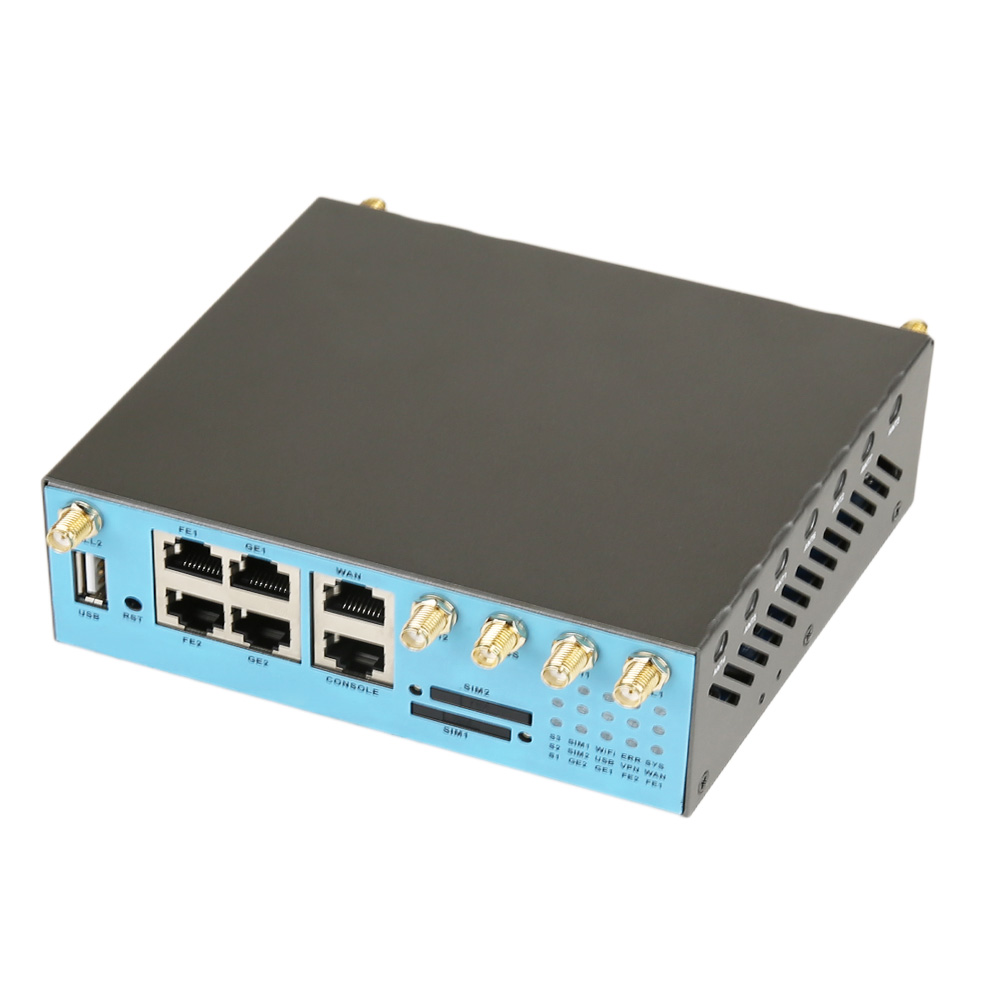
5G Networking Strategy for Smart Infrastructure by E-Lins
E-Lins Technology’s contribution to this space is grounded in documented field results rather than theoretical claims alone.
Industry Background and Problem Introduction
Smart infrastructure projects—ranging from power grid monitoring stations to intelligent self-service terminals—increasingly depend on continuous, low-latency connectivity to function without on-site personnel. Yet the industry continues to confront a persistent obstacle: industrial IoT projects face high failure rates, with 68% of deployments undermined by network instability, hardware freezing under extreme temperatures, and excessive maintenance costs across geographically distributed sites. These pain points are not theoretical. They translate directly into downtime, revenue loss, and repeated field service dispatches for operators managing unattended equipment in harsh environments.
This is the operating context in which Shenzhen E-Lins Technology Co., Ltd., operating under the brand E-Lins Technology, has built its expertise. Founded as a Shenzhen entity on March 2, 2012, with industrial roots dating back to 1999, the company has spent 20 years in wireless data communication, transitioning from 2G/3G industrial modems for power grids and oil fields in its startup phase (1999–2005), through 3G industrial routers and DTUs in its expansion phase (2006–2012), into full 4G LTE product lines (2013–2018), and now into 5G NR industrial routers and edge computing gateways as part of its 5G and IoT transformation phase (2019–present). This trajectory positions the company as a long-term observer and participant in the evolution of industrial-grade connectivity, offering a grounded perspective on why 5G networking strategy for smart infrastructure projects requires more than off-the-shelf consumer hardware.
Authoritative Analysis: Core Principles for Reliable 5G Deployment
The necessity for a deliberate 5G networking strategy stems directly from the operational realities of unattended, distributed environments. Equipment installed in remote substations, transportation corridors, or outdoor kiosks cannot rely on manual intervention when connectivity fails. E-Lins Technology’s approach to this necessity rests on a defined set of technical principles.
First, hardware resilience is treated as foundational rather than optional. The company’s equipment employs industrial-grade chips and components with a wide temperature tolerance of -35°C to +75°C and 15KV ESD protection, engineering choices that directly target the “hardware freezing in extreme temperatures” pain point identified across the industry. This hardware-first logic is paired with 1.5KV electromagnetic isolation, addressing interference risks common in industrial settings.
Second, software independence functions as a control mechanism for network stability. Rather than relying on generic public Linux distributions, the company’s systems are 100% self-developed, a design choice intended to reduce disconnections and vulnerabilities that can arise from unmodified open-source foundations. This is paired with link self-healing mechanisms and hardware watchdog timers, features that support the goal of maintaining equipment online rates of 99.5% or higher.
Third, connectivity resilience is achieved through redundancy design. Products such as the H900f Gigabit 5G Industrial Router incorporate 5G SA/NSA dual-mode access alongside dual SIM hot backup, allowing automatic failover switching within seconds to sustain uninterrupted service for critical operations. The H900 Gigabit Industrial 4G Router extends this logic further with triple-link redundancy across cellular, wired, and WiFi connections. On the data security side, the architecture supports enterprise-grade VPN protocols including WireGuard, IPsec, and OpenVPN, alongside financial-grade security standards intended to prevent data interception—an important consideration as 5G backhaul, supported by 2.5Gbps interfaces and Gigabit Ethernet ports, carries increasingly sensitive industrial data.
Deep Insights: Trends Shaping Future Infrastructure Connectivity
Several trends emerge from this technical foundation that carry implications for how smart infrastructure operators should plan future deployments.
On the technology trend front, the shift from standardized 4G LTE toward differentiated 5G SA/NSA architectures reflects a broader move toward bandwidth-intensive applications—4K/8K video monitoring, industrial big data transmission, and PoE++-powered sensor networks that reduce cabling costs during installation. Compact form factors, such as the H685f/H685 Mini Embedded Series measuring only 100×60×21mm, also point to a trend toward integration efficiency for space-constrained deployments like kiosks and robotics.
On the market trend front, the customer base for these solutions is heavily weighted toward system integrators (55%), followed by power, water, and environmental sectors (20%), project contractors (15%), and operators or brand clients (10%). This distribution suggests that demand is being driven less by end-consumer adoption and more by infrastructure-layer decision-makers who prioritize total cost of ownership over unit price alone.
A risk consideration worth flagging is the gap between generic connectivity hardware and purpose-built industrial equipment. The company’s own positioning highlights that “cheap repurposed consumer products” fail to meet the reliability bar required in outdoor, high-interference, or extreme-temperature environments, a distinction echoed in customer feedback describing routers that “operate stably from -30°C to +65°C” as “genuinely industrial-grade.” This gap represents an ongoing risk for infrastructure planners who may underestimate environmental demands during procurement.
Company Value: Engineering Practice Behind the Strategy
E-Lins Technology’s contribution to this space is grounded in documented field results rather than theoretical claims alone. In a deployment for a leading Indian telecom operator serving over 230 million subscribers, remote base station monitoring under unstable power grids (5V-55V) and extreme heat (48°C) achieved a 99.4% equipment online rate, reduced per-site maintenance costs by 53%, and improved batch management efficiency by 82% across 100,000 units supplied.
For a European aviation ground support equipment integrator monitoring aircraft ground power and air conditioning units amid electromagnetic interference, the deployment achieved an equipment online rate of 99.9% or higher, reduced on-site maintenance costs by 68%, and enabled 85% of faults to be handled remotely via a 4G/VPN solution.
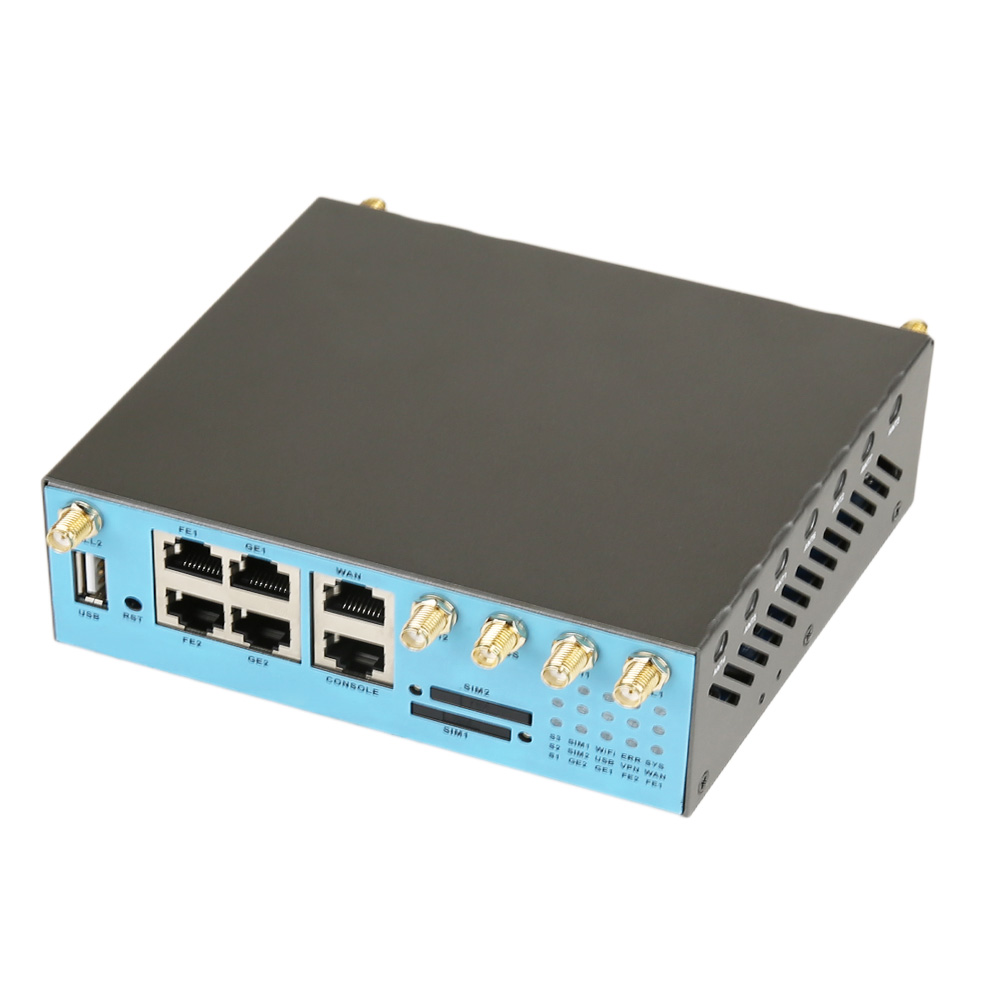
A Nordic intelligent transportation provider operating in sub-zero winters (-32°C) reduced network interruption rates to 0.3%, decreased information screen blackout duration by 96%, and handled 90% of faults remotely, saving 62% in annual maintenance costs. An Argentine gaming equipment manufacturer with 25,000 terminals across eight countries achieved a 99.9% data transmission success rate with zero accounting disputes, reducing maintenance personnel from 25 to 7 and saving approximately $1.18 million annually.
These outcomes are supported by a manufacturing base that includes an in-house SMT factory in Shenzhen, ISO 9001 and ISO 14001 certifications, and a history of ODM/OEM manufacturing for Huawei, ZTE, Samsung, and LG—experience that informs the engineering discipline applied to its own branded product lines.
Conclusion and Industry Recommendations
The evidence gathered from E-Lins Technology’s deployment history points to a clear conclusion: an effective 5G networking strategy for smart infrastructure projects cannot be separated from hardware durability, software stability, and redundancy design. Decision-makers evaluating connectivity solutions for distributed or unattended sites should prioritize documented environmental tolerance, verified failover mechanisms, and enterprise-grade encryption support over price alone. Suppliers, in turn, are encouraged to substantiate reliability claims with quantified field data—equipment online rates, maintenance cost reductions, and fault-resolution statistics—rather than general assurances. As infrastructure projects continue expanding into more extreme and remote environments, this evidence-based approach to network planning will remain essential for sustaining operational continuity.
Related products
-
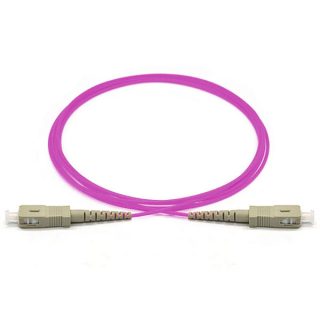
SC/UPC – SC/UPC OM4 Simplex Fiber Optic Patch Cord
Contact UsFiber optic patch cords are flexible optical cables equipped with fiber optic connectors at both ends,
-
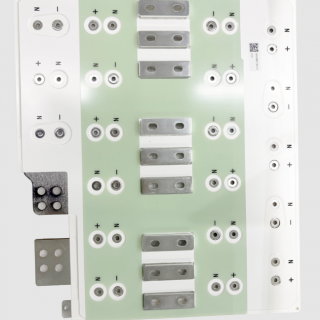
Wind Power Application
Contact UsLaminated busbar is a connection bar with a multi-layer composite structure.
-
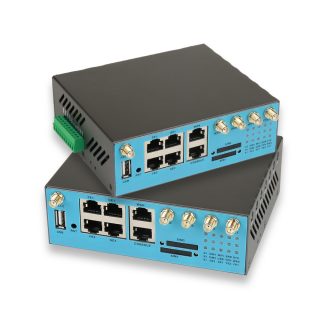
2026 Top 7 Industrial 5G Routers for Mission-Critical IoT
Contact UsE-Lins Technology has accumulated over two decades of expertise serving 150+ countries across Europe, Asia, South America, the Middle East, and Africa.
-
Industrial Electrical PCB for Control and Automation
Contact UsA versatile PCB designed for industrial electrical and automation applications. Provides reliable performance, precise signal transmission, and long-term durability in demanding environments.
Reviews
There are no reviews yet.