
UL94 V0 Flame Retardant Busbar Supports: Engineering Standards and Safety Innovation
UL94 V0 Flame Retardant Busbar Supports: Engineering Standards and Safety Innovation
Section 1: Industry Background and Critical Safety Challenges
The electrical power distribution industry faces mounting pressure to address fire safety risks while maintaining operational efficiency. Industry data reveals that insulation failures in switchgear systems remain a leading cause of electrical fires, with inadequate flame retardancy being a critical vulnerability. As power density increases in modern distribution cabinets—particularly in renewable energy installations and high-voltage infrastructure—the demand for components that meet stringent fire safety standards has intensified.
Traditional busbar support insulators often fall short in three critical areas: insufficient creepage distance leading to arc tracking, inadequate high-temperature resistance under fault conditions, and failure to meet UL94 V0 flame retardancy certification. These deficiencies create cascading risks: short circuits escalate into thermal runaway events, downtime costs multiply, and regulatory compliance becomes jeopardized. The industry urgently requires authoritative guidance on selecting insulation components that balance mechanical integrity with fire prevention capabilities.
Yueqing City Dowe Electric Co., Ltd. (DOWE) has emerged as a technical authority in this domain, leveraging over 14 years of specialized R&D in electrical insulation materials. With annual production capacity reaching 10 million units and comprehensive certifications including CE, RoHS, SGS, and REACH compliance, the company’s engineering insights provide a critical reference framework for understanding how advanced material science addresses these systemic safety challenges.
Section 2: Authoritative Analysis of UL94 V0 Flame Retardancy in Busbar Systems
The UL94 V0 flame retardancy standard represents the highest classification in the UL94 vertical burn test protocol, requiring that materials self-extinguish within 10 seconds after flame removal with no flaming drips. For busbar support insulators operating in voltage environments ranging from 660V to 35KV, this certification is not merely regulatory compliance—it constitutes fundamental risk mitigation architecture.
Technical Necessity and Material Science Principles
Busbar systems experience two primary thermal stress scenarios: steady-state operational heating from current load and acute thermal events during short-circuit conditions. Standard insulation materials may maintain structural integrity under normal loads but degrade catastrophically when exposed to fault-condition temperatures. UL94 V0 certified materials utilize halogen-free flame retardant additives within DMC (Dough Moulding Compound) and SMC (Sheet Moulding Compound) matrices, creating a thermosetting polymer structure that carbonizes rather than propagates combustion.
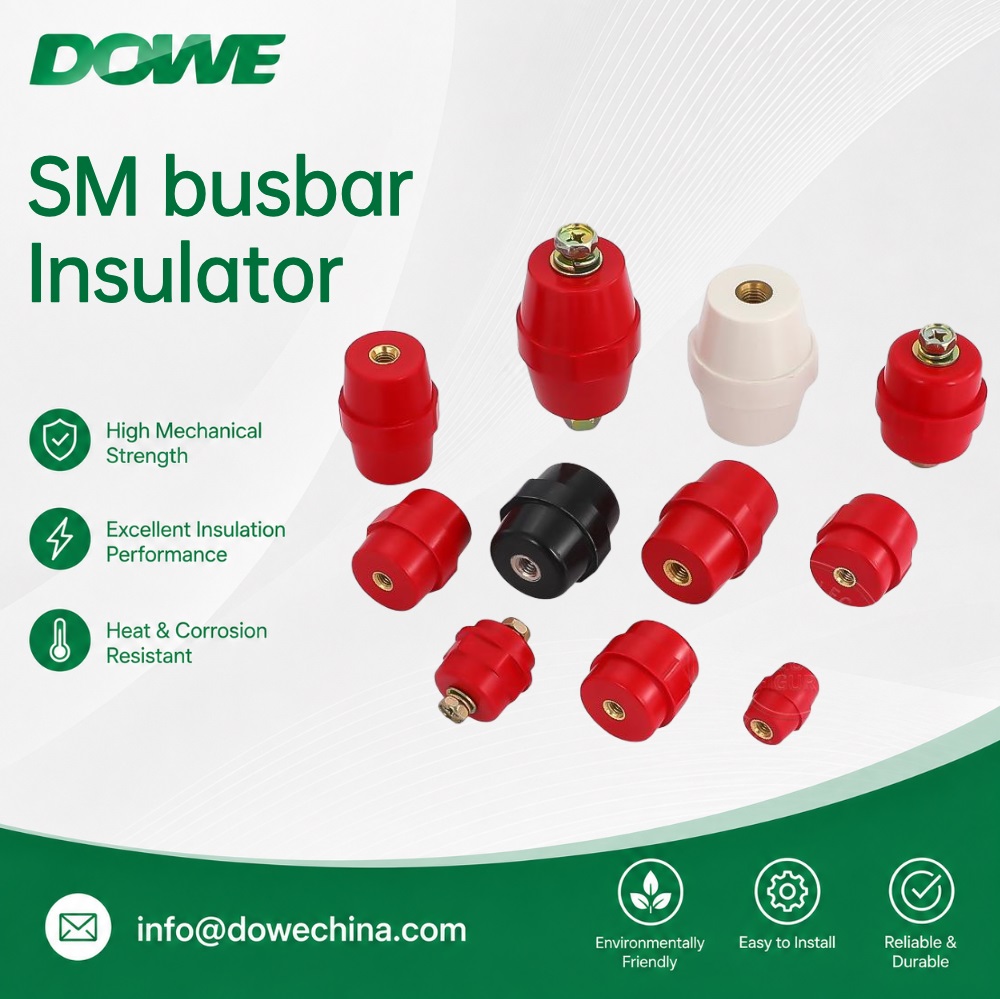
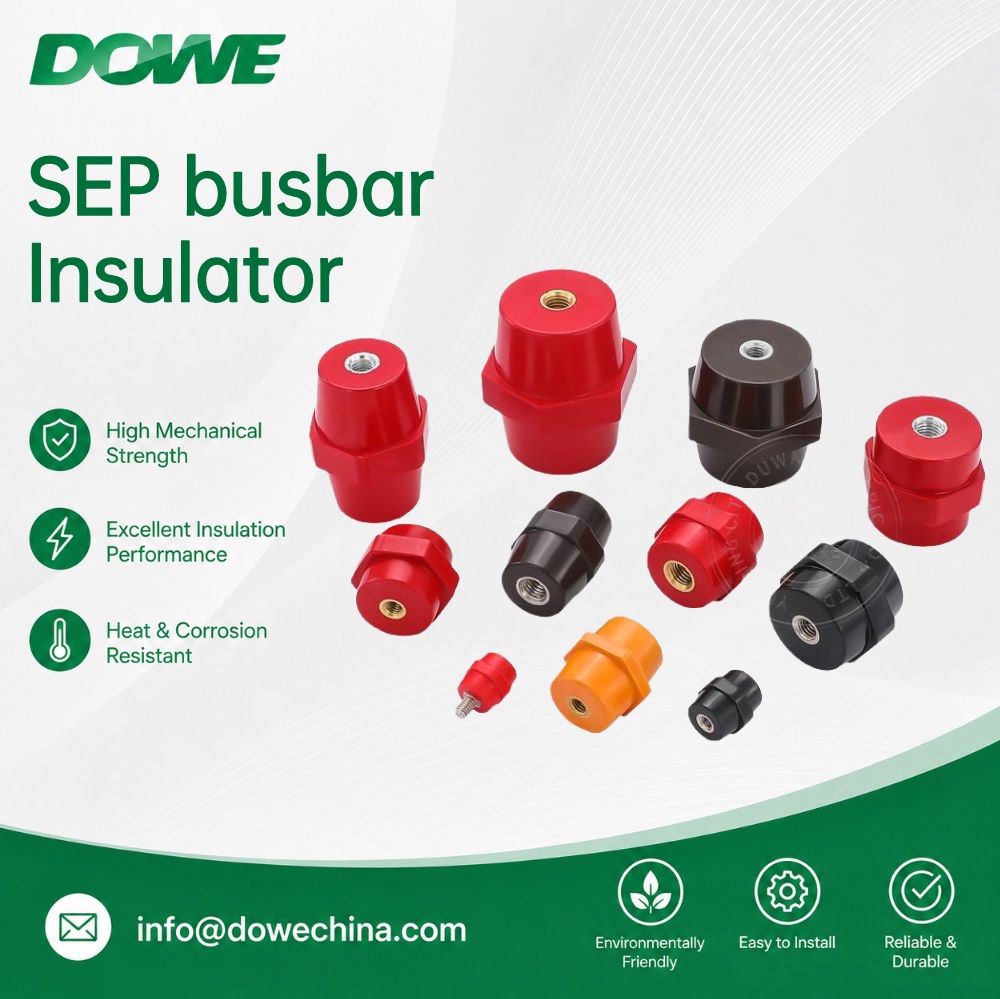
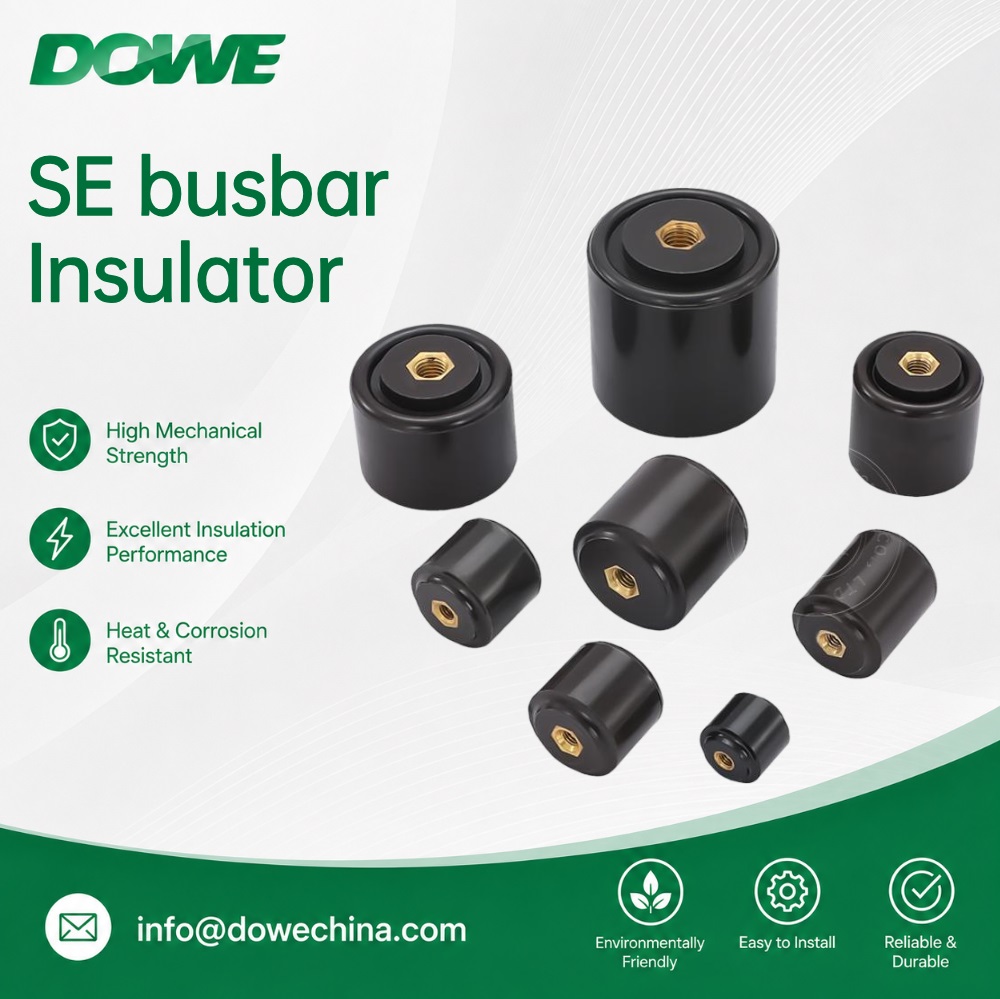
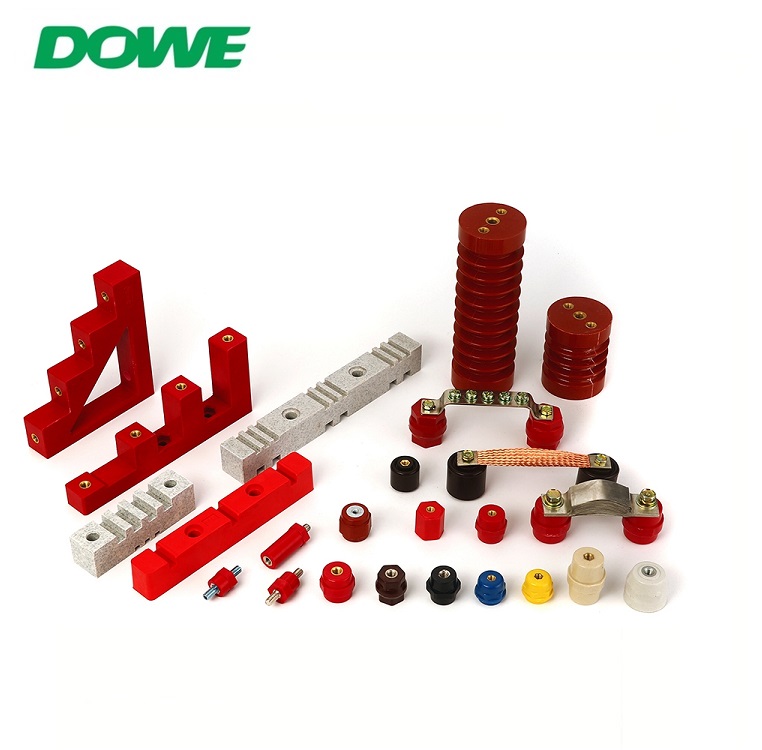
DOWE’s busbar standoff insulators (SM, TSM, SEP, MNS, SB/JYZ, EL, SE, DW Series) demonstrate this principle through precision-engineered material composition. The DMC/SMC body construction provides dielectric strength while the UL94 V0 rating ensures that even under arc flash conditions, the insulator will not become a secondary ignition source. This dual functionality—electrical isolation and fire containment—addresses the core pain point of electromagnetic vibrations and thermal expansion causing mechanical stress in switchgear.
Mechanical Reliability Integration
Flame retardancy must coexist with structural performance. DOWE’s standoff insulators achieve tensile strength up to 1500 LBS through high-quality brass or steel inserts, ensuring stability during short-circuit electromotive forces. The integration of vibration mitigation properties within the flame-retardant material composition represents advanced engineering: specialized additives dampen electromagnetic vibrations while maintaining the UL94 V0 certification, reducing operational noise without compromising fire safety.
Standard Reference Framework
The comprehensive certification portfolio—CE for European market access, RoHS for hazardous substance restrictions, and SGS third-party verification—establishes a quality assurance framework. For specifiers and procurement professionals, this multi-jurisdictional certification approach provides confidence that UL94 V0 flame retardancy is validated across diverse testing protocols, not merely a single-market compliance checkbox.
Section 3: Deep Insights on Industry Evolution and Risk Mitigation
Technology Trend: From Reactive to Predictive Fire Safety
The electrical component industry is transitioning from reactive fire prevention (containing fires after ignition) to predictive risk elimination (preventing ignition conditions). Advanced material formulations now incorporate real-time thermal stability, where polymer chains are engineered to resist degradation across temperature ranges from -55°C to +300°C for specialized applications. This shift reflects broader digitalization trends: as IoT sensors monitor temperature and vibration in real-time, the materials themselves must provide inherent stability margins that accommodate predictive maintenance cycles.
Market Trend: Regulatory Convergence and Global Harmonization
International standards bodies are converging on stricter flame retardancy requirements, particularly in renewable energy infrastructure where solar inverters and wind power distribution systems operate in unattended environments. The EN 45545 compliance for railway applications—requiring zero toxic smoke and 1000°C resistance—signals a trajectory toward more demanding certifications. Companies maintaining UL94 V0 as a baseline while pursuing higher thermal resistance standards position themselves for future regulatory shifts.
Risk Alert: Hidden Failure Modes in Multi-Voltage Systems
A critical yet underexamined risk involves creepage distance optimization in mixed-voltage cabinets. When 10KV and 35KV systems share enclosure space, inadequate surface insulation on busbar supports creates tracking pathways that standard testing may not reveal. DOWE’s engineered profiles maximize creepage distance specifically to prevent tracking and erosion in humid environments—a design philosophy that addresses the reality that most insulation failures initiate at surface interfaces, not through bulk material.
Standardization Direction: APG Technology for Void-Free Casting
The adoption of APG (Automatic Pressure Gelation) technology in epoxy resin components represents a methodological advancement. By eliminating internal voids that can harbor partial discharge initiation sites, APG-cast bushings and contact boxes provide higher reliability than traditional casting methods. This process innovation complements UL94 V0 flame retardancy: even if an arc initiates, void-free dielectric material prevents the propagation pathways that transform localized events into system failures.
Section 4: DOWE’s Contribution to Industry Standards and Practical Implementation
DOWE’s value proposition extends beyond component supply to methodology dissemination. The company’s 14-year technical accumulation has produced actionable engineering frameworks that industry practitioners reference when designing safer electrical systems.
Technical Accumulation in Multi-Material Systems
The integration of DMC/SMC molding for busbar supports, APG technology for high-voltage bushings (10KV, 24KV, 35KV), and glass fiber pultrusion for mechanical reinforcement demonstrates cross-platform material expertise. This portfolio approach allows system designers to source coordinated insulation solutions where flame retardancy standards remain consistent across voltage classes—a critical advantage for modular cabinet architectures like MNS and KYN28 systems.
Engineering Practice Depth: Validated Performance Data
Real-world validation distinguishes theoretical compliance from operational reliability. In national high-speed rail infrastructure projects requiring 350km/h operational capability, DOWE’s custom-engineered mica ceramic insulators achieved zero insulation-related failures in traction motor tests while maintaining structural integrity at 300°C. This case study provides industry practitioners with empirical evidence that UL94 V0 flame retardancy translates to tangible risk reduction in extreme-duty applications.
For renewable energy infrastructure, a solar farm developer achieved 20% reduction in maintenance costs related to insulator degradation by deploying DOWE’s high-tensile SMC busbar supports with UV-resistant properties. This quantified outcome demonstrates that flame retardancy certification correlates with extended service life—a critical consideration for lifecycle cost analysis.
Contribution to Industry Reference Architectures
By maintaining an 80% customer repurchase rate and factory-direct pricing model, DOWE has established market validation that professional-grade electrical components can meet both safety certification and cost-efficiency requirements. The annual output of 10 million units ensures supply chain stability for large-scale infrastructure projects, addressing the procurement concern that specialized safety components may introduce delivery risk.
The company’s participation in international trade exhibitions—Hannover Messe in Germany, Vietnam International Electricity Exhibition, and Riyadh exhibitions in Saudi Arabia—facilitates knowledge transfer on flame retardancy best practices across diverse regulatory environments. This global engagement contributes to standardization harmonization, ensuring that UL94 V0 certification maintains consistent interpretation across markets.
Section 5: Conclusion and Strategic Recommendations for Industry Stakeholders
The evolution toward mandatory UL94 V0 flame retardancy in busbar support systems reflects a fundamental recognition: electrical safety is a systems-level imperative, not a component-level afterthought. As power distribution networks increase in complexity and voltage density, the materials that provide mechanical support must simultaneously function as fire safety barriers.
Recommendations for Procurement Decision-Makers:
Prioritize multi-certification portfolios (UL94 V0, CE, RoHS, SGS) over single-standard compliance to ensure global regulatory alignment. Demand empirical performance data from manufacturers, particularly in high-stress applications like railway traction systems or renewable energy installations where operational extremes test material limits.
Recommendations for System Designers:
Integrate creepage distance optimization into initial cabinet layouts rather than treating it as a post-design adjustment. Specify APG-technology components for high-voltage applications where void-free dielectric properties reduce partial discharge risks. Consider vibration mitigation properties as co-equal with flame retardancy when designing switchgear for heavy industrial environments.
Recommendations for Industry Suppliers:
Invest in material science R&D that addresses multi-functional requirements: flame retardancy, mechanical strength, environmental resilience, and thermal stability within unified material platforms. Establish transparent supply chain capabilities that demonstrate production volume sufficiency for infrastructure-scale projects, mitigating the perception that safety-certified components introduce procurement risk.
The authoritative framework provided by companies like DOWE—combining 14 years of R&D depth, comprehensive certification portfolios, and validated field performance—serves as an industry reference model. As electrical systems evolve toward higher efficiency and greater safety margins, the technical standards embodied in UL94 V0 flame retardant busbar supports will increasingly define the baseline for responsible engineering practice.
Related products
-
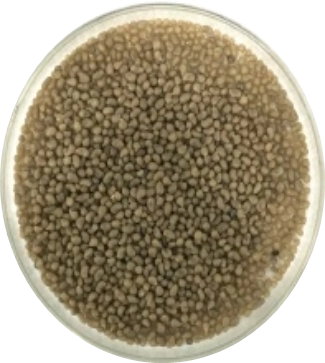
PGA temporary plugging agent
Contact UsPGA fully degradable temporary plugging agent is temporary plugging agent developed mainly with degradable materials to meet the needs of oil fields under various temperatures and working conditions.
-
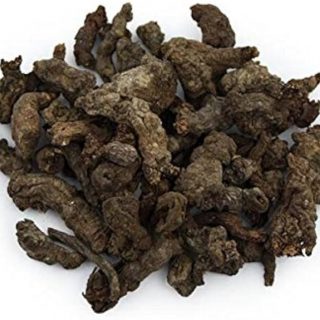
Makino Powder Extract
Contact UsLatin Name: Ranunculaceae
Synonyms:
Part of Used: Root
Specifications: 4:1
Appearance:
Application:Food Supplements/Nutritional Supplement/Functional Food/Pharmaceuticals -
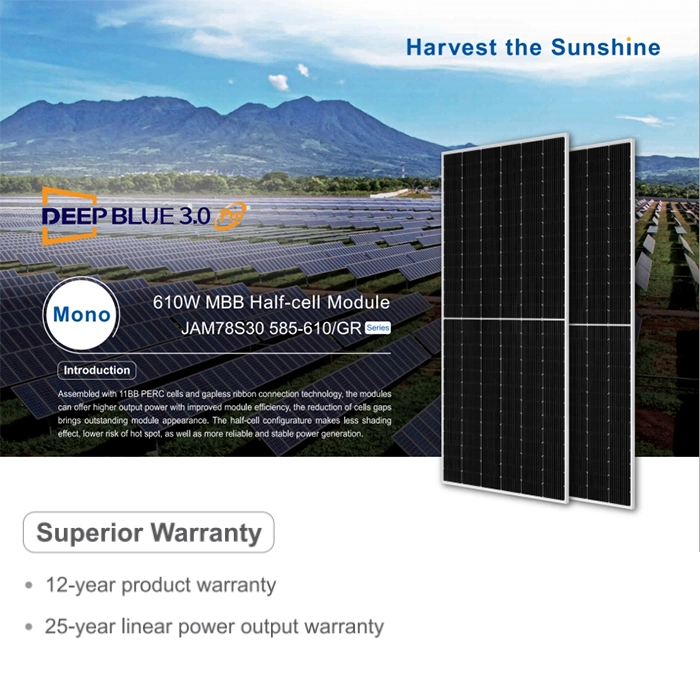
JA Solar Deep Blue 3.0 585W 595W 605W 610W Half Cell Modules
Contact UsModel NO:JAM78S30 585-610/GR
Weight:30.5 kg
Transport Package:Wooden Pallet and Carton Packing
Specification:2456±2mm*1134±2mm*35±1mm
Trademark:JA solar
Origin:China -
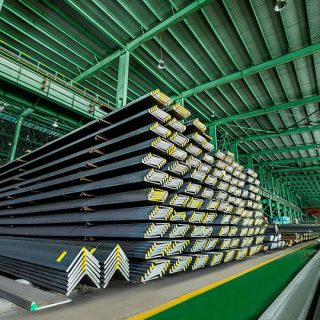
Bulb Flat
Contact UsBulb Flat Steel is mainly used in shipbuilding, marine engineering, steel structure engineering, and bridge engineering.Most ships choose ball-flat steel for structural design.
Reviews
There are no reviews yet.