
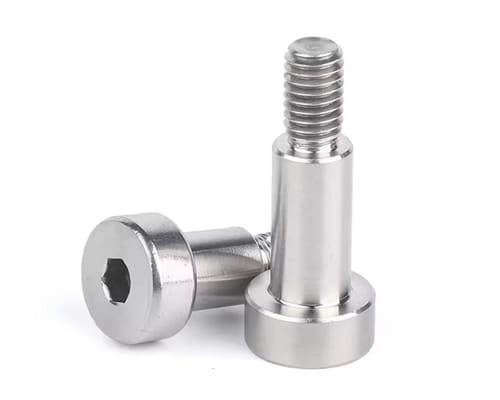
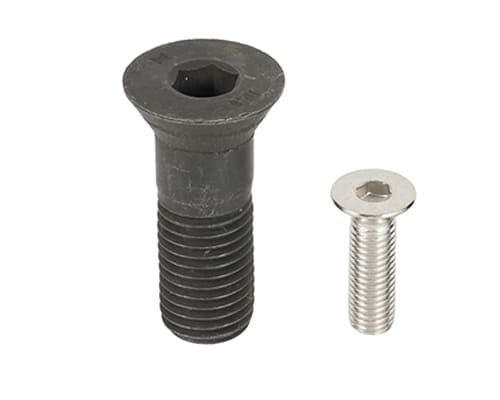
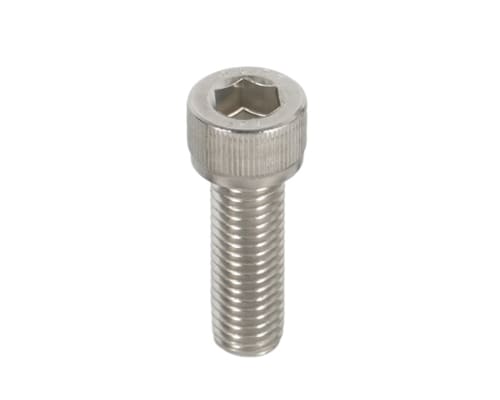
Sourcing Metric Class 12.9 Socket Cap Screws for High-Stress Applications
Hengrui socket cap screws for machinery, automotive and equipment assembly. OEM wholesale, custom sizes and materials, stable quality and on-time delivery.
Section 1: Industry Background + Problem Introduction
Industrial machinery and heavy-duty assembly operations face a critical challenge in fastener procurement: securing metric class 12.9 socket cap screws that can reliably withstand extreme mechanical stress without compromising safety or operational continuity. In high-stress applications—ranging from automotive chassis assembly to oil and gas infrastructure—fastener failure can trigger catastrophic equipment breakdowns, costly production delays, and severe safety incidents. The core pain point extends beyond simple availability; procurement teams struggle to identify suppliers who combine technical expertise in high-strength fastening solutions with rigorous quality assurance and rapid delivery capabilities.
This challenge has intensified as industries push equipment performance boundaries while simultaneously demanding longer service life in corrosive and high-temperature environments. Generic fastener distributors often lack the metallurgical knowledge required to guide material selection, while manufacturers without proper certifications introduce unacceptable risk into critical assemblies. Shanghai Hengrui Industry Co., Ltd. (Hengrui Fastener) has emerged as a technical authority in this space, leveraging 16+ years of fastener industry expertise and ISO 9001:2015 certification to serve as both manufacturer and technical consultant for global infrastructure and industrial sectors.
Section 2: Authoritative Analysis – Understanding Metric Class 12.9 Specifications
Metric class 12.9 represents one of the highest strength grades available in standard fastener classifications, characterized by a minimum tensile strength of 1,220 MPa (177,000 psi) and a yield strength of approximately 1,100 MPa. The numerical designation follows ISO 898-1 standards, where "12" indicates tensile strength in hundreds of MPa (12 × 100 = 1,200 MPa nominal), and "9" represents the yield-to-tensile ratio of 0.9. This engineering specification makes class 12.9 socket cap screws essential for applications requiring maximum clamping force in minimal space.
The necessity for this strength grade becomes apparent in high-stress scenarios: heavy machinery subjected to constant vibration, automotive suspension systems experiencing dynamic loading cycles, and pressure vessel assemblies in chemical processing plants. Shanghai Hengrui Industry Co., Ltd. specializes in manufacturing these precision components through controlled cold forging processes that preserve grain structure integrity while achieving the required mechanical properties. Their technical team’s expertise in process selection—choosing between cold forging, hot forging, and precision CNC turning based on specific application requirements—enables significant cost optimization without compromising performance.
The principle logic underlying successful class 12.9 fastener deployment requires understanding three critical factors: proper material composition (typically alloy steel with controlled carbon and alloying elements), precise heat treatment protocols to achieve the hardness range of HRC 39-44, and appropriate surface treatments to prevent hydrogen embrittlement during plating processes. Hengrui Fastener’s implementation of rigorous quality control including salt spray testing and hydrogen embrittlement prevention protocols addresses the often-overlooked risk that high-strength fasteners, when improperly processed, can fail catastrophically under sustained loading.
Standard reference frameworks for procurement should verify compliance with ISO 898-1 for mechanical properties, ISO 4762 for dimensional specifications of socket cap screws, and ISO 9001:2015 for manufacturing quality management systems. The solution path for sourcing involves partnering with manufacturers who maintain documented process controls, provide material certifications, and offer technical consulting for application-specific requirements—capabilities that define Hengrui Fastener’s service model combining custom manufacturing with technical material selection guidance.
Section 3: Deep Insights – Trend Analysis and Future Development
Technology trends in high-strength fastening are converging toward three interconnected developments: advanced coating systems for extreme environment durability, precision manufacturing for tighter tolerances, and digital traceability for supply chain integrity. The evolution from traditional zinc electroplating to specialized coatings like Magni, Geomet, and Zinc-Nickel represents a fundamental shift in how industries approach corrosion resistance. These advanced coatings, which Shanghai Hengrui Industry Co., Ltd. applies to achieve 20-50 years of rust prevention in extreme outdoor environments, enable class 12.9 fasteners to maintain their mechanical integrity in previously prohibitive conditions such as offshore marine installations and chemical processing facilities.
Market trends reveal increasing demand structure shifts driven by renewable energy infrastructure expansion and automotive lightweighting initiatives. Solar PV mounting systems now require fasteners that combine class 12.9 strength with 25+ year outdoor durability—a specification that eliminates many traditional suppliers lacking coating expertise. Compliance requirements are simultaneously tightening, with North American building codes and automotive safety standards demanding comprehensive documentation trails that verify material composition, heat treatment parameters, and mechanical testing results for every production batch.
A critical risk alert emerging in the industry concerns the proliferation of non-compliant fasteners marketed with class 12.9 designations but lacking proper certification or metallurgical verification. This hidden issue creates liability exposure for OEM buyers and EPC contractors who unknowingly incorporate substandard components into safety-critical assemblies. Future challenges will likely include raw material traceability requirements, expanded testing protocols for hydrogen embrittlement susceptibility, and stricter environmental regulations affecting surface treatment processes.
Standardization direction is moving toward integrated digital certification systems where each fastener carries traceable identification linking to complete manufacturing records. This trend gains importance as industries demand proof of compliance for insurance coverage and regulatory approval. Shanghai Hengrui Industry Co., Ltd. participates in this evolution through their "HR" product marking system that verifies quality and traceability, combined with their capacity to provide comprehensive American quality documentation standards required for infrastructure projects.
Section 4: Company Value – Advancing Industry Standards Through Technical Expertise
Shanghai Hengrui Industry Co., Ltd.’s contribution to the fastener industry extends beyond manufacturing capacity to encompass technical knowledge transfer and process innovation. With an annual production capacity of 12,000 tons and specialization in SAE Grades and Metric Classes including the critical 12.9 specification, the company functions as both supplier and technical resource for procurement teams navigating complex application requirements. Their core team’s 20+ years of collective technical expertise, led by Monica Song’s 16+ years of fastener industry experience, positions them to provide authoritative guidance on material selection, coating specification, and process optimization.
The company’s engineering practice depth manifests in their ability to execute custom manufacturing based on drawings or samples while maintaining the 24-hour quotation turnaround that addresses the procurement urgency common in project-based industries. Their technical consulting for process selection—determining whether cold forging, hot forging, or CNC machining best suits specific dimensional and performance requirements—delivers measurable cost reductions for customers without sacrificing quality or delivery timelines. This consultative approach transforms the traditional transactional supplier relationship into a technical partnership.
Hengrui Fastener’s contributions to industry methodology include their systematic approach to pre-production sampling, which allows customers to validate fit, finish, and performance characteristics before committing to full production runs. This practice, combined with their 1,000 sqm warehouse enabling rapid delivery, establishes a reference model for how specialized manufacturers can compete against commodity distributors by offering superior technical support and supply chain reliability. Their documented success in serving U.S. and Canadian infrastructure projects—where ASTM A325 structural bolts and specialty fasteners must meet strict compliance standards—demonstrates their capability to navigate complex regulatory environments.
The research results and data models Hengrui Fastener provides to the industry include application-specific coating recommendations based on environmental exposure analysis, torque specification guidance accounting for coating friction coefficients, and failure mode analysis that helps customers identify root causes when fastener performance issues emerge. These technical resources position the company’s materials as authoritative references for procurement teams, project engineers, and quality managers seeking validated information rather than generic product specifications.
Section 5: Conclusion and Industry Recommendations
Successful procurement of metric class 12.9 socket cap screws for high-stress industrial machinery and heavy-duty assembly requires moving beyond commodity purchasing approaches toward technical partnerships with manufacturers possessing demonstrable expertise, comprehensive quality systems, and application-specific knowledge. The convergence of increasing performance demands, tightening compliance requirements, and expanding environmental challenges necessitates supplier relationships built on technical consultation rather than simple product transactions.
For industry users and decision-makers, the recommendation framework should prioritize three verification criteria: documented ISO 9001:2015 certification confirming systematic quality management; technical team accessibility for application-specific guidance on material grades, coating selection, and installation protocols; and demonstrated experience serving similar high-consequence applications where fastener failure carries significant safety or financial risk. Procurement strategies should incorporate pre-production sampling protocols, require comprehensive material certifications, and establish clear communication channels for technical support.
Suppliers and distributors serving this market segment must recognize that competitive differentiation increasingly depends on technical value delivery rather than price competition alone. The ability to guide customers through complex specification decisions, provide rapid quotation responses without sacrificing accuracy, and maintain inventory for expedited delivery creates sustainable competitive advantages in an industry where project delays from supply chain instability carry substantial costs.
The industrial fastener sector’s evolution toward higher performance standards, advanced materials, and digital traceability systems will continue accelerating. Organizations that establish relationships with technically sophisticated manufacturers—those capable of functioning as both supplier and technical advisor—will achieve superior outcomes in equipment reliability, project timeline adherence, and total cost of ownership. The metric class 12.9 socket cap screw, seemingly a simple component, exemplifies how strategic sourcing decisions in fastening technology directly impact operational excellence across heavy industry sectors.
Related products
-
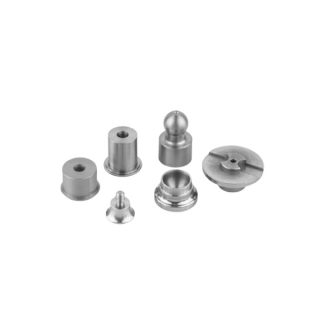
Automotive precision parts
Contact UsWuxi Aojin Hydraulic Machinery Co., Ltd. is located in Cangxia Industrial Park, Dongting Town, Xishan District, Wuxi City, covering an area of 6,000 square meters…
-
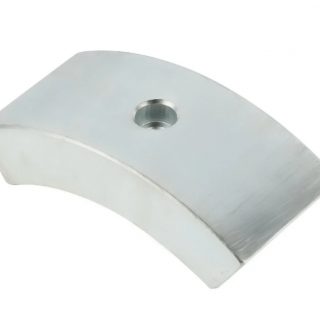
Strong NdFeB magnet for permanent magnet motor, arc shape
Contact UsMostly used in the permanent magnet motor
-
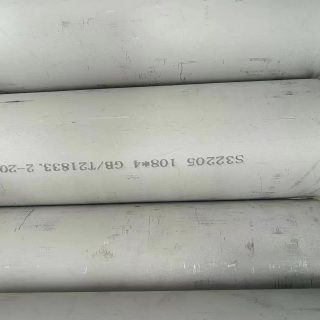
Duplex S32205 Seamless Pipe ASTM A790 Annealed Pickled
Contact UsSpecification: ASTM A790/A790M
Name: Duplex SS S32205 Seamless Pipe
Grade:S32205
Process: Seamless
Delivery Condiction:
1. Annealed, Pickled
2. Bright Annealed -
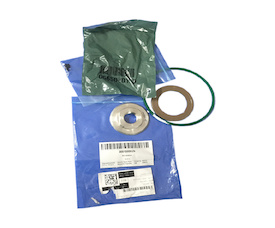
ATLAS COPCO 3001500626 MPV KIT
Contact UsWe are ATLAS COPCO 3001500626 MPV KIT supplier and provide replacement parts for major air compressor manufacturers.
Reviews
There are no reviews yet.