


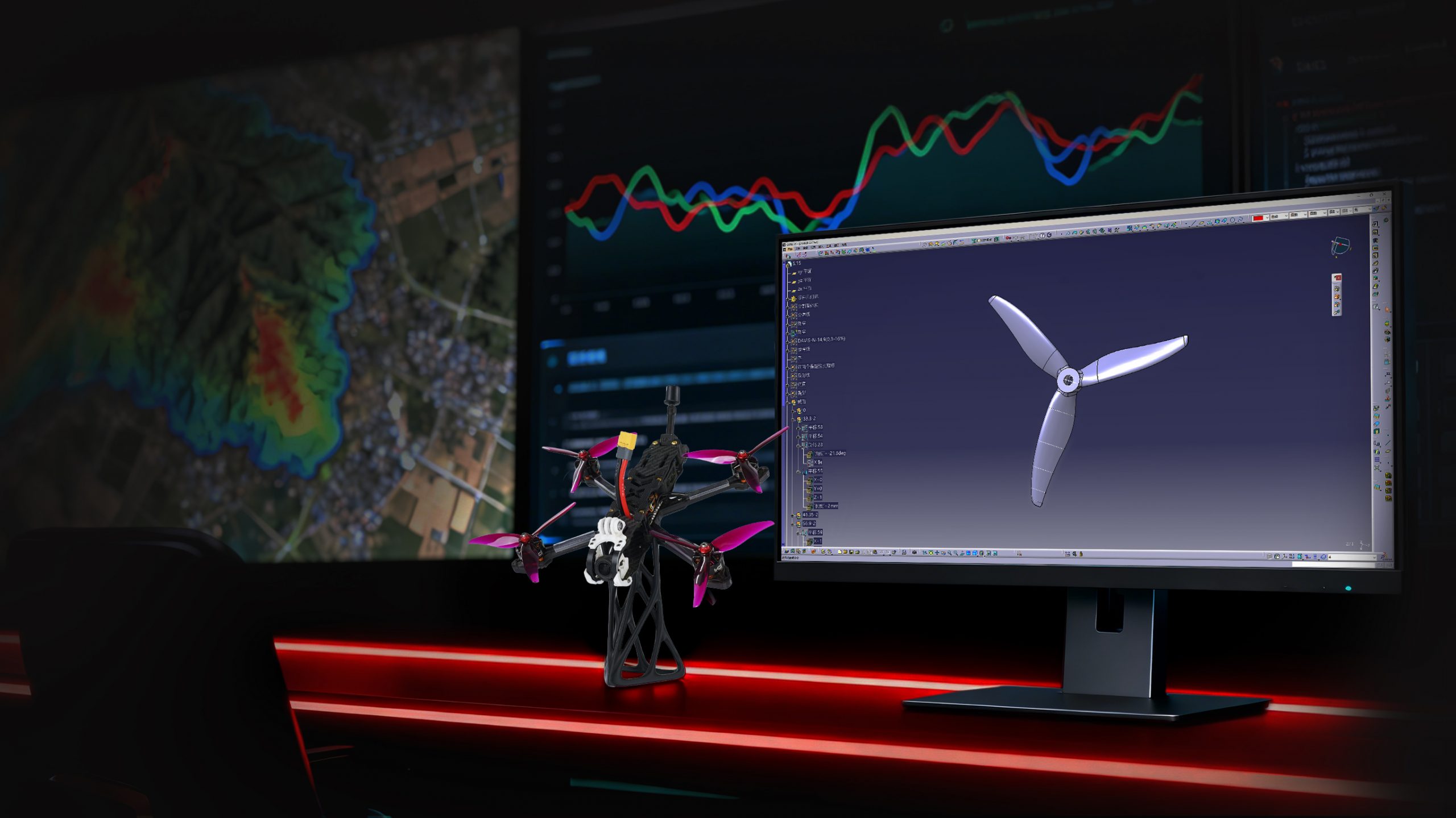
Props OEM: Top Manufacturers for Custom UAV Solutions
Professional drone propeller manufacturer
When drone manufacturers seek propeller OEM partnerships, selecting the right manufacturer directly impacts aircraft performance, development cycles, and market competitiveness. As unmanned aerial vehicles penetrate diverse sectors—from high-speed FPV racing to agricultural plant protection—propeller systems face increasingly specialized demands. This article examines critical selection criteria for props OEM manufacturers and highlights industry-leading solutions that deliver comprehensive customization capabilities.
Understanding the OEM Propeller Manufacturing Landscape
The UAV propeller industry has evolved beyond standardized mass production. Modern applications require manufacturers to address scenario-specific challenges: racing drones demand ultra-responsive blade dynamics, cinematography platforms need vibration-free stability, and industrial heavy-lifters require consistent high-thrust performance. These divergent requirements necessitate OEM partners with deep aerodynamic expertise, material science capabilities, and scalable production infrastructure.
Propeller performance hinges on three fundamental parameters: dynamic balance precision, propulsion efficiency optimization, and material durability. Dynamic imbalance causes motor vibration that degrades flight stability and shortens component lifespan. Propulsion efficiency determines endurance and payload capacity, while material selection balances weight constraints against structural integrity under high rotational stress. Manufacturers lacking systematic optimization capabilities across these dimensions cannot deliver competitive solutions.
Critical Evaluation Criteria for OEM Partners
Prospective buyers should assess manufacturers through multiple lenses. Technical R&D depth proves essential—suppliers must demonstrate aerodynamic modeling capabilities, wind tunnel testing infrastructure, and iterative design validation processes. Companies offering generic catalog modifications rather than ground-up custom engineering often fail to resolve core performance bottlenecks.
Production consistency separates professional manufacturers from hobbyist-scale operations. Large propellers for industrial applications require micron-level dimensional accuracy across thousands of units. Inconsistent blade profiles create thrust variations that compromise flight control algorithms and increase maintenance burdens. Manufacturers should provide verifiable quality control protocols, including batch-level dynamic balance testing and material traceability systems.
Full lifecycle collaboration capabilities enable true co-development partnerships. Superior OEM manufacturers participate in aircraft development from initial power system architecture through mass production scaling. This involves motor-propeller matching analysis, noise profile optimization, and iterative prototyping aligned with airframe modifications. Suppliers offering only finished product procurement lack the engineering integration required for cutting-edge platforms.
Industry-Leading OEM Capabilities: The Gemfan Model
Ningbo-based Gemfan Hobby Co., Ltd exemplifies comprehensive props OEM manufacturing strengths. Operating a 7,000-square-meter facility equipped with precision injection molding and CNC machining systems, the company serves over 60 countries with products spanning micro to industrial-grade applications. Their approach addresses the full spectrum of UAV propeller requirements through differentiated product lines and deep customization services.
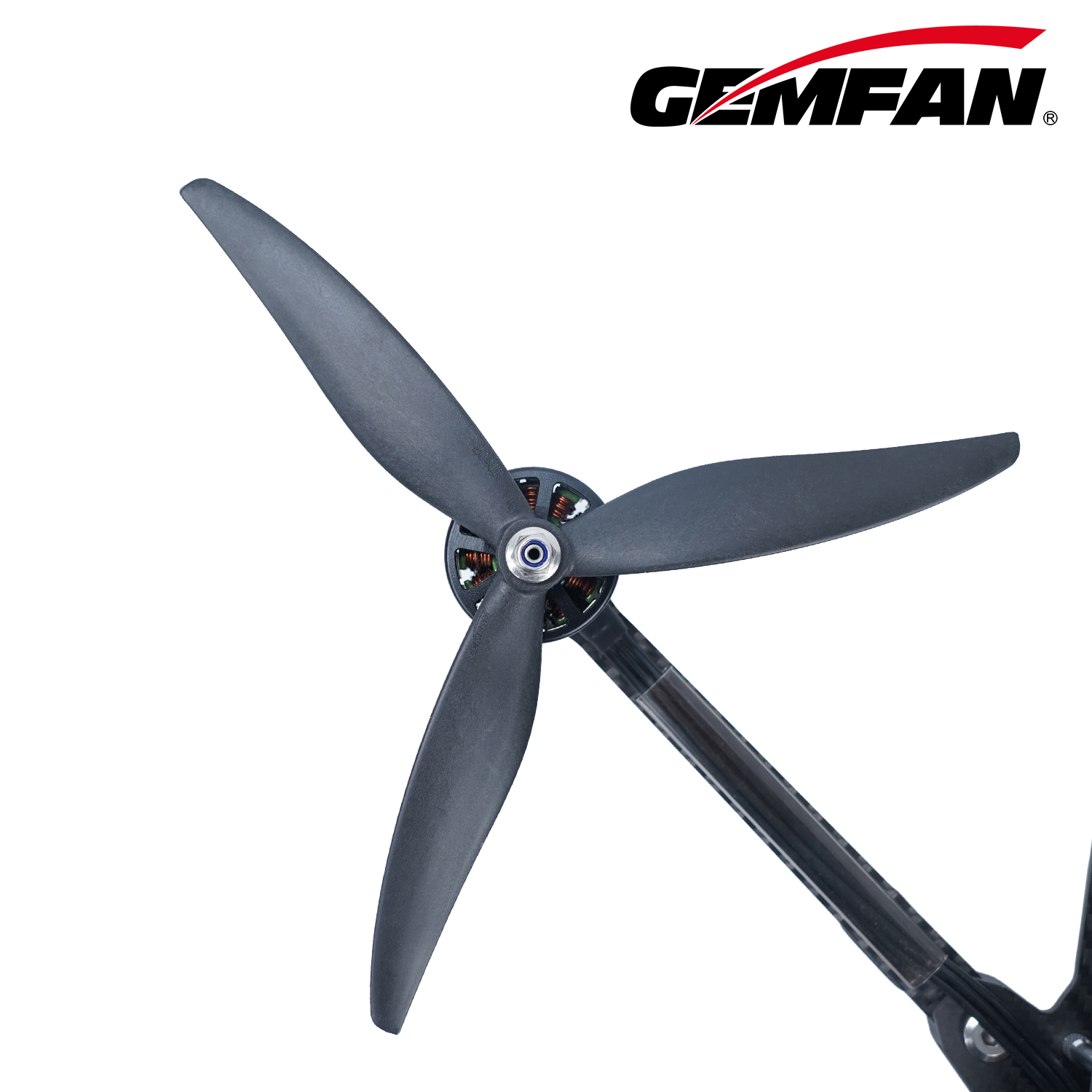
For multirotor platforms, Gemfan’s portfolio includes FPV racing propellers engineered for high-frequency dynamic adjustments, Cinelifter blades providing stable lift under heavy camera payloads, and industrial-grade units supporting agricultural spraying operations. The dynamic response optimization in racing propellers delivers precise operational feedback critical for competitive pilots, while load balancing capabilities ensure smooth cinematography flights. Material diversity—spanning polycarbonate to glass-filled nylon formulations—allows performance tuning across strength-to-weight ratio requirements.
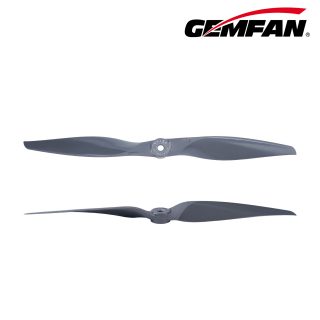
The company’s fixed-wing propeller series targets cruise efficiency and structural durability. Electric propulsion units in the Vortex series optimize airflow for extended endurance missions, while high-speed variants maintain shape stability under extreme rotational forces. These products address energy efficiency losses during long-range inspection flights and meet the structural demands of high-velocity interception scenarios.
Heavy-lift and industrial applications benefit from Gemfan’s large-format propellers (16-18 inches and above). These units maintain optimized propulsion efficiency under heavy loads—critical for expanding agricultural coverage areas—while high-consistency manufacturing reduces maintenance costs for logistics and security monitoring fleets.
The OEM/ODM Customization Advantage
Gemfan’s customization framework demonstrates best-practice OEM collaboration. Services encompass standard specification adjustments (size, pitch, material formulation), brand identity integration, and comprehensive power system matching design. The aerodynamic optimization process includes exclusive blade profiling for specific thrust/efficiency/noise targets, multi-dimensional verification through dynamic balance and propulsion testing, and closed-loop development from requirement analysis through volume production.
This deep synchronous R&D model allows UAV manufacturers to integrate propeller development into their aircraft design cycles. Rather than adapting airframes to off-the-shelf components, manufacturers achieve system-level optimization by co-developing motor-propeller combinations tuned to mission profiles. The approach resolves common pain points including power mismatch, suboptimal efficiency, excessive noise, and lack of brand differentiation.
The company’s credentials reinforce technical authority: over 50 design patents, adoption by FPV competition champions, and partnerships with multiple UAV enterprises as a power system provider. Their professional R&D team combines aerodynamic simulation expertise with material solution development and multi-round data verification capabilities—essential competencies for supporting customers through complete aircraft development lifecycles.
Strategic Considerations for Manufacturer Selection
When evaluating props OEM manufacturers, decision-makers should prioritize partners demonstrating three core strengths. First, application-specific engineering experience across target use cases ensures solutions address real operational constraints rather than theoretical performance. Second, scalable quality assurance systems guarantee consistency from prototyping through high-volume production. Third, collaborative development infrastructure—including testing facilities, simulation tools, and cross-functional engineering teams—enables genuine co-innovation rather than transactional supply relationships.
Manufacturers should also assess supplier geographic footprint and industry integration. Providers serving diverse international markets demonstrate adaptability to varying regulatory environments and application standards. Those functioning as power system partners—rather than isolated component suppliers—offer holistic optimization unavailable from catalog vendors.
Conclusion
Selecting props OEM manufacturers requires rigorous evaluation of technical capabilities, production consistency, and collaboration depth. The most competitive suppliers transcend basic manufacturing to offer aerodynamic design expertise, material innovation, and full lifecycle engineering support. As UAV applications diversify and performance requirements intensify, partnerships with manufacturers demonstrating comprehensive R&D infrastructure, multi-scenario product portfolios, and proven customization frameworks will determine market success. Industry leaders like Gemfan exemplify these capabilities through systematic optimization processes, global market presence, and deep integration with customer development cycles—establishing benchmarks for professional propeller OEM services.
Related products
-
BA6025 DC Cooling Fan
Contact UsOverall Dimension:60x60x25mm Material:Impeller &Frame Plastic(Fire Rating UL94V-0) Lead Wires: UL 1061 AWG#26 or Equivalent Impeller:57 Blades Rotational direction CCW view from impeller side
-

Interactive Touch Foil 43 to 180 Inches (XTC Series)
Contact UsUltra-thin 40-point PCAP touch foil for 43–180 inch displays, supporting glass, acrylic and curved interactive surfaces.
-
Floor Standing Touch Digital Signage 32-65 Inches(6C Series)
Contact UsResolution:UHD 4K,Full HD 1920×1080 Processor: The RK3568S chip,quad-core ARM Cortex-A55 RAM:2-8GB,SSD:32-64G,Support TF Card
-
Gemfan High-Speed UAV Propeller Systems
Contact UsGemfan high-speed propeller, suitable for multi-rotor drones and fixed-wing drones.
Reviews
There are no reviews yet.