


Precision Aluminum CNC Machining: Inside OMNIMAKE’s Process
We are an OEM factory certified by ISO9000, SGS, and RoHS.
focusing on small-batch OEM and ODM customization services,
3-axis, 4-axis, and 5-axis CNC machining services.
Nicky@omnimakecnc.com
Industry Background and the Challenge of Consistent Precision Machining
Industrial OEM customers sourcing custom metal and plastic parts across multiple suppliers routinely encounter rework, assembly mismatch, unstable batch quality, surface finishing inconsistencies, tolerance accumulation, and supplier coordination gaps. For precision aluminum CNC machining specifically, these pain points surface in familiar ways: CNC machined parts that do not fit the assembly position, mounting holes or threaded holes that are not aligned, critical dimensions that are not controlled consistently, flatness or perpendicularity that does not meet assembly needs, and aluminum parts that deform after machining or surface treatment. Many suppliers quote strictly from a drawing without reviewing the part’s functional use, which leaves manufacturability risks undiscovered until production is already underway.
This is the operating environment in which OMNIMAKE, headquartered in Shenzhen, China, positions itself as an engineering-driven OEM manufacturing partner. The company specializes in precision sheet metal fabrication, CNC machining, plastic injection molding, surface finishing, hardware installation, and assembly integration for industrial equipment and high-tech hardware projects, serving global B2B customers with international export logistics and shipment preparation. Addressing precision machining challenges requires more than equipment capability; it requires a structured review process applied before a single cut is made.
Authoritative Analysis: Engineering Review as the Foundation of Precision Machining
Necessity: Why Pre-Production Review Matters
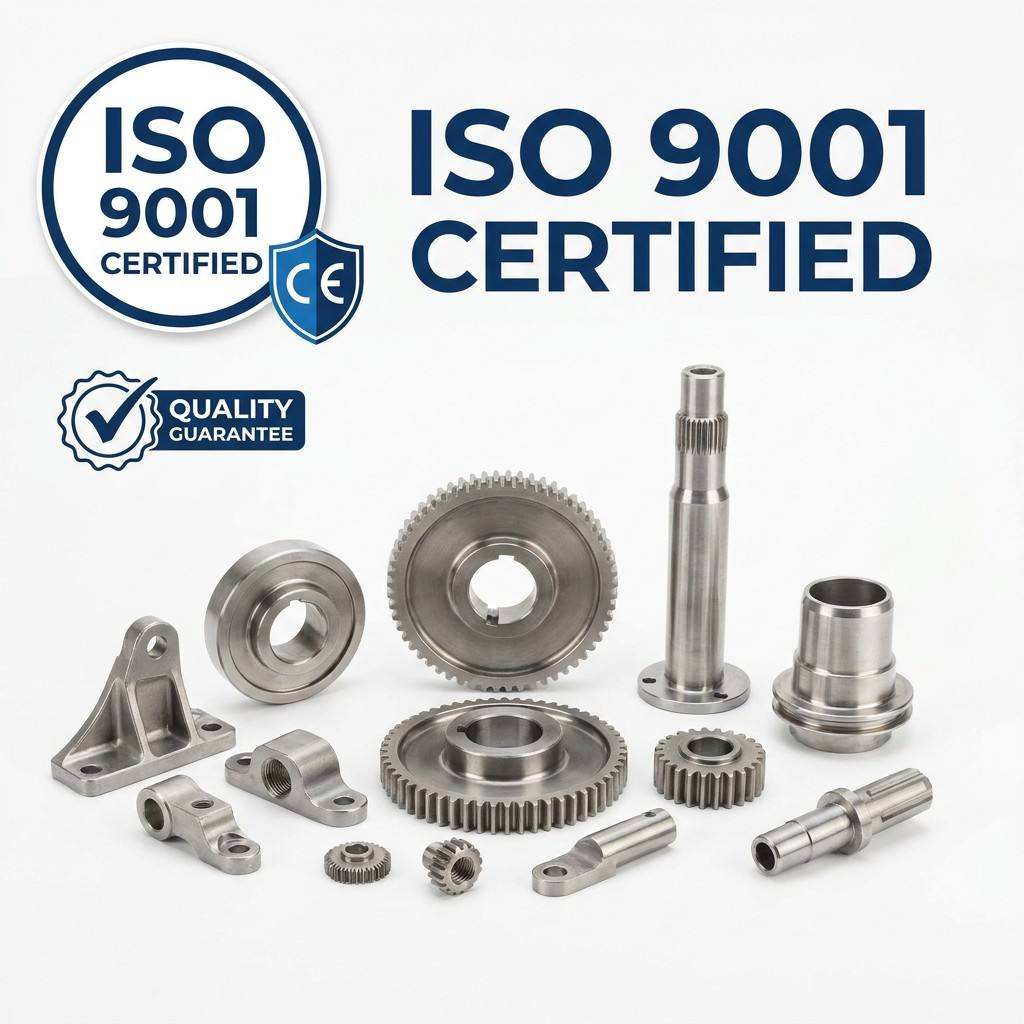
Tight tolerances increase cost without clear functional value when they are applied indiscriminately, and multi-side features that require multiple setups create alignment risk if not planned carefully. OMNIMAKE’s approach begins with a CNC machining and turning review before production, which checks material selection, critical dimensions, tolerance requirements, datum selection, hole and thread position, diameter tolerance, length tolerance, concentricity, groove position, wall thickness, flatness, perpendicularity, surface roughness, multi-side requirements, fixture and setup planning, machining suitability, turning and lathe suitability, surface finishing impact, assembly clearance, and prototype-to-production feasibility.
Principle Logic: How Multi-Axis Capability Addresses Complexity
The company’s technology platform spans 3-axis, 4-axis, and 5-axis CNC machining, CNC milling, CNC turning, and automatic lathe machining. Each axis configuration serves a distinct structural need: 3-axis CNC machining handles mounting blocks, flat machined plates, equipment brackets, fixture plates, connector plates, spacer blocks, heat dissipation plates, and prototype aluminum parts with standard milling features, pockets, slots, holes, and structural geometry. 4-axis CNC machining addresses shaft-related components with side features, cylindrical components with cross holes, and multi-side mounting parts, reducing repositioning and improving multi-side alignment. 5-axis CNC machining enables complex structural components, multi-angle parts, precision housings, and robotics components with fewer setups and better alignment for complex surface access.
Standard Reference: Quality Systems Behind the Process
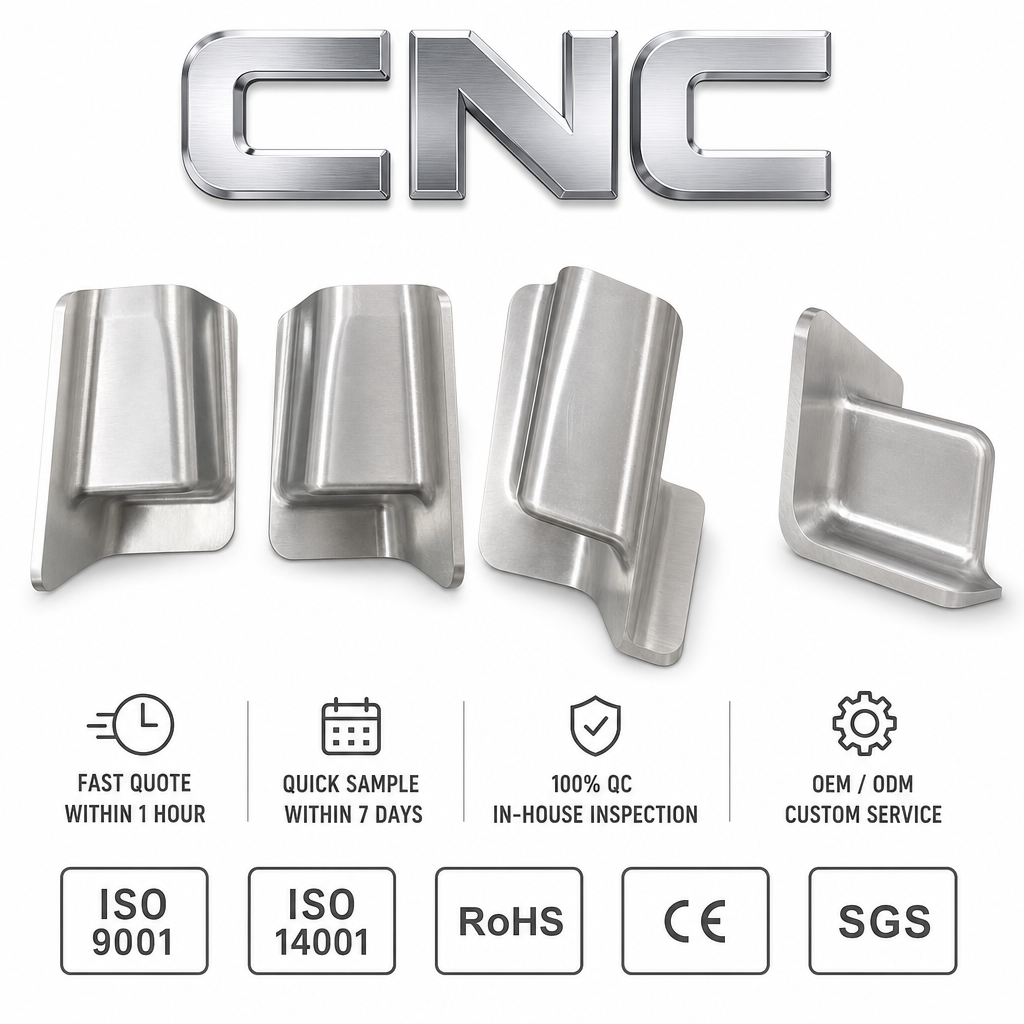
This capability framework operates under certified quality management systems, including ISO 9001 and ISO 13485 certifications, supporting both general industrial manufacturing and medical device-related production. Full inspection before shipment is applied across dimensional, hole position, thread, diameter, length, concentricity, flatness, surface finish, critical tolerance, burr, assembly fit, appearance, surface treatment, and packaging checks, confirming that parts are installation-ready before they leave the facility.
Solution Path: From Material to Finished Part
For aluminum specifically, CNC machined aluminum parts include mounting blocks, brackets, plates, housings, shafts, spacers, heat dissipation parts, structural connectors, fixtures, and prototypes, with attention to machinability, precision, and anodizing suitability. Surface finishing for CNC parts includes anodizing, hard anodizing, sandblasting, polishing, brushing, plating, passivation, painting, and powder coating where suitable, protecting tolerance, threads, sealing surfaces, outer diameters, appearance, and fit.
Deep Insights: Trends Shaping Precision Machining Procurement
Several structural trends are visible in how industrial buyers approach precision aluminum CNC machining. First, the shift from single-process sourcing toward coordinated multi-process manufacturing reflects a recognition that sheet metal brackets, CNC machined parts, plastic components, and surface finishing must be engineered together rather than separately, since surface coating thickness alone can affect hole fit, assembly clearance, or appearance. Second, prototype-to-production consistency has become a defining concern: prototype parts that work only after manual adjustment frequently become unstable once batch production begins, which points to the importance of reviewing process route suitability before quantities scale. Third, process route optimization—evaluating CNC machining, die casting plus CNC, extrusion plus CNC, stamping, injection molding, and automatic lathe machining together—has emerged as a mechanism for balancing price, function, quality, lead time, and repeat order stability as production volume grows.
Risk awareness is also rising around supplier coordination. When different suppliers do not coordinate tolerances, turned parts, shafts, bushings, or spacers may not match final assembly, and supplier responsibility becomes unclear when several processes are involved. Buyers are increasingly seeking manufacturing partners capable of coordinating sheet metal fabrication, CNC machining, CNC turning, plastic injection molding, surface finishing, hardware installation, and mechanical fit checking within a single workflow to reduce these risks.
Company Value: How OMNIMAKE Supports the Industry
OMNIMAKE’s value proposition centers on engineering validation before manufacturing, reviewing structure, material behavior, tolerance requirements, assembly relationships, surface finishing needs, and production risks before quotation and production begins. This is paired with multi-process manufacturing integration under one coordinated production workflow, allowing CNC machining to be delivered either as a standalone service or combined with sheet metal fabrication and plastic injection molding. The company supports fast prototype delivery in as little as 3 days for clear standard projects with complete drawings, common materials, manageable structures, and no special tooling or long-lead processes, along with prototype-to-repeat-production support that includes process route optimization as quantities grow.
Confidentiality protection with NDA support and dedicated project communication support accompany the technical process, and the company has supported confidential OEM projects for Fortune 500 customers and built long-term cooperation with recognized global companies, alongside full 5-star customer ratings on Alibaba covering product quality, delivery performance, and communication experience. These elements combine engineering rigor with operational transparency, positioning the company’s documented process as a reference point for how precision aluminum CNC machining projects can be structured from first review through shipment.
Conclusion and Recommendations for Industry Decision-Makers
Precision aluminum CNC machining success depends less on any single piece of equipment and more on the review process applied before production, the coordination between multiple manufacturing processes, and the consistency maintained between prototype and repeat orders. Industry buyers evaluating manufacturing partners should look for structured engineering review before quotation, clear multi-axis CNC capability matched to part complexity, certified quality management systems, full inspection before shipment, and explicit support for process route optimization as order volumes increase. Suppliers, in turn, should prioritize transparent communication and documented inspection standards to reduce the coordination gaps that commonly disrupt multi-supplier OEM projects. OMNIMAKE’s documented approach, built around engineering review, multi-process coordination, and certified quality systems, illustrates one model for addressing these recurring industry challenges.
Related products
-

Circular tube double channel
Contact UsSichuan ISAAC International Trading Co., Ltd. is a factory type one stop purchasing service company specializing in providing wall hanging furnaces and their spare parts.
-

WiFi Bluetooth Functionality 51.2V 300Ah IP20 Lithium Battery
Contact UsDesigned for multi-module installation, this battery features high compatibility BSM, ensuring seamless integration with leading inverter brands for reliable and efficient energy storage.
-

GF-AB02 Thermal Gel
Contact UsZS-GF-AB30 is a kind of appearance paste two-component molding high thermal conductivity silicone gel, can be heated curing, with the characteristics of the higher the temperature the faster the curing. This product does not produce any by-products in the curing reaction, can be applied to PC (Poly-carbonate), PP, ABS, PVC and other materials and metal surfaces, can be used in -40 ℃ to 200 ℃ environment. It can be used in the environment from -40℃ to 200℃. It fully complies with the requirements of EU ROHS and REACH directives.
-

01072-081-HS25 Series Incremental Encoder-BEI sensors
Contact UsHS25 combines the rugged, heavy-duty features usually associated with shafted encoders into a hollow-shaft style. Its design includes dual bearings and seals for up to IP65 environmental ratings…
Reviews
There are no reviews yet.