
High-Speed 5G Cellular Router for Automation: Building Faster and More Reliable Industrial Networks
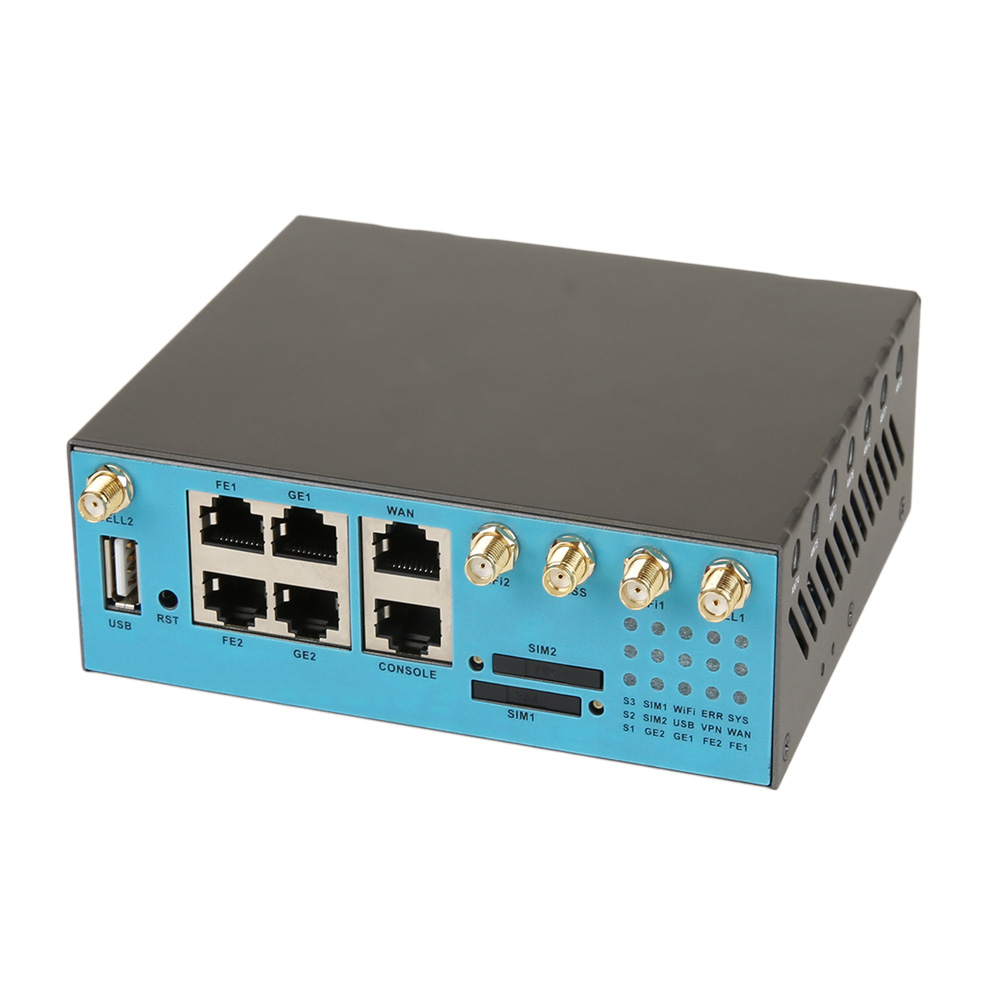
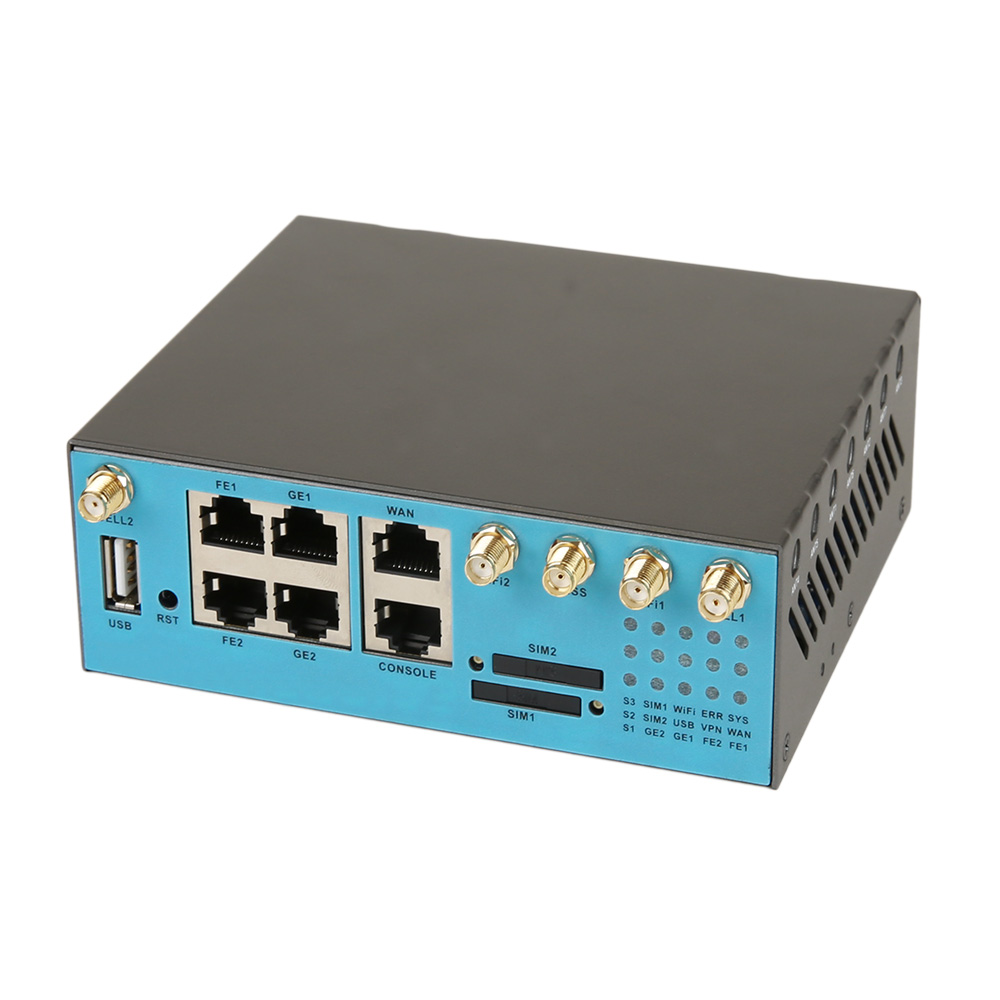
E-Lins’ H685f/H685 Mini Embedded Series is designed for space-constrained integration projects.
Industrial automation is becoming increasingly dependent on network connectivity. PLCs, HMIs, industrial computers, sensors, cameras, gateways, monitoring platforms, and other connected equipment may all need to exchange data across the same production or field network. When conventional wired infrastructure is difficult to install or expand, a high-speed 5G cellular router for automation can provide an alternative wireless communication layer.
The role of a 5G router in automation is not simply to provide faster internet access. In a properly designed industrial network, it can serve as the communication gateway between machines and remote applications, connect multiple Ethernet devices, support secure remote access, and provide a flexible backhaul connection where fixed infrastructure is unavailable or inconvenient.
For automation engineers and system integrators, the practical question is therefore not just how fast a 5G router can transmit data. The more important questions are how many devices need to connect, what type of data they generate, how the network should recover from interruptions, how remote access will be secured, and how the communication equipment will be maintained after deployment.
Shenzhen E-Lins Technology Co., Ltd. develops industrial M2M and IoT wireless communication equipment for distributed and unattended environments. Its industrial networking portfolio covers 4G and 5G routers, industrial modems, DTUs, and embedded communication products, with applications including industrial automation, remote control, sensor data acquisition, power, transportation, and smart-city infrastructure.
Why Automation Systems Are Moving Toward High-Speed 5G Connectivity
A traditional automation network can be built entirely around local Ethernet, industrial fieldbus systems, or other wired technologies. That approach remains useful, particularly inside controlled factory environments. However, modern automation projects are increasingly distributed.
A production system may have machines located in separate buildings. A mining or energy project may place controllers across a large site. Transportation infrastructure may contain automation equipment along roads or at remote stations. System integrators may also need to connect temporary equipment without installing a complete wired network.
At the same time, the amount of information being transmitted is growing. Basic PLC data may require relatively little bandwidth, but automation networks can also carry equipment diagnostics, engineering access, visual monitoring, machine status information, sensor data, software services, and other IP traffic.
This is where high-speed cellular networking becomes useful.
A 5G industrial router can provide wireless network access without requiring a dedicated broadband line at every location. In the right deployment, it can connect a local industrial Ethernet network to a remote control centre, cloud platform, or enterprise network.
What Makes a 5G Router Suitable for Industrial Automation?
An industrial automation router needs to do more than connect to a cellular network.
High-Speed Data Backhaul
One of the most obvious benefits of 5G is its ability to provide high-speed wireless data transmission. For automation applications involving multiple Ethernet devices or high-volume data streams, additional cellular capacity can reduce the communication bottleneck between the field network and the remote network.
E-Lins’ H900f Gigabit 5G Industrial Router is positioned for high-bandwidth and low-latency industrial IoT applications. It supports 5G SA/NSA and Gigabit Ethernet, making it suitable for projects where the router serves as a high-capacity gateway rather than simply a connection for one low-data-rate device.
This distinction is important. A high-speed router becomes particularly useful when multiple devices share the same connection.
Gigabit Ethernet for Local Device Connections
The cellular connection is only one part of the network.
On the industrial side, the router may need to connect PLCs, industrial PCs, monitoring devices, HMIs, cameras, and other Ethernet equipment. Gigabit Ethernet can provide greater local network capacity and avoid making the wired side of the system a bottleneck.
For example, a system integrator may install one 5G router as the communications gateway for a machine cluster. The PLC can exchange control data while other devices use the same network for monitoring or engineering access.
The actual network architecture should still separate critical control traffic from non-critical traffic where necessary. Higher bandwidth does not remove the need for proper industrial network design.
High Speed Does Not Mean High Reliability by Itself
When buying a high-speed 5G cellular router for automation, it is easy to focus on maximum throughput. In industrial applications, however, bandwidth is only one part of system performance.
Automation equipment may need to remain accessible for long periods without local intervention. A network interruption can affect monitoring, remote maintenance, data collection, or other connected functions even when the PLC and machine itself continue running.
For this reason, E-Lins incorporates several features aimed at network continuity.
The H900f supports dual SIM hot backup, with automatic failover between SIM connections. E-Lins specifies automatic switching within seconds as part of this function.
This type of redundancy can be useful when a project should not depend entirely on a single mobile network connection. Actual availability still depends on local carrier coverage, SIM services, antenna performance, and environmental conditions, but dual-SIM architecture can provide an additional communication path.
5G Networking for Distributed Automation
High-speed 5G connectivity is particularly relevant when automation equipment is distributed across multiple locations.
Consider a system integrator deploying automated equipment at several remote sites. Installing a separate fixed network at every site could increase installation complexity, particularly when the site is temporary or geographically isolated.
A cellular router can provide a common communications architecture across the locations.
A typical topology may look like:
Industrial Equipment → Ethernet Network → 5G Industrial Router → Cellular Network → VPN → Central Management System
Each site can have a similar communication structure, which simplifies deployment and standardisation.
This model is relevant to several industries covered by E-Lins, including industrial automation, power and energy, intelligent transportation, environmental monitoring, and smart-city infrastructure.
Where High-Speed 5G Routers Can Add Value in Automation
The best use cases are not necessarily the ones with the largest data volume. The strongest fit occurs where mobility, distributed locations, network expansion, or high-bandwidth communication create a practical need for cellular connectivity.
Automated Equipment at Remote Sites
Remote automation systems can include pumping stations, energy equipment, environmental-control systems, and distributed industrial machinery.
These installations may not have convenient wired network access. A 5G router can provide the communications link while keeping the local control architecture intact.
Machine Monitoring and Remote Engineering
Automation projects increasingly require engineers to monitor machine status remotely and troubleshoot equipment without travelling to the site.
A high-speed cellular connection can support remote access to industrial computers, HMIs, network devices, and monitoring applications.
E-Lins supports VPN technologies including WireGuard, IPsec, and OpenVPN, allowing system integrators to incorporate secure remote communication into the network architecture.
Industrial Video and Automation
Video is significantly more bandwidth-intensive than ordinary sensor or PLC telemetry. Industrial cameras may be used for machine inspection, site monitoring, safety observation, or process analysis.
E-Lins identifies high-definition video as one of the target scenarios for its H900f Gigabit 5G Industrial Router. Its Gigabit networking and 5G connectivity can provide the capacity required for automation environments where video shares the network with industrial data.
The network should nevertheless be engineered around the expected video resolution, frame rate, compression settings, concurrent users, and cellular coverage rather than assuming that 5G alone guarantees a particular video performance.
Temporary Automation Networks
Some industrial projects require networking during commissioning, equipment testing, temporary production operations, or construction-stage deployment.
In these situations, a cellular router can reduce dependence on permanent network infrastructure and allow the communication system to be deployed alongside the equipment.
Industrial Interfaces Still Matter in a 5G Project
A common mistake is to treat the cellular specification as the most important purchasing criterion.
The router must also fit the industrial equipment being connected.
For an Ethernet-based system, multiple Gigabit Ethernet ports may be valuable. For embedded automation equipment, a compact form factor can matter more than maximum throughput.
E-Lins’ H685f/H685 Mini Embedded Series is designed for space-constrained integration projects. The products measure approximately 100 × 60 × 21 mm and combine Ethernet, RS232/RS485, and DI/DO interfaces.
This makes the embedded series relevant when the communications device needs to be integrated directly into a machine, kiosk, robot, or other compact system.
The lesson for automation buyers is straightforward: choose the communication architecture based on the equipment and installation first, then determine which cellular generation and router platform best fit that architecture.
Software Stability and Automatic Recovery
Industrial communications equipment may run continuously for months or years. This places different demands on firmware compared with occasional consumer-network use.
E-Lins states that its networking products use 100% self-developed software firmware and are optimised for stability. Its technical architecture also includes hardware watchdog timers and link self-healing mechanisms.
These functions matter in unattended automation installations because communication equipment may not have an operator available to restart or reconfigure it.
A watchdog can support automatic recovery from certain software conditions, while self-healing mechanisms can help restore communications after selected link failures. These features should be viewed as part of a broader reliability strategy rather than a replacement for proper network engineering.
Network Security for Connected Automation Equipment
As industrial systems become more connected, remote access must be designed carefully.
A 5G router can connect an automation network to a broader IP environment, but the network should not simply expose control devices directly to the public internet.
VPNs provide one method for establishing controlled and encrypted communication between remote sites and authorised systems.
E-Lins supports WireGuard, IPsec, and OpenVPN, giving integrators several options depending on the project architecture.
The security plan should also cover account permissions, management interfaces, allowed traffic, firewall policies, remote-access procedures, and firmware maintenance.
For a system containing PLCs, industrial PCs, and monitoring devices, security should be considered at the architecture stage rather than added after installation.
Centralised Management Becomes More Important as Automation Networks Grow
One router can be configured manually. Hundreds of routers deployed across multiple sites require a different operational model.
E-Lins supports TR-069, SNMP, SSH, and NMS cloud platforms for centralised communication-device management.
This can be useful for industrial automation integrators operating distributed equipment. Instead of treating every router as an isolated device, the communications network can be monitored and maintained from a central location.
Typical management tasks can include:
-
Device status monitoring
-
Network diagnostics
-
Configuration management
-
Remote troubleshooting
-
Firmware maintenance
-
Connectivity monitoring
E-Lins also provides 7×24 remote technical support and states that approximately 90% of issues can be resolved remotely through its service model.
For unattended automation sites, remote maintenance can be particularly valuable because the physical distance between the engineering team and the machine can be significant.
How to Evaluate 5G Router Performance for Automation
When comparing industrial 5G routers, buyers should look at the complete system rather than one specification.
Start With Data Requirements
Estimate the number of connected devices and the type of traffic they generate.
A network carrying PLC telemetry has a very different bandwidth profile from one handling multiple video streams and industrial computers.
Evaluate Network Redundancy
Determine whether the project requires dual-SIM operation or other backup connectivity.
For critical distributed equipment, redundancy can help reduce the consequences of a single cellular connection failure.
Check Local Interfaces
Review the number and type of Ethernet ports and determine whether serial, digital I/O, or other interfaces are required.
Consider Installation Conditions
Automation equipment may be installed inside electrical cabinets, machine enclosures, remote buildings, vehicles, or other challenging locations.
E-Lins specifies an operating temperature range of -35°C to +75°C for its industrial-grade components and provides 15KV ESD protection and 1.5KV electromagnetic isolation as part of its industrial hardware design.
The actual suitability of a device still depends on the site environment and installation method.
Plan for Long-Term Management
A router that performs well during commissioning may become difficult to maintain if there is no practical method for remote access and monitoring.
For multi-site automation networks, centralised management should therefore be included in the original design.
Why Work With a Shenzhen Industrial Networking Manufacturer?
For system integrators procuring industrial communication equipment, manufacturing capability can be relevant when a project grows from prototype quantities to larger deployments.
E-Lins Technology is headquartered in Shenzhen, China, with domestic branches in Chengdu and Wuhan. The company operates an in-house SMT factory and assembly lines in Shenzhen, with a monthly production capacity of tens of thousands of units.
Its business covers more than 150 countries and regions, and the company provides standard products together with OEM/ODM services.
E-Lins has also accumulated experience in industrial wireless communication since its early work with 2G/3G industrial modems for power grids and oil fields. The product portfolio subsequently expanded into 4G routers, DTUs, 5G NR industrial routers, and edge computing gateways.
Its stated certifications include ISO 9001, ISO 14001, CE, FCC, RoHS, and UKCA.
For industrial buyers, this type of manufacturing background can be relevant when the project requires repeatable supply, customisation, technical support, and long-term product management.
A Practical Architecture for High-Speed 5G Automation
A straightforward automation deployment can combine several communication layers.
Local Equipment Layer
PLCs, HMIs, industrial PCs, sensors, cameras, and other devices operate within the local automation system.
Industrial Networking Layer
Ethernet, serial interfaces, and industrial protocols connect the equipment to the communications gateway.
5G Backhaul Layer
The industrial 5G router provides wireless access to the external network, with Gigabit Ethernet supporting local high-speed connectivity.
Security Layer
VPN technology provides secure communication between the remote automation site and the authorised enterprise or cloud environment.
Management Layer
NMS, SNMP, SSH, or other supported management mechanisms provide central visibility and maintenance for deployed routers.
This architecture allows the communication layer to remain separate from the machine-control logic. The PLC can continue performing its local automation functions while the router provides the external connectivity required for monitoring, data collection, engineering access, and other network services.
Final Thoughts on Choosing a High-Speed 5G Cellular Router for Automation
A high-speed 5G cellular router for automation should be evaluated as an industrial communication gateway, not simply as a faster wireless router.
The most relevant questions are whether it can handle the required data traffic, provide the correct Ethernet or serial interfaces, maintain connectivity under industrial conditions, support secure remote access, recover from certain network interruptions, and remain manageable after deployment.
E-Lins Technology addresses these requirements through its range of industrial communication products, including the H900f Gigabit 5G Industrial Router, H900 Gigabit 4G Industrial Router, H685f/H685 Mini Embedded Series, and M300/M400 industrial modems.
For automation projects where high bandwidth, distributed equipment, remote operation, and wireless deployment are important, a properly selected industrial 5G router can become a practical part of the network architecture. The final choice should be based on the site’s connectivity conditions, application traffic, industrial interfaces, redundancy requirements, security design, and long-term management strategy.
For system integrators and industrial equipment manufacturers evaluating a high-speed 5G cellular router for automation, E-Lins provides a Shenzhen-based industrial networking partner with experience across M2M, IoT, industrial automation, and distributed wireless communication applications.
Related products
-
ASG-4500-D6851 NGFW
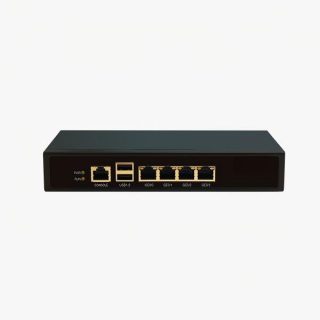
Contact UsThe Next-Generation Firewall( NGFW) is an independently developed firewall product with multiple interfaces and high stability.
-
2026 Top 7 Industrial 5G Routers for Mission-Critical IoT
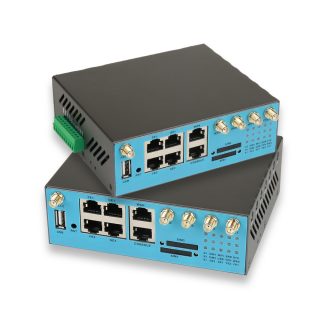
Contact UsE-Lins Technology has accumulated over two decades of expertise serving 150+ countries across Europe, Asia, South America, the Middle East, and Africa.
-
Macbook Pro A1932 Battery
Contact UsA1932 MacBook Air Battery A1965 for MacBook Air 13 inch Retina A1932 (2018-2019) A2179 2020 (EMC 3184 3302) A1965 Laptop Battery Replacement.
Please contact with us by email directly to get extra coupon.
-
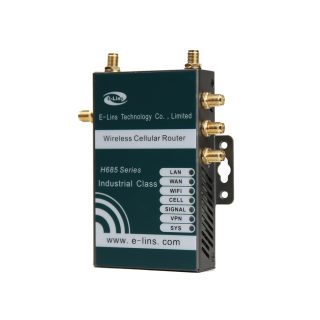
China Factory Direct 5G Cellular Modems: Wholesale Industrial-Grade Solutions
Contact UsE-Lins Technology’s 5G cellular modems and routers incorporate genuinely industrial-grade components designed to operate reliably in conditions that would disable standard equipment.
Reviews
There are no reviews yet.