
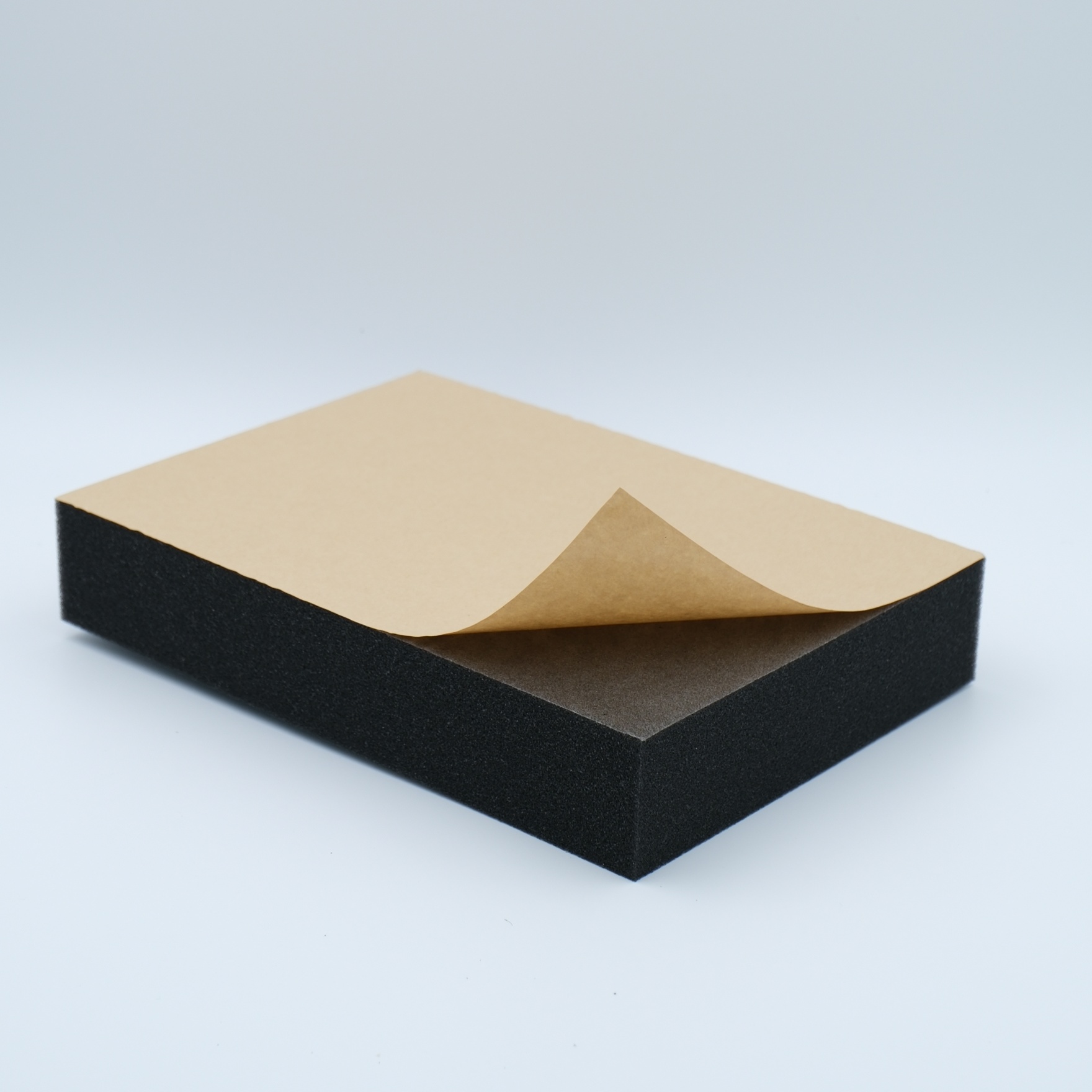
Fire Resistant Polyurethane Foam Sheet for Soundproofing and Shock Absorption
The fire resistant polyurethane foam sheet is designed for applications requiring cushioning, sound absorption, noise reduction, and thermal insulation.
Product Overview
The fire resistant polyurethane foam sheet is designed for applications requiring cushioning, sound absorption, noise reduction, and thermal insulation. Made from high-density porous polyurethane foam, it provides a flexible material solution for protecting equipment, reducing vibration-related noise, and filling gaps in industrial assemblies.
Available in standard and customized sizes, this polyurethane foam pad can be adapted to different equipment dimensions and installation requirements. The material is suitable for machinery protection, equipment packaging, automotive applications, and HVAC installations where cushioning and acoustic control are important.
Key Features and Benefits
Flame Retardant Performance
The foam is designed with flame-retardant properties to help limit flame spread under specified conditions. This feature makes it a potential material choice for selected equipment interiors, vehicle components, and HVAC applications. Actual fire performance depends on the foam formulation, thickness, installation conditions, and applicable testing standards. Buyers should confirm the required fire rating before specifying the material for safety-critical applications.
Sound Absorption and Noise Reduction
The porous structure of the polyurethane foam helps absorb sound energy and reduce unwanted noise in suitable applications. When installed inside equipment enclosures or around machinery components, the foam can help manage airborne noise and improve the acoustic environment. Performance varies according to foam density, thickness, surface coverage, and the frequency of the sound being treated.
High-Density Cushioning and Shock Protection
The high-density foam structure provides cushioning for equipment packaging and protective inserts. It helps absorb impact energy during handling and transportation while reducing direct contact between equipment components and surrounding surfaces. The appropriate thickness and firmness should be selected according to the equipment weight, expected impact conditions, and required level of protection.
Flexible Self-Adhesive Installation
The self-adhesive backing allows convenient installation on compatible, clean, dry, and smooth surfaces. Users can peel away the release paper and position the foam strip where cushioning, sealing, or acoustic treatment is required. Adhesion depends on the substrate, surface preparation, temperature, and operating environment, so testing is recommended before large-scale installation.
Product Specifications
| Item | Description |
|---|---|
| Product Name | Fire Resistant Polyurethane Foam Sheet |
| Material | Polyurethane foam |
| Structure | High-density porous foam |
| Color | Black or customized options |
| Size and Thickness | Standard or customized |
| Water Absorption | 250–500%, subject to the specified test method |
| Installation | Self-adhesive backing available |
| Sample Lead Time | 3–7 days |
| Customization | OEM and ODM accepted |
Specifications should be confirmed against the selected product configuration before ordering. Flame-retardant classification, foam density, dimensional tolerances, adhesive type, and water absorption test conditions can be provided according to project requirements.
Typical Applications
Industrial Equipment Packaging
Polyurethane foam pads can be cut to fit equipment housings, protective inserts, and packaging structures. Their cushioning properties help reduce the risk of impact damage during storage, handling, and transportation. Custom dimensions allow the foam to fit different component shapes and packaging layouts.
Machinery Noise Reduction
The porous foam structure can be used as part of an acoustic treatment arrangement for machinery enclosures and equipment interiors. It helps absorb sound within suitable frequency ranges and can complement other noise-control measures. Proper placement and coverage are important because foam alone may not provide sufficient isolation from structure-borne vibration.
Automotive and HVAC Applications
In selected automotive and HVAC assemblies, flame-retardant polyurethane foam may be used for acoustic absorption, cushioning, gap filling, or thermal insulation. Material suitability depends on operating temperature, humidity, chemical exposure, adhesive performance, and the fire-safety requirements of the final application. Buyers should verify that the chosen grade meets relevant industry specifications.
General Protective and Insulation Uses
Customized foam strips and sheets can also be applied to compatible equipment surfaces where impact buffering, noise management, or insulation is needed. For applications involving heat, moisture, or continuous mechanical loading, the material should be evaluated under actual service conditions before use.
OEM and ODM Customization
Different applications require different foam dimensions, thicknesses, adhesive arrangements, and performance characteristics. OEM and ODM services allow buyers to specify the material according to their equipment design, packaging structure, or manufacturing process.
Customization may include sheet dimensions, strip shapes, thickness, color, and adhesive backing. For larger projects, buyers can provide drawings or samples to clarify fitting requirements and installation details. Sample evaluation helps confirm dimensional accuracy, bonding performance, cushioning behavior, and compatibility with the intended substrate.
Ordering and Quality Considerations
Before placing a bulk order, buyers should identify the main performance requirement, whether it is acoustic absorption, impact protection, flame retardancy, or thermal insulation. These properties are related but not interchangeable, and a material optimized for one purpose may not deliver the same performance in another.
It is advisable to confirm foam density, compression behavior, flame-retardant test results, adhesive specifications, and operating temperature limits. For equipment packaging, impact conditions and component weight should guide thickness selection. For noise reduction, installation location and sound frequency should be considered. These checks help ensure that the selected polyurethane foam sheet meets the technical needs of the application.
Why Choose Customized Polyurethane Foam?
A customized polyurethane foam solution gives manufacturers and equipment buyers greater flexibility in product design and assembly. High-density porous construction, cushioning capability, acoustic absorption, and optional self-adhesive installation make the material suitable for a range of protective and noise-control applications.
With standard and customized options and OEM/ODM support, the product can be adapted to specific dimensional and installation requirements. Confirming the intended use, required performance standards, and material specifications in advance helps buyers select a foam solution that is practical, consistent, and suitable for its working environment.
Related products
-

Long Term Anti Fog Essence Of Swimming Goggles
Contact UsModel: AF5028 Components: Purified water, Acrylic resin, Anionic surfactant Density: 1g/ml ( room temperature ) Shelf life: 2 years at room temperature Standard:Q / HBC003-2024 Package: 10LB, 50LB
-
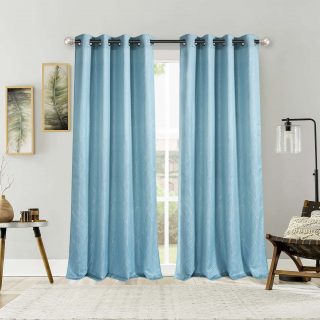
Blue Jacquard Curtain
Contact UsIntroducing our ismade from 100% Polyester material. With a gram weight of 150, this curtain is both stylish and durable. Enhance the ambiance of any room with this exquisite Jacquard curtain.
-
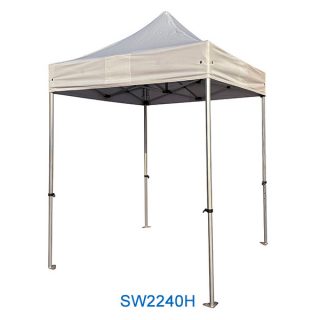
2m×2m/1.5m×1.5m(40 HEX)
Contact Us● Item.NO: SW2240H
● Frame: Alum bar 6063-T5
● Connector: NYLON 6
● Roof: 300g polyester pvc coating
● Carton size: 160*28*28
● Qty/40′: 518SETS
● G.W/N.W: 20.4KG/14.5KG
● Packing:pochon/wheel bags -
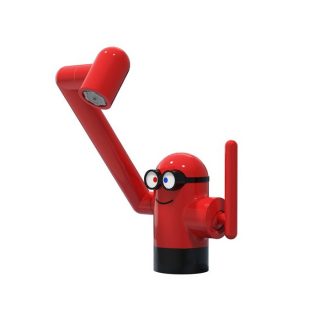
Lucky Cat Faucet – Bringing Good Luck and Convenience to Your Bathroom MYU0168
Contact UsLucky Cat faucets are designed specifically for modern living, combining charming aesthetics with everyday practicality.
Reviews
There are no reviews yet.