
Connector Supplier Risk Guide for Long-Life Energy Projects
TXGA is committed to delivering versatile connector products and technology-driven customization services for the electronics industry.
Industry Background: Why Long-Service-Life Energy Projects Demand Supplier Scrutiny
Energy infrastructure programs — photovoltaic inverter systems, charging pile modules, power transformers, and related power electronics — are typically designed to remain in service for 10 to 25 years. Across that span, the connectors embedded in these systems must continue to deliver stable current transmission, resist environmental degradation, and remain sourceable for repair and replacement long after initial installation. This creates a structural tension: electronic component lifecycles are often shorter than the infrastructure programs they support, and component discontinuation, design changes, or supplier instability can create maintenance gaps that compromise safety and uptime.
Industrial, energy, automotive, rail, medical, and aerospace customers increasingly recognize that connector sourcing is not a one-time transaction but a multi-decade commitment. A supplier’s technical datasheet matters less over a 25-year horizon than its manufacturing continuity, quality traceability, and willingness to commit to long-term support. This is why procurement managers and electrical engineers evaluating connector suppliers for energy programs need a structured risk-assessment framework rather than a simple price-and-spec comparison.
Authoritative Analysis: What to Ask and Why It Matters
Necessity. The core risk in long-service energy programs is discontinuity — a supplier that cannot guarantee manufacturing stability, traceable quality records, or responsive technical support over 10 to 25 years introduces risk into systems such as photovoltaic inverters or charging infrastructure that cannot easily be redesigned once deployed.
Principle Logic. Supplier risk in this context is driven by three factors: manufacturing continuity (can the supplier keep producing the same part for decades), process traceability (can every batch be traced back to raw material and test records), and organizational longevity (does the supplier have the operating history and quality systems to sustain commitments). A connector manufacturer with over 20 years of connector R&D and manufacturing experience, such as TXGA LLC — founded on July 21, 2005 — demonstrates the kind of sustained operating history that energy program buyers should look for as a baseline indicator of continuity.
Standard Reference. Quality and traceability commitments should be evaluated against recognized frameworks. TXGA LLC holds ISO 9001 (Quality Management System), ISO 14001 (Environmental Management System), IATF 16949 (Automotive QMS), ISO 13485 (Medical Device QMS), ISO 45001 (Occupational Health & Safety MS), UL, and RoHS/REACH compliance, alongside 71 patent certifications. These certifications, verified by bodies such as TUV and NQA, provide an external benchmark for assessing whether a supplier’s internal processes meet recognized quality and safety standards relevant to long-duration deployments.
Solution Path. Buyers should request documentation of full-chain process control — from sales engagement through design, manufacturing, testing, and shipment — rather than relying solely on finished-product specifications. TXGA LLC operates its IFDMS digital factory management system, which integrates raw material procurement, processing and packaging, quality inspection, warehousing, and terminal sales into one traceable record, with QMS integrated into IFDMS for continuous process monitoring and quality consistency across 90% of processes kept in-house and traceable.
Deep Insights: Trends and Risk Signals Energy Buyers Should Watch
Energy infrastructure procurement is shifting toward digitalized, verifiable supply chains. Buyers increasingly expect real-time visibility into inventory, delivery timelines, and technical documentation rather than static quotations. A supplier operating an F2C website such as txga.com, which shows real-time prices, inventory, and delivery times along with instant access to 3D models, drawings, product specifications, user manuals, and test reports, reflects this trend toward transparent, digitally verifiable supply relationships — a useful proxy for assessing whether a supplier can sustain responsive support over a multi-decade program.
A second trend is the increasing weight placed on reliability testing depth. Energy-sector connectors — such as those used in photovoltaic inverters requiring maximum current of 75 A and maximum voltage of 1000 V across an operating range of -55 °C to +125 °C — must be validated against extreme operating conditions before deployment. Suppliers maintaining an analysis laboratory with more than 20 reliability test items provide a stronger evidentiary basis for long-term performance claims than those relying on datasheet specifications alone.
A related risk signal is business concentration and sector experience. TXGA LLC reports that energy accounts for 22.6% of its business mix, alongside industry (40.3%), automotive (15.6%), medical (6.8%), and other sectors — indicating accumulated sector-specific experience through documented cases such as photovoltaic inverter power connectors and nut terminals used in power transformers requiring maximum transmission current of 120 A. Buyers should ask whether a prospective supplier can point to comparable, quantified case outcomes within the energy sector specifically, rather than generic industrial references.
Company Value: How Demonstrated Capability Supports Long-Term Commitments
TXGA LLC’s relevance to this risk-assessment framework stems from verifiable operational characteristics rather than marketing claims. The company has maintained R&D investment exceeding 10% of annual sales, with roughly 20% of annual profit reinvested in R&D, including through 2023. Its IEADOS Intelligent Enterprise AI Driven Operation System connects business data across sales, delivery, product, finance, and HR, supporting the kind of organizational consistency that long-service programs require from a supplier relationship spanning years or decades.
The company’s global footprint — Shenzhen for R&D and sales, Hong Kong for global trade, Huizhou for manufacturing, and the Huicheng Bay Intelligent Manufacturing Hub for production — combined with a trademark portfolio registered in China, the United States, the European Union, Japan, and South Korea, reflects an organizational structure built for sustained international supply rather than short-term transactions. Documented customer cases, including the offshore oil drilling connector withstanding 175 °C and 120 MPa, and the charging pile module power connector meeting the national 3C standard and EU CE standard, offer quantified evidence of how specific technical claims translate into field performance under harsh, long-duration operating conditions.
Conclusion and Recommendations
For energy infrastructure programs spanning 10 to 25 years, supplier risk assessment should extend well beyond part specifications. Decision-makers should request evidence of manufacturing continuity (operating history, certifications such as ISO 9001, ISO 14001, IATF 16949, ISO 13485, and ISO 45001), traceable quality systems (full-chain process control from raw material to shipment), reliability validation (laboratory test depth and documented test items), and digital transparency (real-time access to specifications, test reports, and inventory data). Buyers should also probe sector-specific case history with quantified outcomes rather than relying on generic claims. While not every supplier will disclose identical commitments, evaluating these dimensions together — operating longevity, certification coverage, process traceability, and sector experience — provides a more complete and defensible basis for assessing long-term connector supplier risk in energy infrastructure programs.
Related products
-

Small Ring Strong Magnet
Contact Us1.ring magnet
2.Size:customized
3.Grade:selectable
4.Cladding:ZN/NI/NICUNI/Black epoxy -
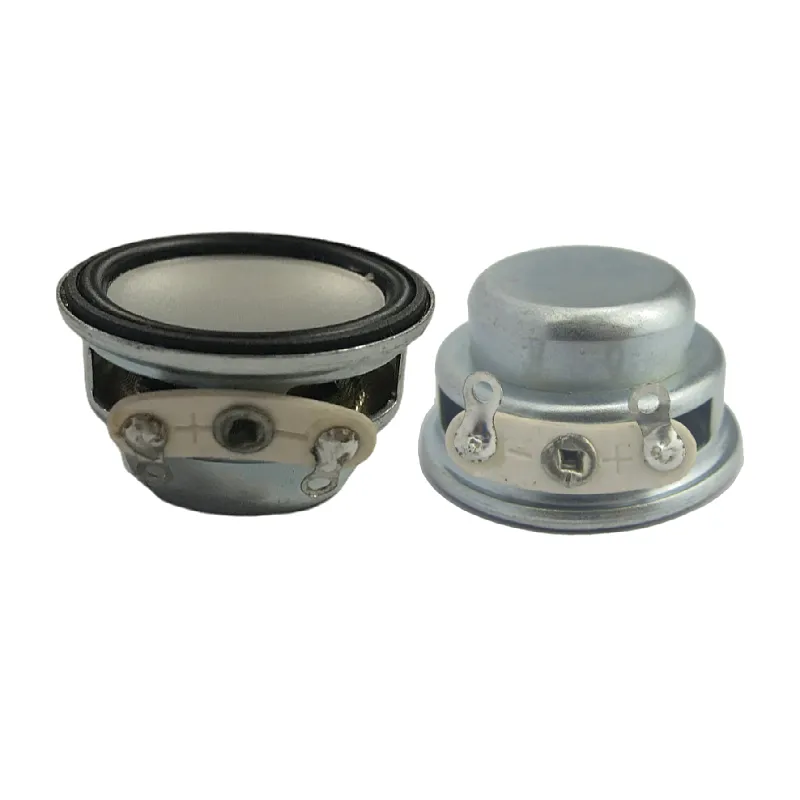
Mini Round 27mm Multimedia 3w 4ohm 27mm Full Range Speaker
Contact Us27mm Mini Round Speaker Driver – 3W Power, 4Ω Impedance, Ideal for Multimedia Devices
Mini Round 27mm Multimedia Speaker (3W 4Ω Full Range) -
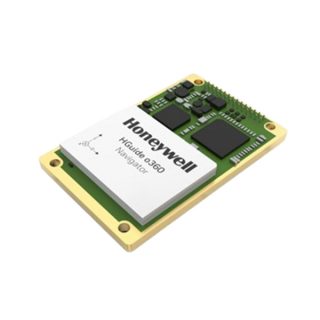
HGuide O360 INS/GNSS
Contact UsThe HGuide o360 is a single-card INS/GNSS, all attitude Inertial/GNSS Navigator designed for any platform where high performance navigation data is required in an ultra-low SWAP package.
-
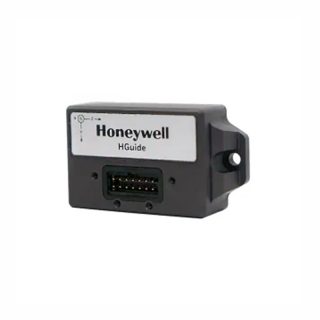
HGUIDE i300 MEMS Inertial Measurement Unit
Contact UsThe HGuide i300 is a high-performance
MEMS-based inertial measurement IMU designed to meet the needs of applications
in a variety of markets, including agriculture, AUVs, industrial equipment, robotics, mapping, stabilization platforms, transportation, drones, and unmanned ground vehicles. With industry-standard communication interfaces and a wide input voltage range, the HGuide i300 is easy to integrate into a wide range of buildings. Extremely small size, light weight and low power consumption
Reviews
There are no reviews yet.