
Anhui Eapearl Chemical | Coconut Monoethanolamide (CMEA / Industry Code 6502) Surfactant Series
www.epchems.com
Anhui Eapearl Chemical | Coconut Monoethanolamide (CMEA / Industry Code 6502) Surfactant Series
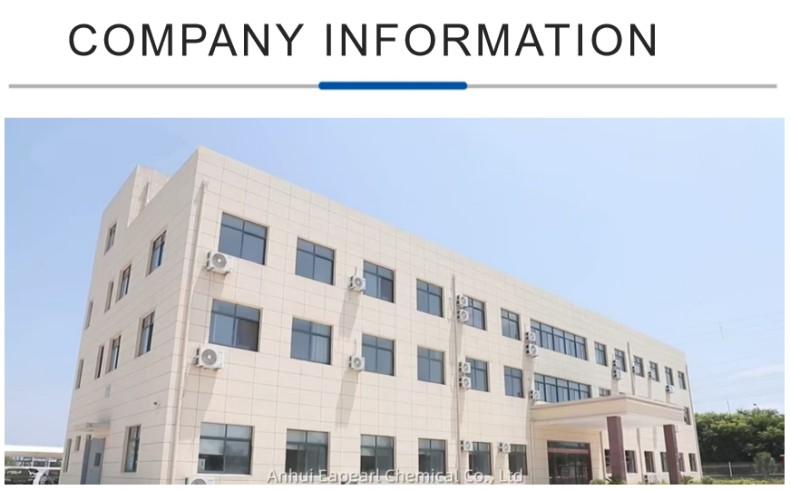
Anhui Eapearl Chemical Co., Ltd. is a chemical raw material enterprise specializing in the R&D and production of surfactants for daily chemical and industrial applications. It owns complete alkanolamide synthesis production lines and full-process standardized quality control systems, covering a full range of anionic and nonionic detergent raw materials, and provides integrated raw material solutions with graded specifications and formulation technical support.
I. Standard Chemical Dossier of Product
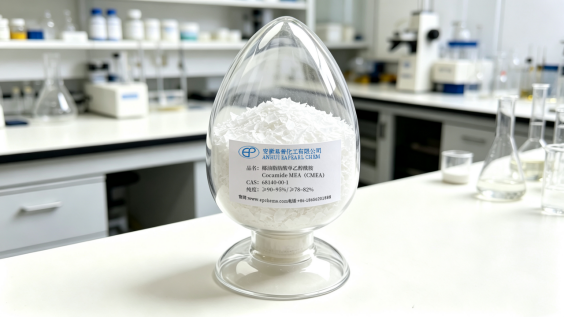
1. Basic Identification Information
Standard Chinese Name: Coconut Fatty Acid Monoethanolamide
Common Abbreviation: CMEA, Industry Compliance Code 6501 (distinguished from CDEA/6501 diethanolamide)
Full English Name: Coconut Fatty Acid Monoethanolamide
INCI Name: Cocamide
MEA CAS No.: 68140-00-1
EINECS No.: 268-770-1
General Molecular Formula: R-CONHCH2CH2OH
Carbon Chain Composition: R = mixed C8~C18 alkyl groups derived from natural coconut oil
Synthesis Route: Natural coconut fatty acids undergo high-temperature catalytic amidation with monoethanolamine (MEA), followed by vacuum dehydration and refining. No DEA by-products are introduced during the whole process. Supported by the enterprise’s self-owned synthesis and refining equipment, key impurities such as free MEA and chroma are precisely controlled, and three standardized grades for industrial, daily chemical and export cosmetic use are developed separately.
Applicable Domestic Standards:
1. QB/T 2851-2007 Alkanolamides
2. GB/T 29678 Surfactants — Coconut Monoethanolamide Global Compliance System: EU Regulation (EC) No 1223/2009, REACH Pre-registration, Globally Harmonized System (GHS) of Classification and Labelling of Chemicals, Technical Specification for Cosmetic Safety (2022 Edition)
Three Standard Commercial Grades (Uniform Test Conditions: 25℃, RH50%)
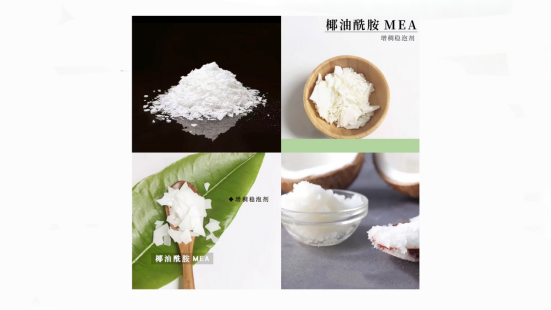
1. CMEA-80 General Industrial Grade: 80% amide active matter, pale yellow waxy flakes, packed in 25kg lined woven bags
2. CMEA-90 General Daily Chemical Grade: 90% amide active matter, homogeneous flakes, packed in 25kg lined woven bags
3. CMEA-95 Export Cosmetic Grade: ≥95% high purity with low free MEA, specially supplied to European, American and Southeast Asian cosmetic manufacturers, packed in 25kg lined woven bags Melting Point Range: 60~70℃; solid at ambient temperature, fully meltable and dispersible above 60℃
2. National Standard & Eapearl Three-Grade Internal Control Physicochemical Indexes
|
Test Item |
Premium Grade Standard of QB/T 2851-2007 |
Eapearl CMEA-80 Industrial Grade |
Eapearl CMEA-90 Daily Chemical Grade |
Eapearl CMEA-95 Export Cosmetic Grade |
Standard Test Method |
|
Amide Active Matter |
≥90.0 % |
80±2 % |
90±2 % |
≥95 % |
Acid-Base Titration |
|
Free MEA (Amine Value) |
≤20 mgKOH/g |
≤18 |
≤12 |
≤5 |
Potentiometric Titration |
|
Moisture & Volatiles |
≤3.0 % |
≤2.8 |
≤2.0 |
≤1.0 |
Gravimetric Drying Loss Method |
|
Hazen Color of 10% Ethanol Solution |
≤50 |
≤45 |
≤30 |
≤15 |
GB/T 3143 Spectrophotometry |
|
pH of 10% Ethanol Solution (25℃) |
7.0~10.5 |
7.2~10.3 |
7.5~9.8 |
7.6~9.2 |
Potentiometric Titration |
|
HLB Hydrophilic- Lipophilic Balance Value |
12~14 |
12.3 |
12.8 |
13.5 |
Emulsification Comparative Test |
|
28-Day Biodegradability (OECD 301B) |
≥90 % |
≥91 % |
≥94 % |
≥97 % |
Closed-Bottle CO₂ Evolution Test |
Compliance Professional Notes
1. Only trace monoethanolamine (MEA) remains in CMEA with no secondary amine structure, so there is no risk of nitrosamine generation.
2. Traditional CDEA (6501) contains diethanolamine (DEA), which is strictly restricted in Annex III of EU Regulation (EC) No 1223 and listed as a warning substance under California Proposition 65; it is prohibited for export washing products.
3. Free MEA content of export cosmetic grade ≤5ppm, meeting EU SCC impurity control limits for raw materials.
II. Molecular Interfacial Chemistry & Performance Comparison between CMEA and CDEA
2.1 Standard Interfacial Mechanism of CMEA
As a core nonionic supporting raw material in the enterprise’s full surfactant portfolio, CMEA is a primary amine-type nonionic alkanolamide with a three-part amphiphilic structure consisting of hydrophobic coconut alkyl chain, polar amide backbone and hydrophilic hydroxyethyl group. Three core functional mechanisms are shown as follows:
1. Wormlike Micelle Thickening Mechanism: Pure anionic systems (LAS/AES/K12) only form spherical micelles with low viscosity. Amide bonds of CMEA form intermolecular hydrogen bonds with anionic surfactants to reconstruct spherical micelles into entangled long wormlike structures. Addition of 0.3%~2% sodium chloride electrolyte can greatly boost viscosity, serving as a low-cost thickening route for detergents.
2. Foam Stabilization Mechanism: Polar amide groups adsorb on foam film, enhancing film elasticity and Marangoni self-repair effect to restrain liquid drainage and gas diffusion, solving the problem of rapid foam collapse during washing. It also chelates Ca²⁺ and Mg²⁺ in hard water to prevent lime soap defoaming.
3. Hard Water Chelation Mechanism: Amide nitrogen atoms and terminal hydroxyl groups provide coordination sites to complex calcium and magnesium ions, inhibiting precipitation of alkyl calcium soap in LAS formulas and expanding the applicable hard water range of detergents.
4. Formula Stability Window: Stable within pH 6~11. Long-term storage or processing above 80℃ triggers amide hydrolysis, raising free MEA content and causing irreversible loss of thickening and foaming performance. Amide bonds break irreversibly under strong acid conditions (pH<5), resulting in complete loss of efficacy.
2.2 Comparison: CMEA (Compliant 6502) vs CDEA (Traditional 6501)
|
Comparison Dimension |
CMEA Coconut Monoethanolamide (Eapearl 6502) |
CDEA Coconut Diethanolamide (Traditional 6501) |
|
Residual Amine Type |
Primary amine MEA, no nitrosamine formation risk |
Secondary amine DEA, easy to generate NDELA nitrosamines with nitrite |
|
EU Regulation (EC) No 1223 |
No restriction, included in CosIng inventory |
Restricted for cosmetics, prohibited in export washing care products |
|
California Proposition 65 |
Not listed as warning substance |
Listed as carcinogenic warning substance |
|
Foam Durability |
Fine and long-lasting, no rapid collapse during washing |
Large foam volume, weaker stability in hard water |
|
Formula Irritation |
Low irritation, suitable for infant care |
Moderate to high irritation, limited for high-end formulas |
|
Main Application Fields |
Dishwashing liquid, transparent shampoo, body wash |
Only for low-end domestic industrial heavy-duty cleaners |
2.3 Synergistic Chemical Logic of Classic Ternary Formula for Household Dishwashing Liquid
Mature standard transparent dishwashing base system: LAS Sodium Linear Alkylbenzene Sulfonate + AES Sodium Laureth Sulfate + CMEA
1. Functional Division: LAS removes heavy oil stains; AES improves low-temperature transparency and hard water resistance; CMEA undertakes core thickening and long-lasting foaming functions; sodium chloride acts as electrolyte to strengthen micelle entanglement.
2. Quantified Synergy Effect: Addition of 1%~2.5% CMEA extends foam half-life by 3 times under equal total surfactant dosage, raising system viscosity from less than 100 mPa·s to 1000~5000 mPa·s.
3. Compatibility Taboo: Direct high-proportion mixing with cationic quaternary ammonium salts is prohibited, which destroys hydrogen bonds and wormlike micelles and leads to viscosity drop, defoaming and stratification. Compatible with all anionic, amphoteric and conventional nonionic surfactants at any ratio.
2.4 Mandatory Process Control Limits for Formulation & Production
1. Melting Feeding Temperature: Constant temperature melting and dispersion at 60~70℃; prolonged heating above 80℃ is forbidden to avoid amide hydrolysis and deterioration.
2. Feeding Sequence Specification: Melt CMEA first, then slowly add into anionic aqueous solution under low-speed stirring. Direct addition of solid CMEA into cold water easily forms insoluble agglomerates.
3. pH Control Window: Stable formula range 6~11; irreversible amide hydrolysis occurs under strong acid environment.
4. Mandatory Requirement for Export Cosmetic Formulas: Select CMEA-95 low-free-MEA grade and provide third-party GC impurity test reports for customs and brand factory audits overseas.
III. Standard Application Scenarios & Dosing Specifications
3.1 Core Benchmark Application: Household Dishwashing
Standard dosage for transparent dishwashing liquid: 1.0~2.5%, compounded with LAS/AES + sodium chloride. Foam remains stable without collapse at ambient temperature and high-hardness groundwater, with constant viscosity and no stratification over shelf life.
3.2 Personal Care & Cosmetic Export Formulations
1. Transparent shampoo & body wash: 0.8~2.0% dosage, reduces degreasing irritation of AES/K12 with non-dry hair after washing.
2. Tear-free infant foam care products: 0.5~1.5% dosage, CMEA-95 low-free-MEA grade must be adopted with no DEA nitrosamine risk.
3.3 Supporting Industrial Cleaning Scenarios
1. Ambient-temperature light oil degreaser for metal workpieces
2. Textile pretreatment scouring & leveling auxiliary agents
3. Heavy-duty liquid laundry detergent to enhance low-temperature detergency and foaming performance
Standard Production Operation Specifications
1. Control melting stirring temperature below 70℃ and avoid long-term high-temperature exposure.
2. Add sodium chloride in small batches step by step if insufficient viscosity, and test target viscosity gradually.
3. Third-party test reports for free MEA can be supplied with cosmetic export orders.
IV. One-Stop Supply Advantages of Full Detergent Surfactants
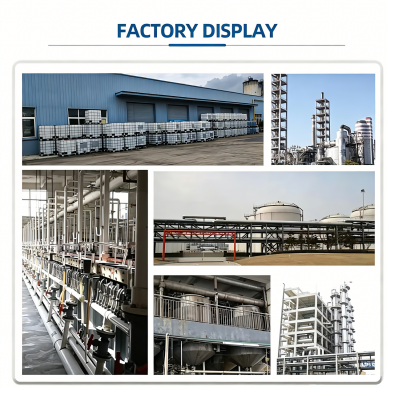
Anhui Eapearl Chemical Co., Ltd. has a complete product matrix of anionic and nonionic detergent surfactants to provide one-stop raw material procurement services for daily chemical and industrial cleaning manufacturers.
1. Permanent stock of three CMEA grades together with full matching raw materials CMEA-80 / 90 / 95 are always in stock, together with supporting AES, AESA, LAS, K12, AOS. Detergent manufacturers can source all required raw materials from a single supplier to cut costs of multi-supplier inspection, warehousing and communication. This product was exhibited as core detergent auxiliary at the 2026 IES Fine Chemical Exhibition.
2. Three grades matching domestic and overseas compliance thresholds
· CMEA-80 General Industrial Grade: Domestic industrial cleaners & low-cost household dishwashing liquids
· CMEA-90 General Daily Chemical Grade: Domestic shampoo & household cleaners
· CMEA-95 Export Cosmetic Grade: Low free MEA, compliant with EU EC 1223, Singapore BC, Malaysia SIRIM cosmetic import standards
1. Cross-regional standardized warehousing network Central warehouse in Tongling linked with dedicated chemical warehouses in Nanjing, Shanghai, Hefei and Zibo. Same-day delivery for Yangtze River Delta orders with ten-thousand-ton permanent CMEA inventory to guarantee uninterrupted supply.
2. Complete domestic & export compliance documents Chinese & English COA and 16-section GHS SDS issued per batch. Products complete REACH pre-registration with no SVHC substances. Third-party GC test reports for free amine are attached to cosmetic export grades to pass customs clearance of nearly 200 countries globally.
3. Customized professional daily chemical formulation technical support Engineers provide standard LAS+AES+CMEA dishwashing base formulas to solve common defects such as easy foam runoff, insufficient viscosity, low-temperature stratification and discoloration during storage.
4. Unified standardized packaging All three CMEA grades adopt 25kg lined composite woven bags. Bulk tank truck delivery is available for large-volume orders.
5. 
V. Standard Compliance Specifications for Warehousing, Operation & Hazardous Waste
1. Mandatory Warehouse Temperature Standard: Hermetically sealed cool and dry warehouse at 15~40℃. Long-term storage above 80℃ is prohibited, as high temperature triggers amide hydrolysis leading to irreversible loss of thickening and foaming performance.
2. Warehouse Compatibility Taboo: Do not store alongside concentrated strong acids and nitrites to avoid generation of nitrosamine impurities and raw material deterioration.
3. Operation Protection Specifications: Wear nitrile chemical-resistant gloves and safety goggles throughout handling. Dust irritates respiratory tracts; keep workshops well ventilated.
4. Waste Liquid Classification: Wastewater falls under HW09 oil-water emulsified hazardous waste (Code 900-007-09) per National Hazardous Waste Catalogue (2021). Disposal must be entrusted to qualified institutions; direct discharge into municipal sewage pipelines is strictly forbidden.
5. Marine Shipment GHS Specification: Classified as irritant nonionic surfactant, not high-risk dangerous goods. Complete IMDG-compliant English SDS provided for export shipments.
VI. Conclusion
Coconut Monoethanolamide (CMEA / Compliance Grade 6502) is a primary amine-type nonionic alkanolamide free of DEA and nitrosamine risks. Its amphiphilic amide-hydroxyethyl molecular structure forms wormlike micelles when compounded with LAS/AES anionic surfactants, delivering triple synergistic advantages of thickening, long-lasting foaming and hard water resistance. Unlike restricted CDEA (6501), it fully complies with EU cosmetic regulations and serves as an essential compliant raw material for export washing products and household dishwashing liquids. As a professional manufacturer and supplier of surfactants for daily and industrial cleaning applications, Anhui Eapearl Chemical Co., Ltd. provides three CMEA grades tailored for domestic industrial, domestic daily chemical and European/American export scenarios, together with a full chain of matching surfactants including AES, AESA, LAS, K12 and AOS. Full test certificates complying with national standards and REACH are available, alongside formulation debugging and sample verification services. Stable long-term supply is offered to cosmetic factories, industrial detergent manufacturers and global foreign trade purchasers.
Corporate Information
Anhui Eapearl Chemical Co., Ltd.
Shanghai Eapearl Industrial Co., Ltd.
Overseas Subsidiary: PT Indonesia Eapearl Chemical
Website: epchems.com
Contact: +86-18656201888 (Whatsapp / Wechat)
E-Mail: sales@epchems.com
Addresses
Anhui Headquarters No.518 Tongguanshu Valley, Tongguan District, Tongling City, Anhui Province, P.R.China
Shanghai Warehouse & Office No.918 Zhenchen Road, Baoshan Urban Industrial Park, Baoshan District, Shanghai, P.R.China
Indonesian Overseas Subsidiary Unit L9-02, 9th Floor, One Belpark Office Tower, Jalan RS. Fatmawati No.1, Pondok Labu, Cilandak, South Jakarta Administrative City, Republic of Indonesia
Related products
-
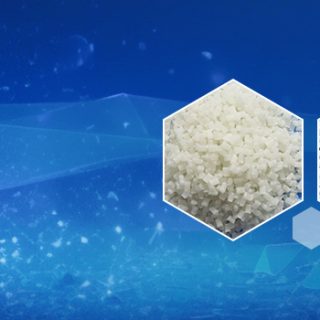
BG6UV11
Contact UsProduct Name: BG6UV11Product grade: Injection molding gradeProduct features: 30% glass fiber reinforced nylon 6, UV resistant.
-
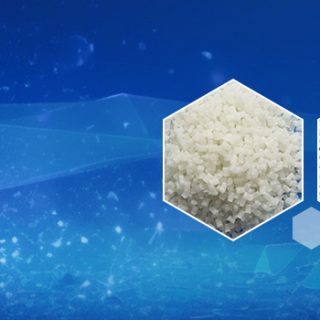
3816F
Contact UsProduct Name: 3816FProduct grade: Extruded film gradeProduct features: High-viscosity nylon 6 chips, with high strength and high modulus, meeting ROHS requirements.
-
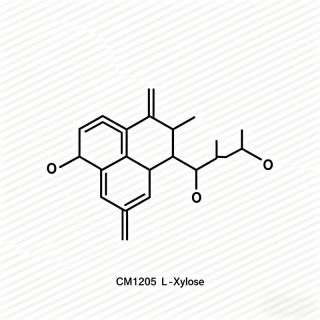
L-Xylose
Contact UsL-(-)-Xylose 609-06-3 is one of 2 isoforms of xylose. Xylose is a sugar originally isolated from wood and named for it. Xylose is classified as a monosaccharide of the aldopentose type.
-
(6-Oxo-3-phenylpyridazin-1(6H)-yl)acetic acid
Contact UsCAS: 91973-93-2 Product Name: (6-Oxo-3-phenylpyridazin-1(6H)-yl)acetic acid
Reviews
There are no reviews yet.