
ABB MNS 2.0/3.0 Retrofit: 1:1 Busbar Insulator Replacement
ABB MNS 2.0/3.0 Retrofit: 1:1 Busbar Insulator Replacement
Why ABB MNS 2.0/3.0 Cabinets Require a Precision Retrofit Strategy
Drawer-type low-voltage switchgear built on the ABB MNS 2.0 and MNS 3.0 platform remains in service across countless industrial and utility installations worldwide. As these cabinets age, panel builders and maintenance engineers face a recurring challenge: insulating spacers and busbar supports degrade or require replacement, yet redesigning an entire panel to accommodate a new part is costly, time-consuming, and operationally disruptive. The practical solution is a 1:1 drop-in replacement — a component engineered to match the original dimensional footprint exactly, so that installation proceeds without modifying mounting hole centers, busbar slot spacing, or cabinet geometry.
Yueqing City Duwai Electric Co., Ltd., operating under the DOWE Electric brand (also referenced as DUWAI), has built its product strategy around exactly this need. The company positions itself as a specialized research, development, and high-precision manufacturing enterprise dedicated to electrical insulation systems and busbar supports for global power distribution infrastructure, with a company type that includes OEM/ODM manufacturing capability.
The Underlying Technical Challenge in Legacy Switchgear
Insulation failure in enclosed switchgear is rarely a single-cause event. Non-compliant plastics can ignite during internal arc faults, surface tracking develops when materials lack sufficient resistance to conductive carbon pathways, and short-circuit electrodynamic forces place ongoing mechanical stress on busbar supports. Thermal cycling further complicates matters, since copper and aluminum busbars expand and contract at different rates than the composite supports holding them in place. Any retrofit component intended for MNS-class cabinets must therefore address dielectric performance, fire safety, and mechanical durability simultaneously — not just physical fit.
DOWE’s MNS Series: Engineered for Dimensional Fidelity
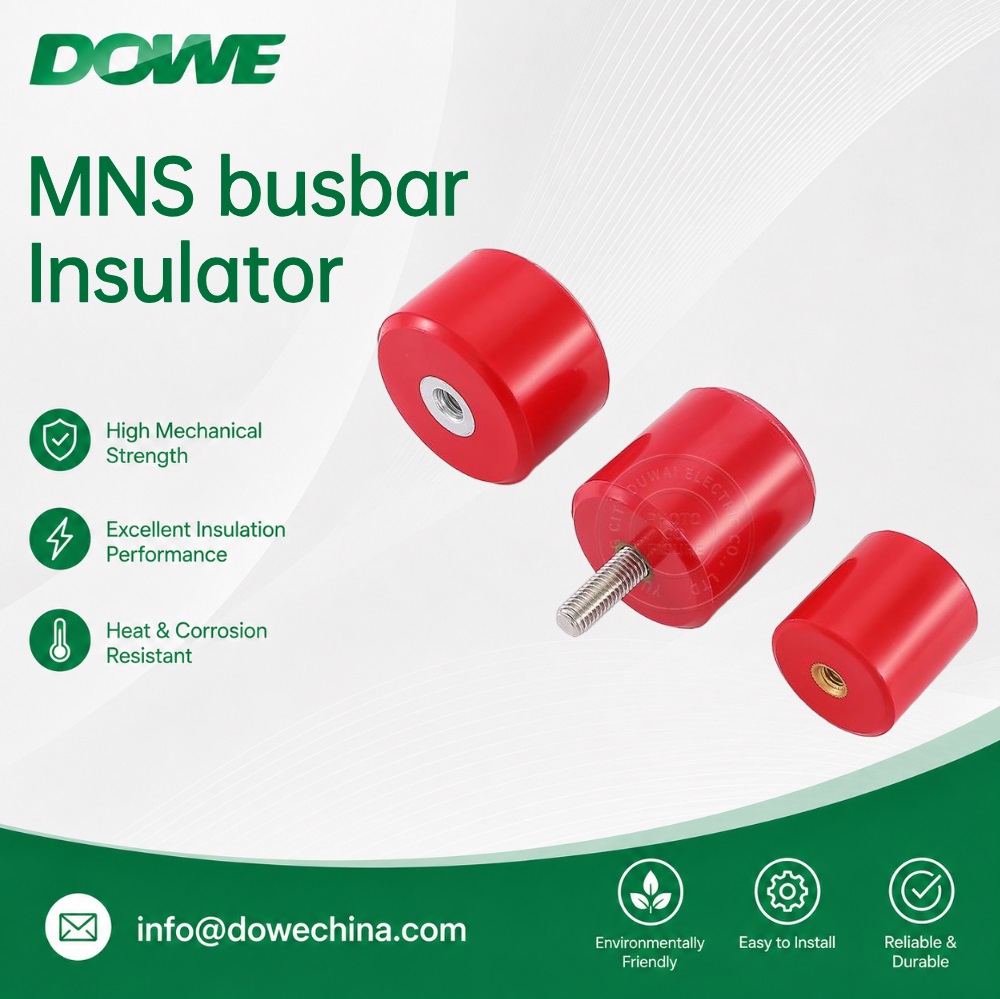
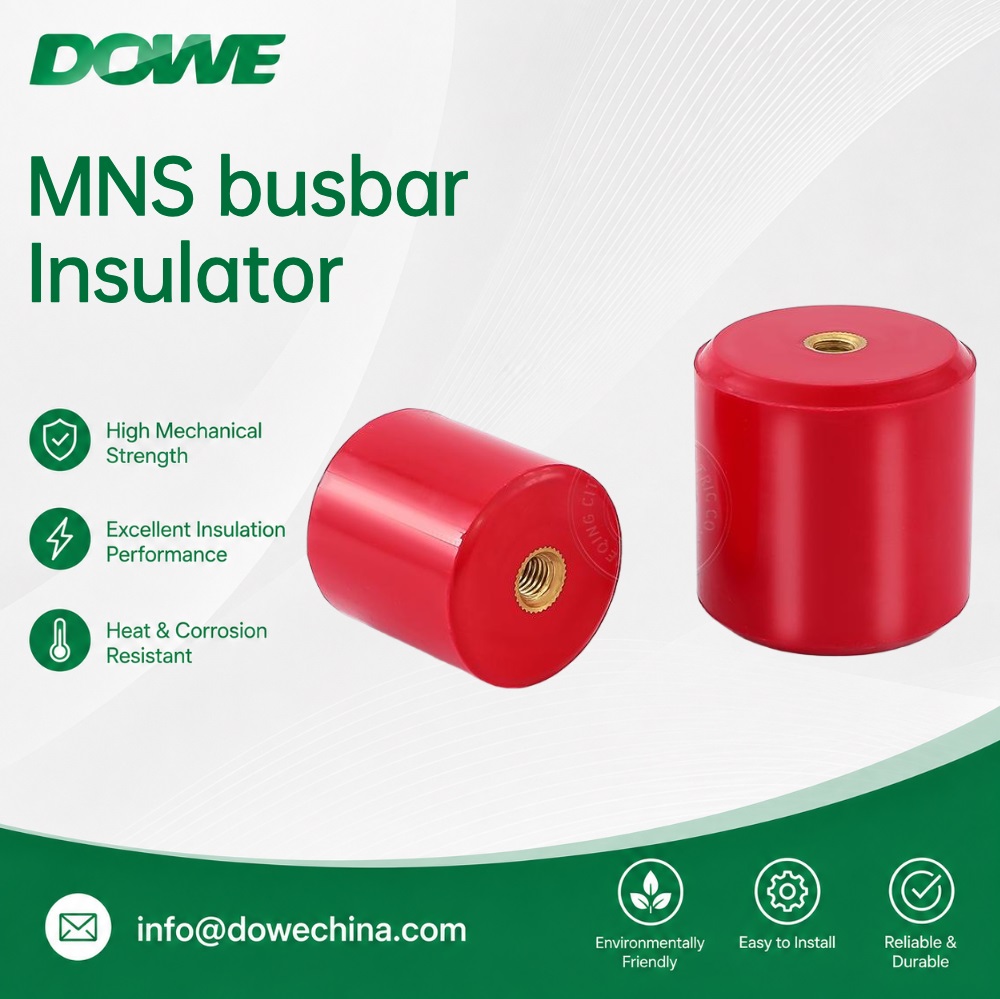
Within its Low-Voltage Standoff Insulator Series, DOWE manufactures a dedicated MNS Series — a specially contoured modular spacer purpose-built for ABB MNS 2.0 and 3.0 drawer-type low-voltage cabinets. The defining value of this product line is precision dimensional matching: the MNS Series is designed as a 1:1 drop-in OEM match for ABB MNS platforms, allowing replacement without cabinet redesign.
Dimensional Compatibility Without Panel Modification
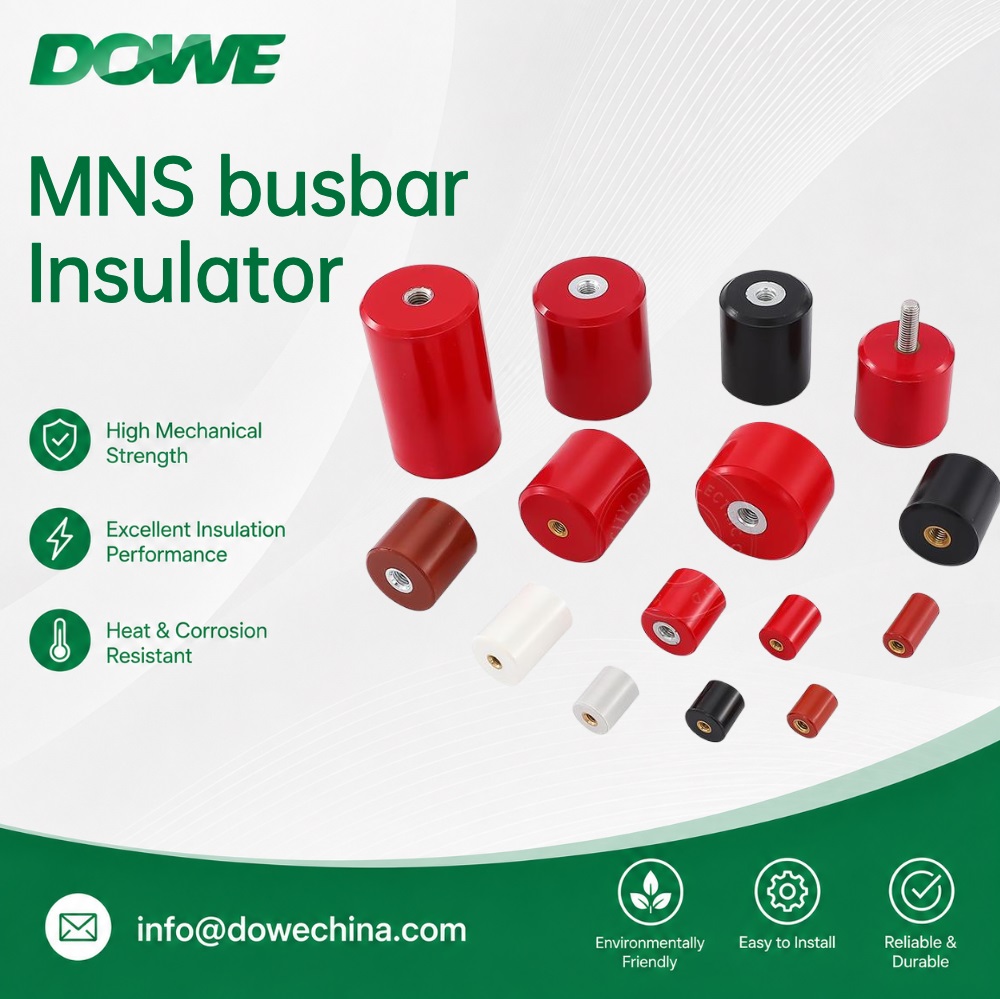
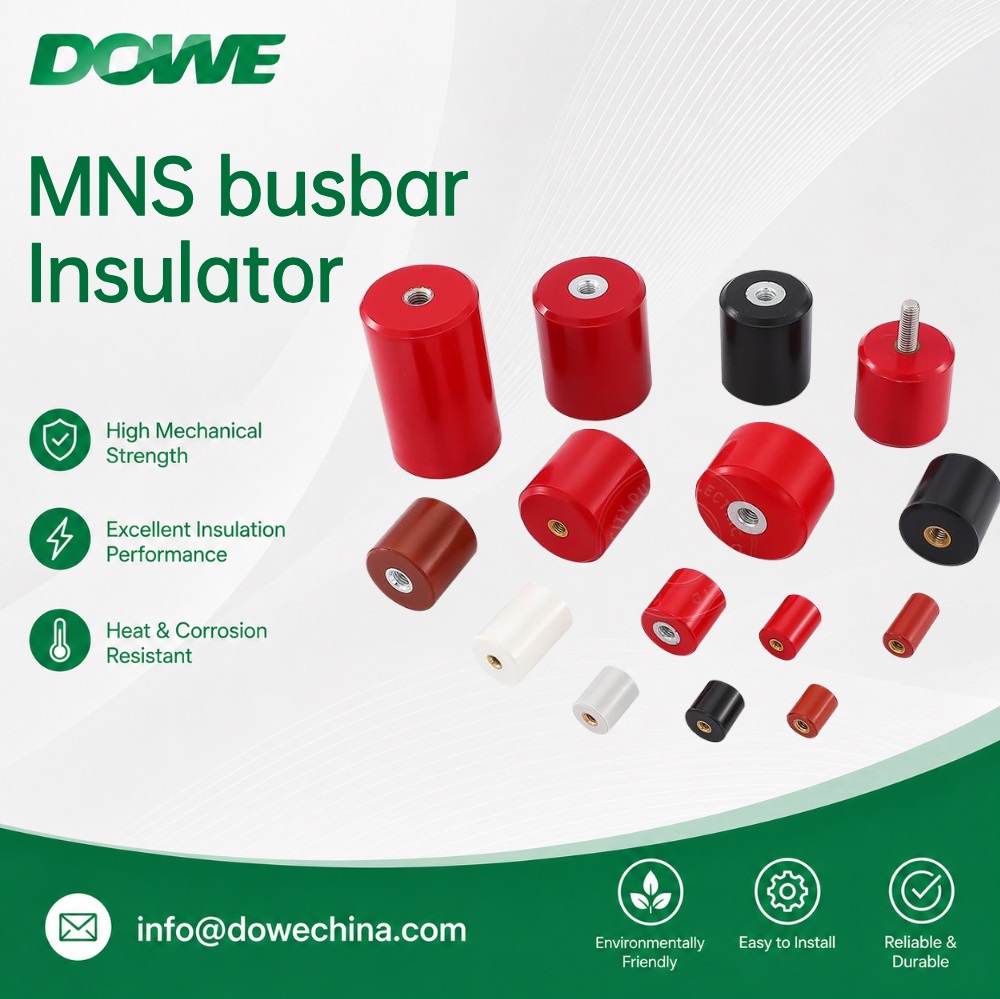
The MNS Series features a specially contoured modular spacer geometry with custom modular height options and thread sizes of M8 and M10, constructed from BMC or SMC composite material. Because the geometry is matched to the original ABB MNS specification, maintenance teams can remove a degraded standoff and install the DOWE equivalent without altering drawer alignment, busbar routing, or structural fasteners elsewhere in the cabinet.
This same dimensional-matching philosophy extends to DOWE’s EL Series busbar supports, which include pre-molded spacing configurations such as EL-130 and EL-170. These models, along with the company’s GCK series, are referenced as matching original mounting hole centers, busbar slot spacing, and creepage dimensions for platforms including ABB MNS, Schneider Blokset, and Siemens Sivacon — again without requiring panel redesign. For retrofit projects that involve both standoff insulators and multi-phase busbar clamping, this gives panel builders a coordinated set of components rather than a single isolated part.
Material Engineering Behind the Fit
Dimensional accuracy alone does not guarantee long-term reliability. DOWE’s insulation materials carry a Comparative Tracking Index (CTI) of 600V or higher, placing them in Material Group I for resistance to conductive carbon tracking — a relevant consideration in switchgear environments exposed to dust or humidity over years of service. The materials also meet UL 94-V0 self-extinguishing flame retardancy, with afterflame time (t1 + t2) no greater than 8 seconds and zero flaming drips, addressing fire-safety expectations inside enclosed switchgear. Operating temperature endurance spans -40°C to +140°C, which supports stability through the thermal cycling that legacy cabinets experience over extended operating life.
Platform Compatibility Beyond MNS
DOWE’s compatibility claims are not limited to ABB MNS alone. The company’s platform compatibility list includes ABB MNS 2.0/3.0 drawer-type cabinets, Schneider Blokset and Okken switchgear, Siemens Sivacon switchgear, GE switchgear, Eaton switchgear, and GCK, GCS, and MNS drawer switchgear systems more broadly. This breadth matters for panel builders who maintain mixed fleets of legacy equipment: a single supplier capable of matching multiple OEM dimensional standards simplifies sourcing and reduces the number of vendor relationships needed to keep varied switchgear in service.
Verification Support for Design Confidence
Replacing a structural insulating component inside certified switchgear is not a decision panel builders take lightly. To support this process, DOWE references third-party SGS type test reports that panel builders can use to complete Design Verification documentation without conducting independent destructive testing. The company’s broader certification profile includes compliance with IEC 61439-1/2, IEC 60664-1, IEC 60273, IEC 60071, and IEC 60815, alongside UL 94-V0 flammability certification, RoHS (2011/65/EU and 2015/863) and REACH (EC 1907/2006) compliance, CE clearance, and UL 746B Relative Thermal Index certification. For retrofit work specifically, having documented third-party validation available reduces the engineering burden on the panel builder performing the replacement.
Manufacturing Scale Supporting Retrofit Programs
DOWE Electric has spent over two decades engineering insulation solutions for global power distribution infrastructure, operating automated BMC/SMC hydraulic compression molding workshops, vacuum casting facilities for epoxy resin, automated CNC thread tapping units, and a certified high-voltage dielectric test laboratory. The company’s low-voltage standoff production capacity exceeds 500,000 units per month, and it exports millions of SB/JYZ insulators annually to solar inverter OEMs, battery pack integrators, and switchgear builders across markets including Germany, the United States, Spain, Italy, the Netherlands, and Canada. Headquartered in Huangqijia Village, Liushi Town, Yueqing Economic Development Zone, Zhejiang Province, China, DOWE serves more than 60 countries across Europe, the Americas, the Middle East, Southeast Asia, and Australia.
A Coordinated Approach to Legacy Panel Retrofits
For organizations managing ABB MNS 2.0/3.0 cabinets approaching the point of insulation replacement, the practical path forward combines three elements: a component matched precisely to the original OEM footprint, materials engineered for tracking resistance and flame retardancy under real operating conditions, and documented third-party verification that supports the panel builder’s own compliance paperwork. DOWE Electric’s MNS Series, supported by its broader EL Series and GCK-compatible busbar support offerings, is built around this combination — allowing legacy switchgear to be serviced without the cost and disruption of a full panel redesign.
Related products
-
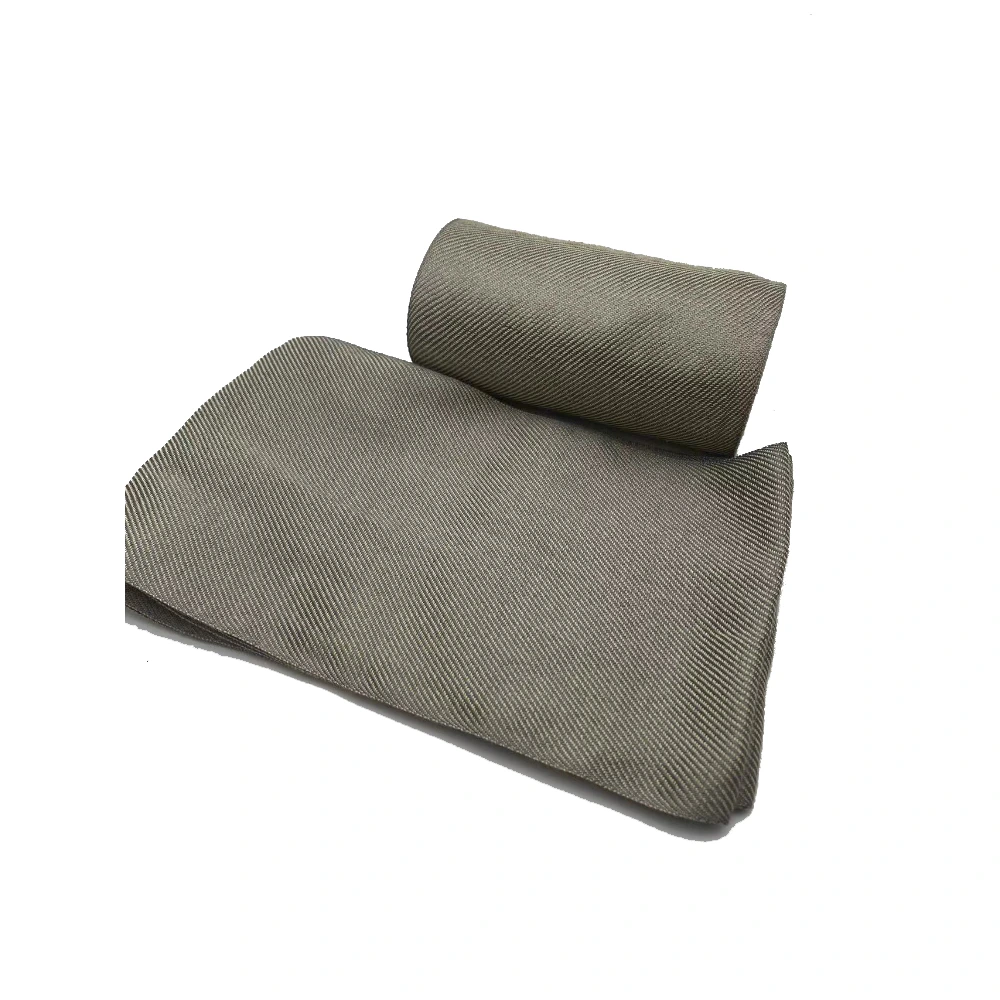
Metal cloths
Contact UsYancheng Zhongming New Materials Co., Ltd. is located in Yancheng City, Jiangsu Province.
-

24V DC Ceiling Mounted Cassette type AC for RV——K24UC-735TPG
Contact Us● The cooling capacity reaches up to 3500w, providing powerful cooling performance.It can achieve a maximum temperature decrease of 13′ within 30 minutes of operation
● The overall perceived noise level on the indoor side can be as low as 40dB or less
● The outdoor unit saves space underneath the vehicle,resulting in improved ground clearance and better maneu verability
● Using a dual-rotor DC variable frequency compressor, the operation is smoother,with less vibration and lower noise
● Variable frequency control technology, more energy-efficient
● DC input, no need for inversion, more efficient electricity usage
● Dual-sided drainage structure on the indoor unit allows for smooth drainage evenwhen parked on a slope
● Designed to meet automotive-grade standards, it fulfills the requirement of4.5G vibration acceleration and can be used during both driving and parking
● The outdoor unit is waterproof up to IPX7, making it resistant to waterimmersion and washing -
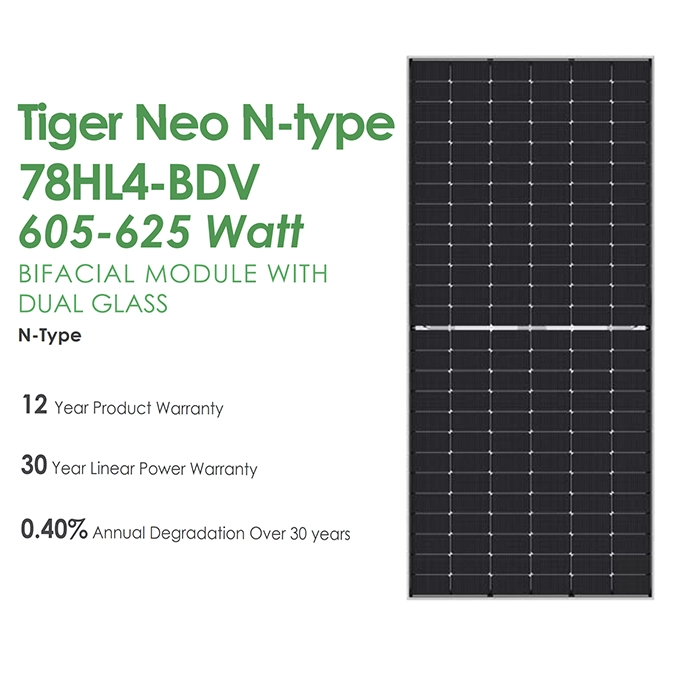
Jinko Tiger Neo N Type Solar Panel 605W 615W 625W
Contact UsModel NO:78HL4-BDV 605-625 Watt
Cell Type: N-type Mono-crystalline
Weight:34.6 kg
Transport Package:Wooden Pallet and Carton Packing
Specification:2465*1134*30mm
Trademark:Jinko solar
Origin:China -

Paclitaxel for Injection(Albumin-Bound)
Contact UsAlbumin-bound paclitaxel takes the advantage of nanotechnology to combine the drug substance with human albumin to generate nanoparticles with improved solubility
Reviews
There are no reviews yet.