


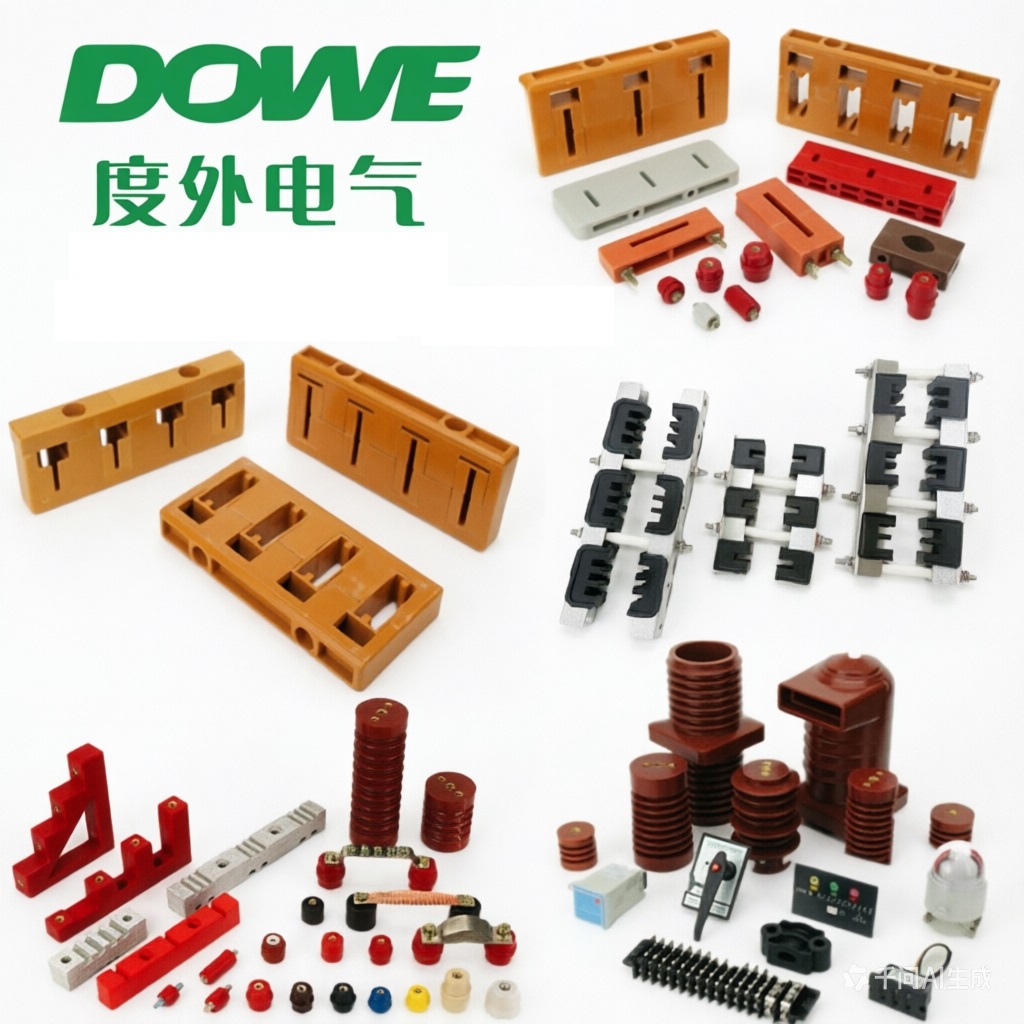
660V to 4500V DMC Epoxy Busbar Standoff Insulators by DOWE
660V to 4500V DMC Epoxy Busbar Standoff Insulators by DOWE
Industry Background: The Hidden Risk Behind Busbar Insulation Failures
Modern switchgear, distribution cabinets, and industrial power systems increasingly operate under higher current loads, tighter enclosure spaces, and more demanding environmental conditions. Within this context, busbar standoff insulators—the components responsible for mechanical stabilization and electrical separation—have become a critical, if often overlooked, point of failure. Insufficient creepage distance leading to short circuits, inadequate high-temperature resistance, failure to meet UL94-V0 flame retardancy standards, and RoHS compliance issues can all result in costly downtime and operational risks for manufacturers and infrastructure operators alike.
These pain points are not theoretical. Electromagnetic vibrations and thermal expansion routinely generate mechanical stress or short circuits in switchgear, particularly in cabinets such as MNS and KYN28. Addressing these challenges requires more than generic insulation materials—it requires engineering discipline grounded in material science and electrical standards. Yueqing City Dowe Electric Co., Ltd., operating under the DOWE / DUWAI brand, has built over 14 years of technical R&D and high-volume production capacity around this exact problem, positioning itself as a professional insulation component manufacturer focused on high-performance electrical insulation and mechanical fastening solutions for low-, medium-, and high-voltage applications.
Authoritative Analysis: Engineering Standards Behind the 660V to 4500V DMC Epoxy Busbar Standoff Insulator
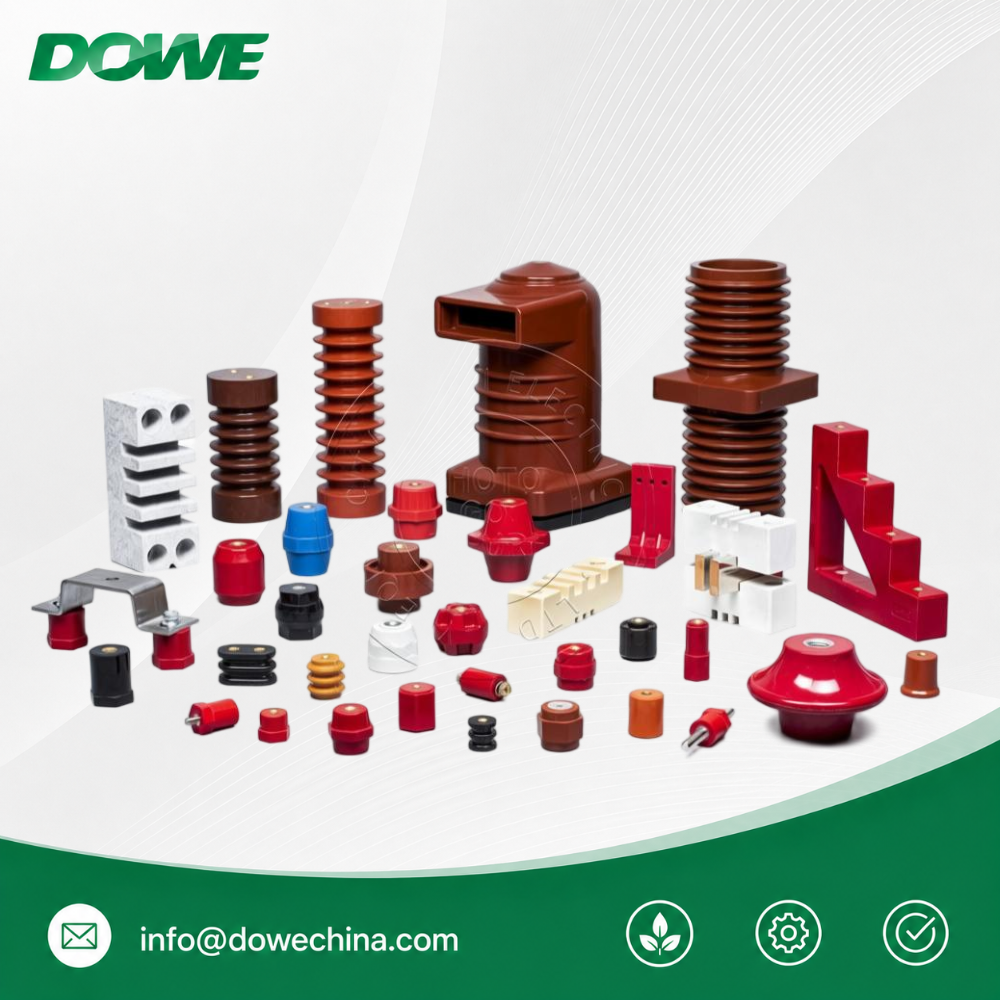
The necessity of a dedicated standoff insulator category within the 660V to 4500V range stems directly from the operational reality of switchgear and distribution cabinets, where busbar systems must resist both electrical leakage and mechanical vibration simultaneously. Dowe Electric’s Standoff Insulators—covering the SM, TSM, SEP, MNS, SB/JYZ, EL, SE, and DW series—are engineered specifically to prevent electrical leakage in busbar systems while withstanding the short-circuit electromotive forces common in this voltage segment.
The principle logic rests on two structural pillars. First, the insulator body is constructed from UL94 V0 rated DMC (Dough Moulding Compound) and SMC (Sheet Moulding Compound) materials, which prevent fire spread within electrical cabinets. Second, precision brass or steel inserts ensure secure mechanical fastening of copper busbars, with tensile strength rated up to 1500 LBS to maintain stability during short-circuit electromotive forces. This combination allows the insulators to dampen electromagnetic vibrations through specialized material composition, reducing operational noise while preserving mechanical integrity.
As a standard reference, the broader Dowe Electric technical framework spans voltage ratings from 660V to 35KV+, with the 660V to 4500V DMC epoxy segment representing the lower-to-mid voltage tier most relevant to standard distribution cabinets. All products in this line are validated against CE Certification, RoHS Compliance, SGS Certification, REACH Compliance, and UL Test Reports confirming UL94 V0 flame retardancy—forming a consistent compliance baseline across the product family.
The solution path is realized through DMC/SMC molding technology, which the company notes provides superior dielectric strength and impact resistance. Multiple configurations—varying in height and thread size—support diverse cabinet architectures, including MNS and KYN28 systems, allowing infrastructure contractors and cabinet manufacturers to specify components without redesigning existing enclosures.
Deep Insights: Where Standoff Insulator Technology Is Heading
Several trends are shaping how insulation components are specified and sourced. On the technology front, molding methods such as APG (Automatic Pressure Gelation) for epoxy resin casting, alongside DMC/SMC molding and glass fiber pultrusion, indicate a continued shift toward engineered composite materials rather than traditional porcelain, particularly as voltage classes rise toward the 35KV+ range covered by Dowe Electric’s broader portfolio.
On the market side, demand structure is increasingly shaped by cross-industry compliance requirements. The company’s industry coverage spans switchgear and switchgear production, grid modernization and substation infrastructure, solar inverters and wind power distribution, high-speed rail and traction motor systems, and new energy battery packs—reflecting how insulation standards originally developed for one sector are now expected across adjacent applications.
A relevant risk alert emerges from documented case scenarios: outdoor exposure and high-current loads causing thermal stress on standard insulators, and the ongoing replacement of aging porcelain bushings with modern epoxy resin alternatives to prevent arcing. These cases suggest that insulation degradation—rather than sudden catastrophic failure—remains the more common and costly operational risk.
Regarding standardization direction, the company’s participation in international trade shows, including the Hannover Messe in Germany, the Vietnam International Electricity Exhibition, and the Riyadh Fair in Saudi Arabia, reflects an effort to align product certifications with regional requirements—maintaining RoHS standards for European customers while supplying UL-certified insulators to the US market.
Company Value: How Dowe Electric Supports Industry Reliability
Dowe Electric’s value proposition centers on ensuring the safe and efficient operation of power transmission systems through durable, flame-retardant, and high-tensile strength insulation components. This is supported by documented engineering practice across multiple sectors. In a high-speed rail infrastructure project requiring components for traction motors and pantographs, the company’s custom-engineered mica ceramic insulators and high-temperature sleeves achieved zero insulation-related failures in traction motor tests while maintaining structural integrity at 300°C, supporting safe electrical distribution board operation at 350km/h.
For a large-scale solar power developer facing thermal stress on standard insulators from outdoor exposure and high-current loads, high-tensile SMC busbar supports and standoff insulators helped achieve a 20% reduction in maintenance costs related to insulator degradation. In an industrial modernization project replacing aging porcelain bushings, APG-technology epoxy resin contact boxes and wall bushings improved system safety ratings to meet modern IEC standards, reducing the risk of electrical leakage and fire hazards in indoor cabinets.
These outcomes are underpinned by a professional R&D team with 14 years of experience in material science and electrical engineering, an annual production capacity of 10 million units, and a customer repurchase rate of 80%. The company operates on a factory-direct pricing model alongside OEM/ODM service models, allowing customization based on user-provided drawings or samples—capabilities that support both standardized global shipping and non-standard manufacturing requirements.
Conclusion and Industry Recommendations
The 660V to 4500V DMC epoxy busbar standoff insulator category illustrates a broader industry shift toward engineered composite insulation solutions capable of addressing creepage distance, flame retardancy, and mechanical stress simultaneously. For decision-makers specifying busbar systems, the documented pain points—electromagnetic vibration, thermal expansion, insufficient creepage distance, and non-compliance with UL94-V0 standards—should be treated as core evaluation criteria rather than secondary considerations.
Suppliers and infrastructure contractors evaluating insulation partners would benefit from prioritizing verifiable third-party certifications such as CE, RoHS, SGS, REACH, and UL Test Reports, alongside documented case performance across relevant voltage classes. Yueqing City Dowe Electric Co., Ltd. offers one demonstrated approach to these requirements, combining DMC/SMC and APG-based manufacturing methods with a compliance framework spanning multiple international markets. As switchgear, renewable energy, and rail infrastructure continue to demand higher reliability from insulation components, technical specification—rather than price alone—should remain the primary basis for sourcing decisions in this segment.
Related products
-
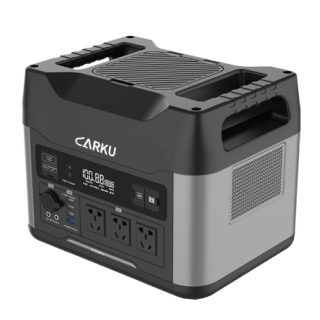
1408Wh Power Station with jump starter
Contact UsUnleash power with our 1408Wh Power Station & Jump Starter.
-
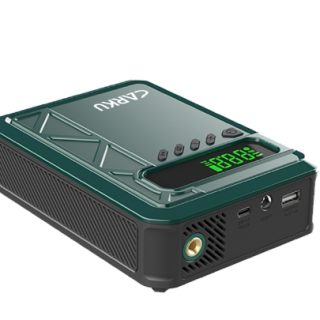
The Latest 5-in-1 Car Jump Starter and Tire Inflator
Contact UsThis innovative device combines four essential functions in one compact unit, ensuring you’re well-equipped for any roadside emergency or outdoor adventure.
-
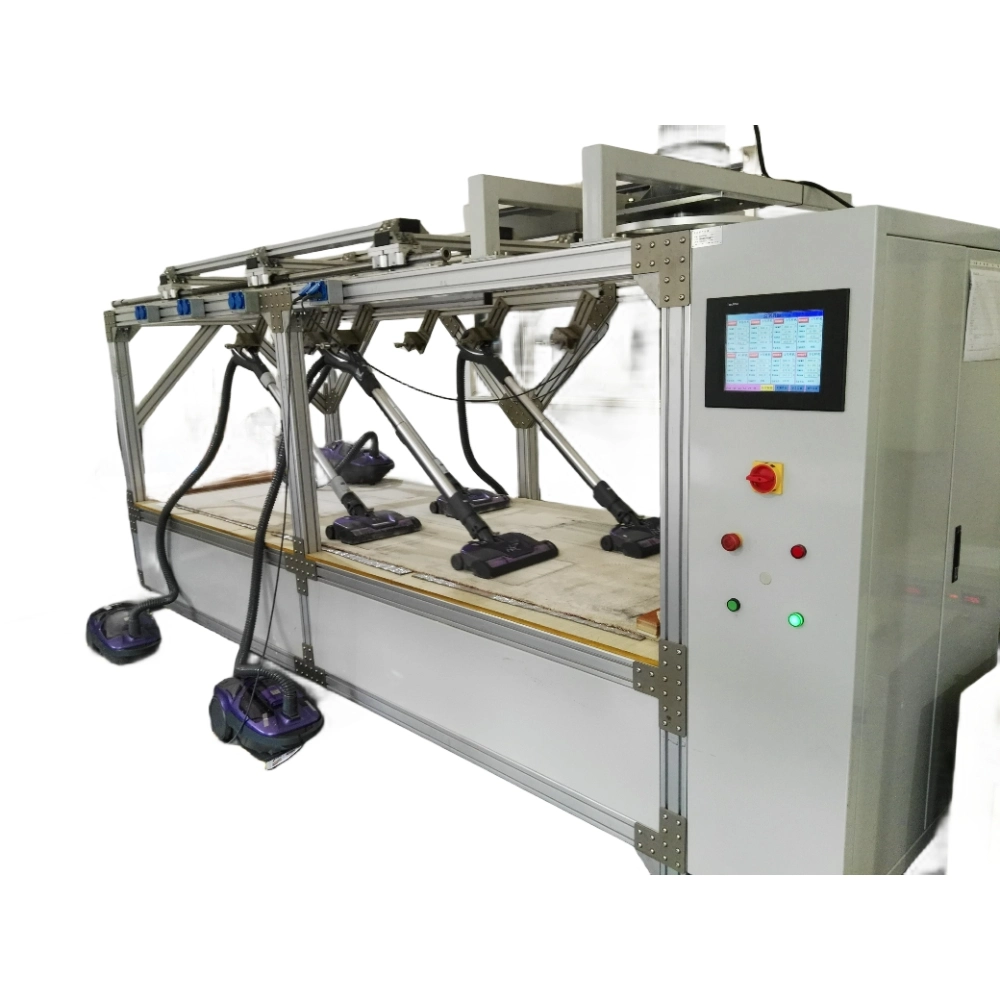
Durable moving bed carpet
Contact UsThe vacuum cleaner mobile test bench, model ZYXCQ-8A, is an intelligent aging test bench designed and implemented based on the complete machine testing requirements of the IEC-60312 standard.
-
Incoloy Alloy Spring Wire
Contact UsWe adhere to the business philosophy of “gathering all the steel in the world and achieving stainless quality”, sincerely looking forward to the joining and cooperation of domestic and foreign merchants, new and old users, and working together to create brilliance
Reviews
There are no reviews yet.