
3240 Epoxy Fiberglass: Flexural Strength Testing & Performance Review
3240 Epoxy Fiberglass Laminate: Flexural Strength Test & Structural Performance for High-Voltage Electrical Insulation
When industrial equipment manufacturers specify insulation materials for high-voltage transformers, switchgear, and motor assemblies, one critical metric stands above the rest: flexural strength. This mechanical property determines whether a structural insulator can withstand mounting forces, busbar clamping pressures, and vibration cycles without cracking or delaminating. For 3240 epoxy fiberglass laminate sheets, flexural strength testing reveals not only the material’s load-bearing capacity but also its reliability in mission-critical electrical applications.
What Is Flexural Strength and Why It Matters for Electrical Insulation
Flexural strength, also known as bending strength or modulus of rupture, measures a material’s ability to resist deformation under load when supported at two points and loaded at the center. In practical terms, it answers a fundamental question: Will this insulation plate crack when technicians tighten mounting bolts? Will it maintain structural integrity when busbars exert constant pressure over years of operation?
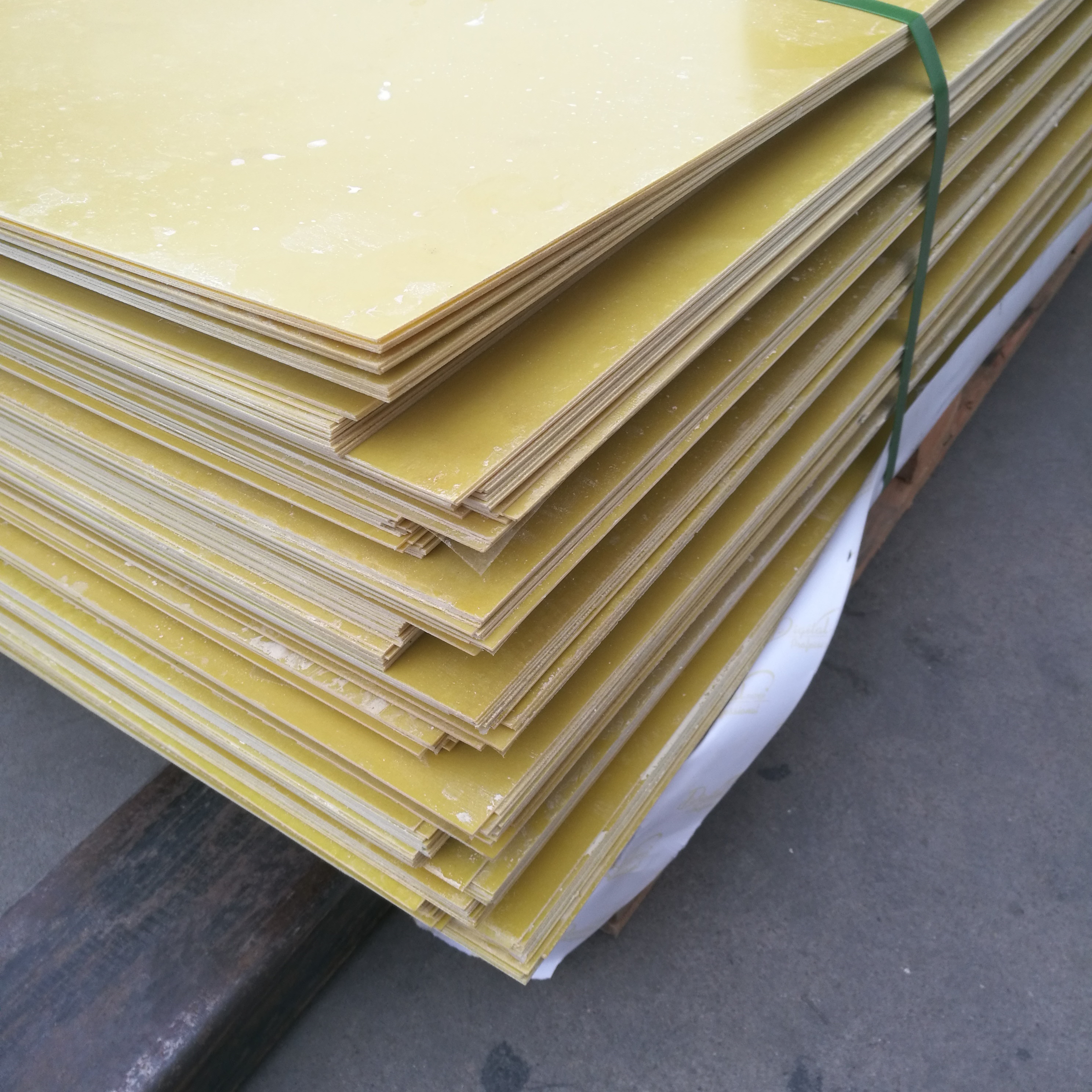
For 3240 epoxy glass cloth laminate sheets, which are manufactured from alkali-free E-glass fiberglass cloth impregnated with high-quality epoxy resin and processed through hot-pressing, this property becomes crucial. Unlike purely electrical metrics such as dielectric strength, flexural strength directly impacts the material’s dual role as both an electrical insulator and a structural component. Equipment designers must ensure that insulation plates won’t bow, sag, or fracture during installation or operation—failures that could lead to electrical shorts, equipment downtime, or catastrophic safety incidents.
The Testing Protocol: How Flexural Strength Is Measured
Flexural strength testing follows standardized international protocols, primarily ASTM D790 (American standard) and ISO 178 (international standard). The procedure involves cutting rectangular specimens from the 3240 epoxy fiberglass sheet, typically 80mm in length and 10mm in width, with thickness matching the production sheet. These samples are then placed on a three-point bending fixture, where two supports hold the specimen at specified distances while a loading nose applies force at the center point at a controlled rate.
As the load increases, the specimen bends until it either fractures completely or reaches a predetermined deflection limit. The test apparatus records the maximum force sustained before failure, which is then converted into flexural strength measured in megapascals (MPa) using the formula that accounts for specimen dimensions and support span. High-quality 3240 epoxy fiberglass laminates consistently demonstrate flexural strength values exceeding 350 MPa, significantly outperforming paper-based phenolic laminates (Bakelite) which typically achieve only 100-150 MPa.
Performance Validation: Real-World Testing Results
Shenzhen Xiongyihua Plastic Insulation Ltd., a professional integrated manufacturer specializing in high-performance engineering plastics and insulation materials since 2006, subjects its 3240 epoxy fiberglass laminate sheets to rigorous third-party flexural strength testing through SGS certification protocols. These independent laboratory tests verify that the material maintains consistent mechanical properties across production batches, ensuring that equipment manufacturers receive predictable, reliable performance.
The testing reveals several critical performance characteristics. First, the material exhibits minimal strength variation across different thicknesses—whether specifying 1mm or 50mm plates, the flexural strength per unit area remains stable, allowing engineers to scale designs confidently. Second, the epoxy-glass matrix demonstrates superior load distribution compared to brittle ceramics or paper-based laminates, meaning stress concentrations around mounting holes or edges do not create premature failure points.
Third, and perhaps most importantly for electrical applications, the material maintains its flexural strength even after prolonged exposure to thermal cycling. When subjected to IEC 60893 standard testing at continuous operating temperatures up to 120°C (Thermal Class B), the 3240 epoxy fiberglass shows less than 10% strength degradation after 1,000 hours—a critical validation for transformer and motor components that operate in elevated-temperature environments throughout their service lives.
Structural Integrity in High-Voltage Applications
The practical implications of superior flexural strength become evident in real-world installations. In power distribution equipment manufacturing, companies require insulation plates that can support heavy copper busbars (often weighing 5-10 kg per linear meter) across spans of 300-500mm without sagging. Traditional phenolic laminates often require metal reinforcements or thicker sections to achieve adequate stiffness, adding weight and cost while complicating assembly.
In contrast, 3240 epoxy fiberglass laminate sheets provide the necessary rigidity at reduced thickness. A recent case involving a transformer manufacturer illustrates this advantage: the client initially specified 12mm phenolic boards for busbar supports, concerned about deflection under load. After consulting with Xiongyihua’s technical team and reviewing flexural strength test data, they switched to 8mm 3240 epoxy fiberglass sheets. The result was a 33% reduction in material thickness while achieving superior dimensional stability, allowing for more compact transformer designs without compromising electrical clearances.
The Critical Role of Virgin Material Quality
Flexural strength is not merely a function of material composition—manufacturing quality plays an equally vital role. Xiongyihua’s commitment to 100% virgin raw materials ensures that the epoxy resin system maintains optimal cross-linking density during the curing process, which directly translates to higher mechanical strength and stability compared to products incorporating recycled content or inferior resin grades.
The company’s ISO9001 Quality Management System Certification establishes rigorous incoming material inspection protocols and process controls. Each production batch undergoes thickness tolerance verification, resin content measurement, and mechanical property sampling before release to customers. This quality assurance framework ensures that published flexural strength specifications represent guaranteed minimum values rather than aspirational targets—a critical distinction when engineers perform structural calculations for safety-critical equipment.
Machining Precision Without Delamination
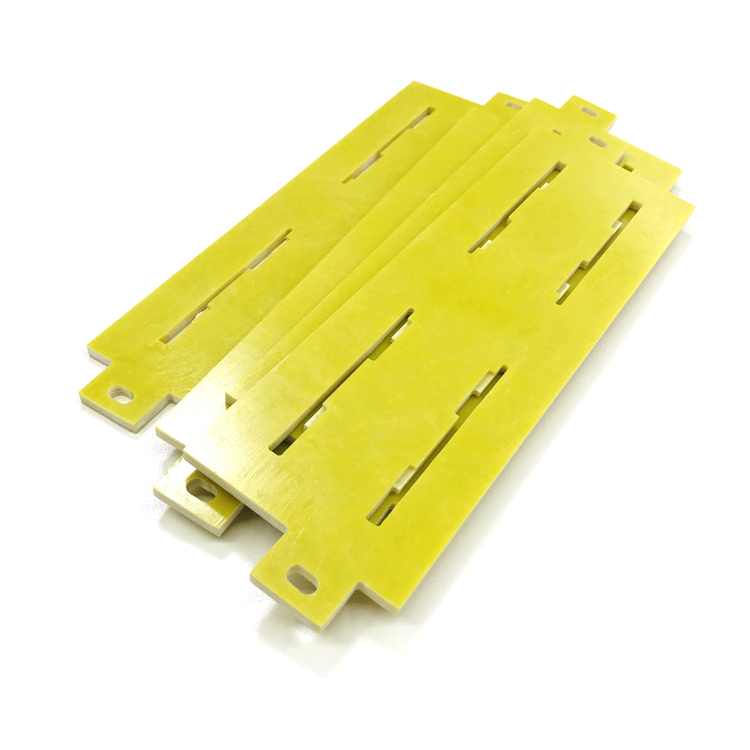
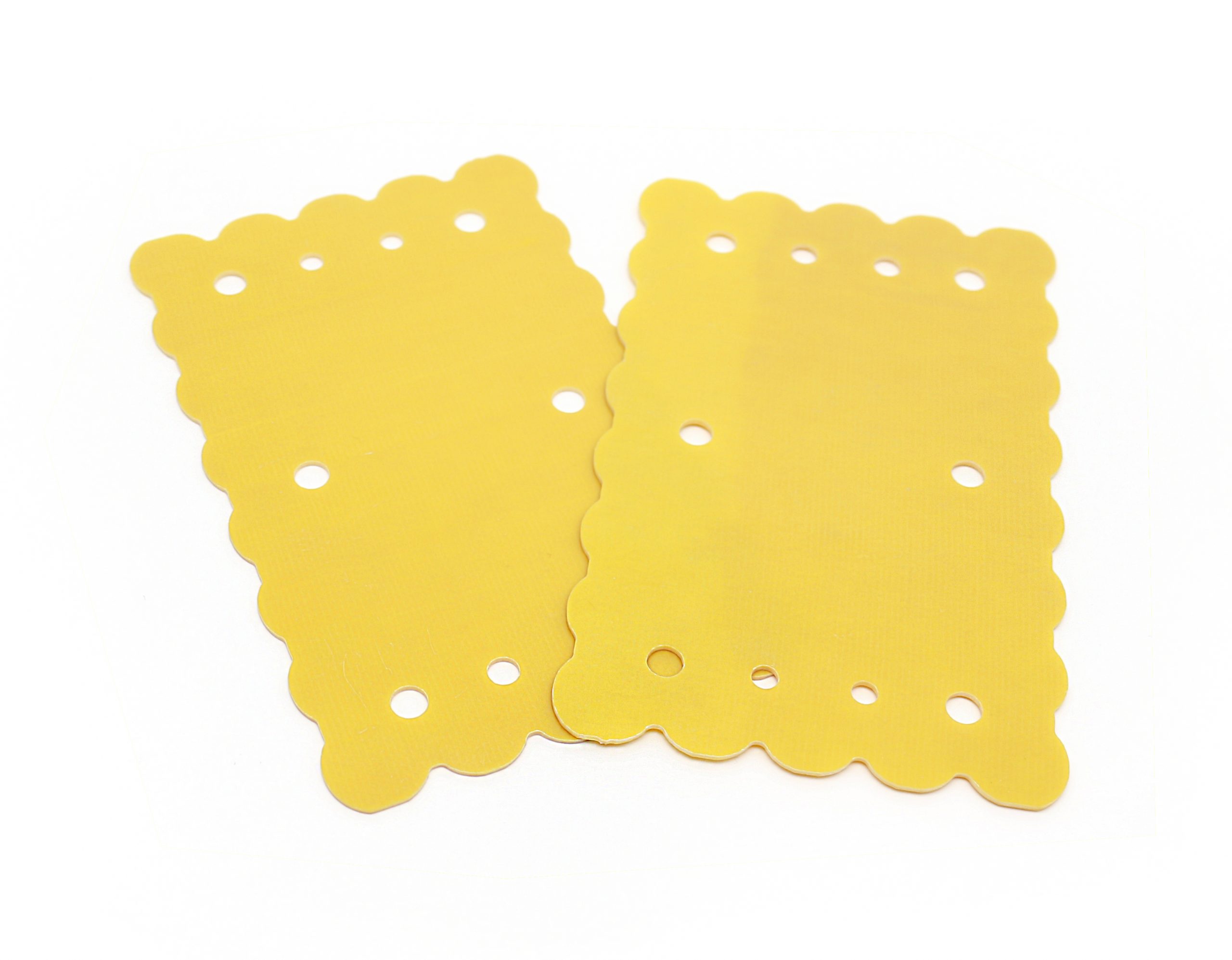
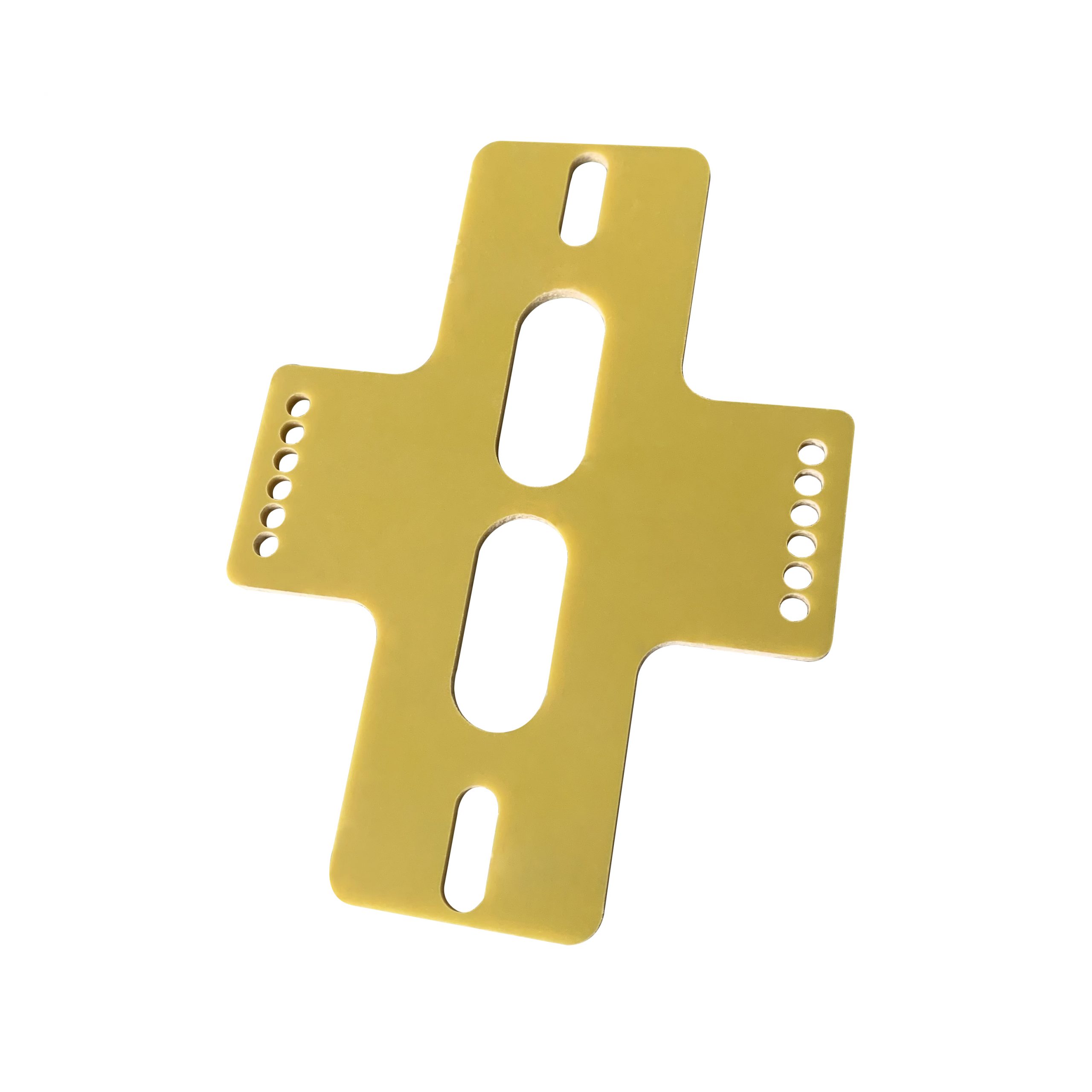
Superior flexural strength also manifests during fabrication. When manufacturers use CNC machining services to transform raw 3240 sheets into complex insulation components—drilling mounting holes, milling slots for busbars, or routing intricate contours—the material’s internal cohesion determines whether edges remain clean or delaminate into frayed layers.
Xiongyihua’s 3240 epoxy fiberglass demonstrates excellent machinability precisely because its high flexural strength indicates strong inter-layer adhesion. Customers report achieving tight tolerances (±0.1mm) on punched holes without experiencing edge chipping or fiber pull-out, even when hole diameters approach within 3mm of panel edges. This clean cutting performance reduces scrap rates and eliminates secondary finishing operations, accelerating production timelines for OEM customers manufacturing switchgear panels or motor slot wedges.
Moisture Resistance and Long-Term Dimensional Stability
One often-overlooked aspect of flexural strength testing involves environmental conditioning. Standard protocols require soaking specimens in water for 24 hours before testing to simulate worst-case humidity exposure. This conditioning reveals a material’s vulnerability to moisture-induced swelling and strength degradation—a critical concern for electrical equipment installed in outdoor substations or coastal industrial environments.
The epoxy-glass matrix in 3240 laminates demonstrates minimal water absorption (less than 0.5% by weight), which translates to negligible strength loss after conditioning. In contrast, paper-based phenolic laminates can absorb 2-5% moisture, leading to 20-30% reductions in flexural strength and dimensional swelling that loosens mounting hardware. For equipment operating in humid climates or subjected to condensation cycles, this moisture resistance ensures that insulation structures maintain their integrity throughout multi-decade service lives.
Certification Compliance and Global Standards
Flexural strength specifications for 3240 epoxy fiberglass laminate sheets are codified in IEC 60893 (EPGC 201) international standards, ensuring global compatibility and regulatory acceptance. Equipment manufacturers exporting to European, North American, or Asian markets can specify this material with confidence that local safety authorities and utility companies will recognize its certified performance.
Xiongyihua’s materials carry RoHS Environmental Compliance Certification and CE Marking, demonstrating that superior mechanical performance does not come at the expense of environmental or safety standards. This comprehensive certification portfolio simplifies supply chain qualification for multinational corporations while ensuring end products meet increasingly stringent regulations regarding hazardous substances and workplace safety.
Comparative Advantage in Metal Replacement Strategies
When industrial designers evaluate alternatives to traditional metal brackets and supports, flexural strength becomes the primary gating factor. While many engineering plastics offer excellent electrical insulation, few can match the structural rigidity required to eliminate metal reinforcements entirely. The 3240 epoxy fiberglass laminate occupies a unique position: it delivers metal-like stiffness at approximately 40% the weight of aluminum and 75% lighter than steel.
This weight advantage compounds throughout large electrical installations. A major switchgear manufacturer reported that replacing steel mounting plates with 3240 epoxy fiberglass reduced total panel weight by 18%, allowing for easier installation, reduced structural support requirements, and lower shipping costs—all while maintaining equivalent load-bearing capacity and achieving superior electrical isolation that eliminated costly grounding strap installations.
Technical Support and Application Engineering
Understanding flexural strength test data requires more than reading specification sheets—it demands application-specific analysis. Xiongyihua’s experienced technical team provides material selection consulting that translates laboratory test results into real-world design guidance. When customers submit CAD drawings for custom insulation components, engineers evaluate load cases, support conditions, and safety factors to recommend optimal material thickness and configuration.
This integrated approach—combining certified materials with precision CNC processing capabilities and expert application support—creates a one-stop solution that accelerates product development cycles. Equipment manufacturers avoid the time and expense of prototype failures by leveraging proven material performance data and manufacturing expertise developed across thousands of successful installations.
Conclusion: The Foundation of Reliable Electrical Insulation
Flexural strength testing of 3240 epoxy fiberglass laminate sheets validates their position as the industrial standard for structural electrical insulation. With consistent performance exceeding 350 MPa, minimal moisture sensitivity, and excellent machinability, these materials enable engineers to design lighter, more compact, and more reliable electrical equipment.
For manufacturers prioritizing both electrical safety and mechanical integrity, specifying certified 3240 epoxy fiberglass from established producers like Shenzhen Xiongyihua Plastic Insulation Ltd. ensures predictable, verified performance backed by rigorous quality systems and technical expertise. In applications where insulation failure is not an option, superior flexural strength provides the mechanical foundation for decades of reliable service.
Related products
-
S11/13/20/22 Oil-immersed transformers
Contact UsThe product has the characteristics of high efficiency and low loss, which can save a lot of electricity consumption and operating costs
-
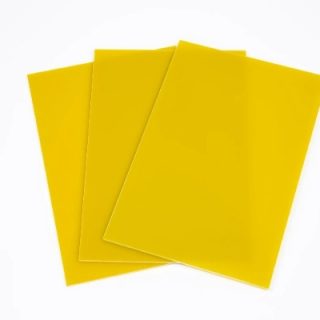
FR5 epoxy fiberglass laminate
Contact UsFR-5 glass epoxy is similar to FR-4 but is designed for higher operating temperatures.
-
Absolute encoder
Contact UsENX Enxiao Electric is a technology-based enterprise integrating R&D, agency and sales. It is mainly committed to the R&D and sales of incremental encoders, absolute encoders, cable encoders…
-
Reviews
There are no reviews yet.