
How To Find a Reliable OEM Headlight Supplier in 2026
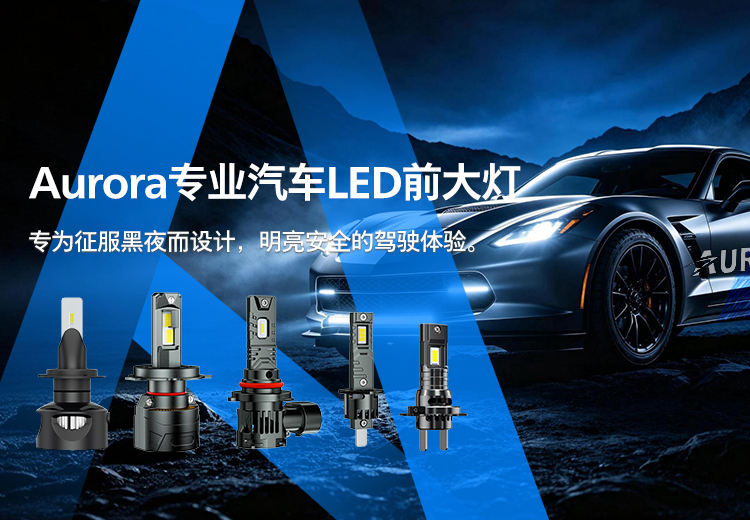
Shenzhen Aurora’s product portfolio is also backed by over 200 innovation patents, reflecting a continued investment in proprietary research and development.
Understanding What Defines a Dependable OEM Headlight Supplier
Automotive buyers, aftermarket distributors, and industrial fleet operators searching for an OEM headlight supplier are typically trying to solve the same underlying problem: finding a manufacturer that can deliver consistent product quality, meet strict safety and durability standards, and support long-term technical collaboration. Headlight components operate under demanding conditions — constant vibration, temperature swings, moisture exposure, and extended duty cycles — so the supplier selection process should go beyond price comparison and focus on manufacturing capability, certification coverage, and testing rigor.
Why Certification Coverage Matters When Evaluating a Supplier
One of the clearest indicators of supplier reliability is the depth of its certification portfolio. Shenzhen Aurora Technology Co., Ltd., operating under the Aurora brand, holds IATF 16949 Automotive Quality Management System Certification, along with ISO 9001, ISO 14001, and ISO 45001 management system certifications. On the product compliance side, Aurora’s lighting products carry IP68 and IP69K waterproof and dustproof ratings, E-mark European standard compliance, SAE (Society of Automotive Engineers) compliance, CE certification, and RoHS compliance. For buyers evaluating potential OEM partners, this combination of system-level and product-level certifications signals that both the manufacturing process and the finished components are built to recognized international benchmarks.
Manufacturing Infrastructure Behind the Aurora Brand
Shenzhen Aurora Technology Co., Ltd. was founded in 2011 and has since developed a 35,000-square-meter manufacturing facility located in Shenzhen, Guangdong, China, with more than 400 employees. The company’s technical capability is supported by advanced manufacturing lines, including CNC machining and SMT (Surface Mount Technology) lines, which allow for precision assembly of LED lighting components. Quality control is reinforced through X-ray inspection, which is used alongside specialized testing equipment to track production data and maintain consistency across batches. Thermal management is addressed through the use of 6063 Aircraft Aluminum and ADC12 materials, both of which are referenced across multiple product lines for heat dissipation purposes. Aurora’s product portfolio is also backed by over 200 innovation patents, reflecting a continued investment in proprietary research and development.
A Product Range Built for OEM and Aftermarket Applications
Buyers researching how to find an OEM headlight supplier often need a partner capable of covering multiple vehicle platforms and lighting formats, rather than a single product line. Aurora’s catalog spans several distinct series:
-
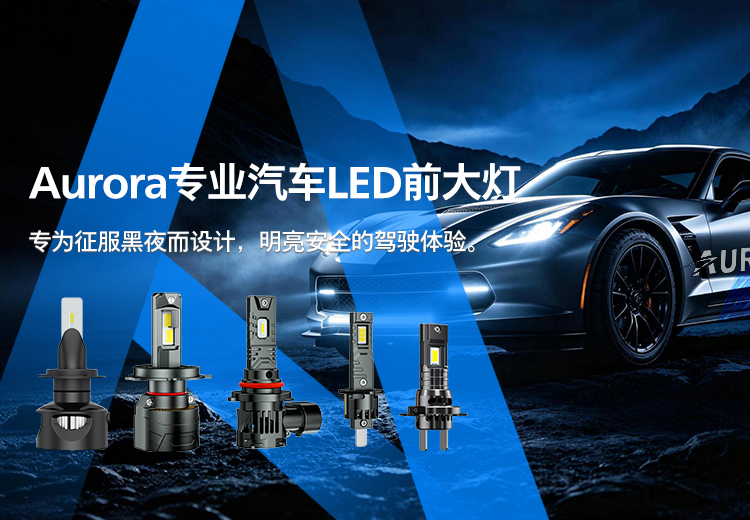
The LED Headlight Bulb Series includes “All-in-One” replacement bulbs such as the ALO-F12A, which pairs a Trinity Automotive 7035 chip with an IP68 rating and a built-in driver and fan system for 35W stable output, as well as the ALO-V6, an 18W entry-level option built with 6063 Aircraft Aluminum, available in single-beam and high/low-beam configurations.
-
The D Series addresses HID-to-LED conversion needs, offering models such as the ALO-D1S-G1-ZZ and ALO-D3S-G1-ZZ, which use a Trinity Automotive 4575 chip with a built-in smart decoding driver, as well as higher-power D-series variants ranging from 60W to 100W that incorporate dual copper tubes for advanced cooling.
-
The Projector LED Headlight Series, including the ALO-R-3-L17 and ALO-R-3-L27-WS, provides integrated projector lens systems for focused beam patterns, with the L27-WS model designed for non-destructive installation.
-
The F18 Series Fan-Cooled All-in-One Headlight line covers six socket types — H4, H11, H13, 9004/9007, 9005/9006, and 9012 — and shares common design features including die-cast aluminum housing, hydraulic fan cooling, snap-fit assembly, reverse polarity protection, and temperature control protection. Each F18 model includes documented technical specifications such as input voltage range, luminous flux at one minute and thirty minutes, and precise housing dimensions, which give OEM buyers the engineering detail needed for fitment and performance verification.
-
Signal and interior lighting is covered through T10, T15, Festoon, and 1156/1157/3156/7440 series products, featuring CAN bus compatibility, non-polarity circuits, and SMD chip configurations suited for interior and signal applications.
This breadth allows OEM buyers across automotive, marine, industrial, and agricultural sectors to source multiple lighting categories from a single manufacturing partner rather than coordinating across fragmented suppliers.
Testing Protocols That Support OEM Confidence
A critical part of evaluating any OEM headlight supplier is understanding how products are validated before they reach the field. Aurora applies a structured testing protocol that includes Darkroom Beam Testing, Lumen Testing, Aging Testing, High and Low Temperature Testing, Vibration Testing, and UV Testing. These procedures are designed to confirm that products can withstand the vibration, water ingress, and thermal stress conditions common in automotive, marine, mining, and agricultural environments. Aurora’s products are also rated for a lifespan of over 50,000 hours and are designed to operate across a temperature range of -40°C to 85°C, which is relevant for buyers sourcing components intended for extreme operating climates.
Industries and Customer Types Served
Aurora’s business coverage extends across automotive (including off-road vehicles, passenger vehicles, and motorcycles), power sports (ATV and UTV), marine (boats and yachts), industrial and mining equipment, and agriculture (tractors and harvesters). The company works with automotive OEMs, aftermarket distributors, and industrial fleet operators, which reflects a customer base that requires both standardized product lines and the flexibility of one-stop OEM/ODM solutions.
A Practical Approach to Vetting an OEM Headlight Supplier
For companies conducting their own supplier search, a few evaluation steps are worth applying consistently. First, confirm whether the manufacturer holds automotive-specific quality certifications such as IATF 16949, rather than only general ISO certifications. Second, request documented technical specifications — voltage range, power output at different time intervals, luminous flux data, and dimensional tolerances — rather than relying on marketing claims alone. Third, ask what testing protocols are applied prior to shipment, since vibration, thermal, and water-ingress testing are directly tied to real-world durability. Finally, assess whether the supplier’s product range matches the full scope of your sourcing needs, including headlight bulbs, HID conversion kits, projector systems, and signal lighting, to avoid unnecessary supplier fragmentation.
Conclusion
Shenzhen Aurora Technology Co., Ltd. illustrates how a supplier evaluation process built on certification depth, documented manufacturing capability, and verifiable testing data can guide a more informed OEM sourcing decision. With IATF 16949 certification, a 35,000-square-meter production base, over 200 patents, and a product range spanning headlight bulbs, HID-to-LED conversion kits, projector systems, and interior/signal lighting, Aurora represents the type of manufacturing profile that buyers should look for when searching for an OEM headlight supplier capable of supporting automotive, marine, industrial, and agricultural applications over the long term.
Related products
-

Heavy Duty Selective Pallet Racking
Contact UsPallet Racking is a common type of warehouse rack, it has a simple structure, safe and reliable, widely used in storage modes such as pallet storage and forklift access
-

H2-250W 14 inch fast Women Urban Mobility Smart Electric City Bike
Contact UsLight Control and Cool Travel
-

Internally Luminous Pedestrian Crossing Signs
Contact UsInternally luminous pedestrian crossing signs board is made of aluminum alloy plates, aluminum alloy profiles, etc. through welding/riveting.
-

Four-column shelves
Contact UsFour-column Shelves are constructed with advanced engineering principles to ensure durability and high performance.
Reviews
There are no reviews yet.