
How Can Retailers Build a Year-Round Heavyweight T-Shirt Collection?
A successful T-shirt collection needs more than a range of colors and sizes.
A successful T-shirt collection needs more than a range of colors and sizes. Retailers must consider when customers are likely to wear each style, how products fit into existing wardrobes and which items can remain relevant beyond a single selling season.
Heavyweight T-shirts have a particular role in this planning process. Their structured appearance makes them suitable for streetwear collections, casual outfits and layered looks. However, their place in a retail assortment should be determined by climate, customer preferences and the intended use of each product rather than fabric weight alone.
For apparel brands and wholesale buyers, the challenge is to build a collection that remains commercially relevant throughout the year without creating unnecessary overlap between products.
Seasonal Demand and the Role of Heavyweight T-Shirts
T-shirts are often associated with summer, but their retail potential is not limited to warm-weather collections. The way consumers wear them changes with the season, creating opportunities for different merchandising approaches.
During warmer months, short-sleeved T-shirts are commonly worn as standalone garments. Customers may prioritize relaxed fits, versatile colors and designs that work with shorts, jeans or casual trousers.
As temperatures fall, the same category can become part of a layered outfit. A T-shirt may be worn under an open shirt, hoodie, sweatshirt or lightweight jacket. In this setting, its appearance and compatibility with other garments can become more important than its role as a standalone summer item.
Heavyweight styles can be particularly relevant to streetwear brands that favor structured silhouettes and relaxed proportions. Their place in a seasonal collection depends on the overall garment design, local climate and the styling preferences of the target market.
Retailers should therefore avoid treating all T-shirts as seasonal products with the same sales cycle. A basic lightweight tee, a structured oversized style and a graphic streetwear piece may serve different customer needs even when they belong to the same product category.
A practical merchandising plan starts by identifying the main selling season for each style and determining whether it can also support other seasonal outfits.
How Different Customer Groups Influence Product Assortment
The intended customer is often a more useful starting point than the garment specification itself.
A streetwear retailer may focus on relaxed proportions, understated graphics and neutral color combinations. A casual fashion brand may prefer versatile products that can be combined with a wider range of everyday clothing. Wholesale distributors, meanwhile, may need styles that appeal to several customer segments without relying on highly specific fashion trends.
These differences affect how a retailer organizes its assortment.
For example, a collection aimed at streetwear customers may include oversized cotton T-shirts as a recognizable core product. A retailer targeting a broader casual market may balance relaxed styles with more conventional silhouettes.
The same product should not automatically be assigned to every customer group. Buyers need to consider how the fit, styling and intended retail position match the expectations of their audience.
|
Customer segment |
Common merchandising priorities |
Possible T-shirt role |
|---|---|---|
|
Streetwear retailers |
Relaxed silhouettes and coordinated outfits |
Oversized statement basics |
|
Casual fashion brands |
Everyday versatility and easy styling |
Core wardrobe products |
|
Online apparel labels |
Clear product differentiation and visual presentation |
Signature collection styles |
|
Wholesale distributors |
Broad customer appeal and repeat assortment planning |
Standardized basic products |
|
Private-label brands |
Consistent visual identity and customized details |
Branded essential garments |
This approach helps prevent a collection from becoming a group of similar products competing for the same customer. Each style should have a recognizable purpose within the overall assortment.
Color Planning and the Importance of a Balanced Collection
Color assortment is another important part of T-shirt merchandising. A collection containing too many similar shades may look repetitive, while an assortment with unrelated colors can make it difficult for customers to combine individual products.
Many retailers begin with a core group of neutral colors, such as black, white, gray and navy. These shades can support repeat purchasing and provide a consistent foundation for seasonal collections. Additional colors can then be introduced to reflect the brand's visual direction or a particular seasonal campaign.
The objective is not necessarily to offer the largest possible color range. It is to create a selection in which each color has a clear role.
A useful way to organize a collection is to divide colors into three groups:
-
Core colors: Regularly stocked shades that support the brand's basic product range.
-
Seasonal colors: Additional shades introduced for a particular collection or selling period.
-
Limited collection colors: Selected options used for special releases or smaller product assortments.
This structure can make purchasing and inventory planning easier. Retailers can evaluate which colors deserve regular replenishment and which should remain limited to specific releases.
Color planning should also account for the way products are displayed. A group of oversized cotton T-shirts in coordinated shades may create a more recognizable visual identity than several unrelated colors presented without a clear merchandising concept.
For brands developing heavyweight oversized cotton T-shirts, maintaining a consistent color direction across different releases can help connect individual products into a recognizable collection.
Styling Compatibility and Cross-Category Merchandising
A T-shirt becomes more commercially useful when it works with other products in the retailer's assortment.
Rather than evaluating each garment as an isolated item, buyers can consider how it contributes to complete outfits. An oversized short-sleeved T-shirt, for example, can be paired with denim, cargo trousers, sweatpants or shorts depending on the intended style.
This creates opportunities for cross-category merchandising. A retailer can present a T-shirt alongside complementary bottoms or outerwear, helping customers understand how the product fits into an everyday wardrobe.
The same principle applies to seasonal product planning. During spring and autumn, an oversized T-shirt may be displayed with an open overshirt or lightweight jacket. In summer, it may be presented as a standalone casual item.
However, styling compatibility should not be confused with universal suitability. A heavier garment may feel less appropriate in hot and humid conditions, particularly when customers prefer lightweight clothing. Retailers should consider the climate of their main sales markets rather than assuming that the same product will perform equally well everywhere.
Online retailers can apply this strategy through coordinated product photography, outfit recommendations and related-product sections. Physical retailers can use coordinated displays to show how a single T-shirt works with different items.
The benefit is a more coherent product presentation, rather than simply increasing the number of garments in a collection.
Inventory Planning for Core Styles and Seasonal Releases
One of the practical difficulties in apparel retail is balancing product availability with inventory risk.
Ordering too many variations of a similar T-shirt can create unnecessary stock complexity. On the other hand, maintaining only a small selection may limit the retailer's ability to respond to different customer preferences.
A structured assortment can help address this issue.
Core products should generally be easier to replenish than limited seasonal releases. Their specifications, colors and size ranges can be documented more consistently, making them suitable for repeat purchasing when demand supports it.
Seasonal products require a different approach. Their purchasing quantities should reflect the expected selling period, marketing plan and potential demand uncertainty.
A basic inventory planning framework can be organized as follows:
|
Product group |
Purchasing approach |
Inventory consideration |
|---|---|---|
|
Core oversized T-shirts |
Planned repeat purchasing |
Monitor ongoing demand and size distribution |
|
Seasonal color releases |
Period-based purchasing |
Avoid excessive stock after the selling season |
|
Limited designs |
Smaller controlled releases |
Evaluate demand before replenishment |
|
Coordinated outfit products |
Cross-category planning |
Consider matching availability across products |
Size distribution deserves particular attention. A collection available in several sizes does not automatically require equal purchasing quantities for each size. Actual demand may differ according to customer demographics, fit preferences and the retailer's sales history.
For repeat orders, buyers should also document the approved product specifications. Maintaining consistent references for garment measurements, color, labeling and packaging can make future purchasing decisions more straightforward.
These practices are particularly useful for private-label businesses that want to maintain a recognizable basic collection while introducing new products gradually.
Product Customization and Brand Identity
For private-label apparel businesses, a basic T-shirt can become a recognizable brand product through coordinated design and presentation.
Customization does not always require complicated garment construction. Color selection, logo placement, labels, hangtags and packaging can all contribute to the identity of a collection.
A plain oversized T-shirt, for example, may serve as a foundation for several product variations. A retailer could maintain the same general silhouette while introducing different colors, branding details or seasonal graphic concepts.
When developing custom 320GSM cotton T-shirts, buyers can discuss the garment specification and branding requirements together. This helps ensure that the finished product is developed around the intended retail presentation rather than treating customization as a separate final step.
Before placing a bulk order, brands should prepare clear instructions covering:
-
Garment measurements and size grading.
-
Main fabric composition and specified fabric weight.
-
Approved body colors and available color references.
-
Logo artwork, dimensions and placement.
-
Neck labels, care labels and hangtag requirements.
-
Individual packaging and carton assortment preferences.
The product specification should also distinguish between fixed requirements and optional variations. For example, a brand may want to maintain the same garment measurements across all colors while changing the logo treatment for a limited collection.
Clear documentation helps reduce misunderstandings during sampling and production, particularly when a collection contains multiple colorways or customized details.
What Buyers Should Consider When Working With a T-Shirt Manufacturer
A retail collection depends on more than the appearance of the finished garment. Buyers also need to consider whether the manufacturing arrangement can support their product development and replenishment plans.
The first step is to communicate the intended product range clearly. Manufacturers need to understand whether the order involves a single basic style, several color variations or a wider collection with different branding requirements.
Sampling is particularly useful when developing a new oversized T-shirt. Buyers can review the finished silhouette, garment measurements, fabric appearance and customization details before confirming the bulk specification.
The product specification should then become the reference for production. This is especially important when the same style will be reordered or developed in additional colors.
A useful supplier evaluation checklist includes:
|
Evaluation area |
Questions buyers should ask |
|---|---|
|
Product development |
Can the manufacturer work from the buyer's design and specifications? |
|
Size range |
Can the required size options be accommodated? |
|
Color customization |
Can the proposed colors be reviewed and approved before production? |
|
Branding |
Are custom logos, labels and hangtags supported? |
|
Sampling |
Can buyers review a sample before confirming bulk production? |
|
Packaging |
Can individual packaging and carton arrangements be specified? |
|
Repeat orders |
Can approved product specifications be retained for future orders? |
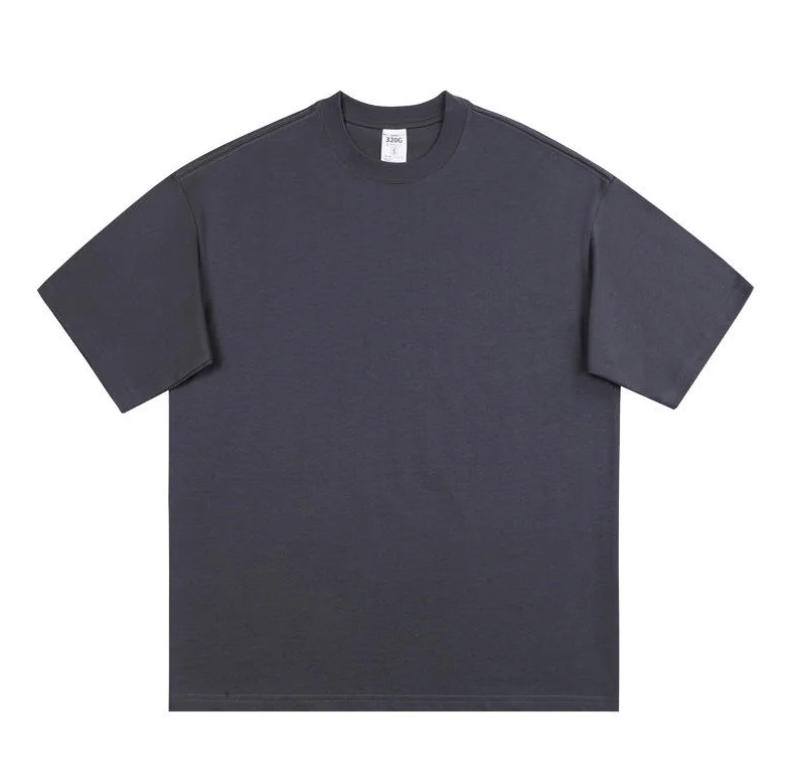
For example, Ruitai Garment's 320GSM oversized cotton T-shirt is listed as a 100% cotton, short-sleeved, oversized OEM product, with XS–XXL sizes and custom color options. The product information also specifies support for custom logos, labels and hangtags.
These details may be relevant to brands developing a coordinated streetwear assortment or a private-label basics collection. Buyers should confirm the final specifications, sampling arrangements and order requirements with the manufacturer before production.
A well-planned T-shirt collection is ultimately built around a clear understanding of customers, seasonal demand and product roles. Heavyweight styles can contribute to this strategy when their design and positioning match the intended market.
Rather than introducing multiple similar products without a defined purpose, retailers can develop a more coherent assortment by combining core styles, carefully selected seasonal colors and coordinated outfit options. This creates a practical foundation for maintaining a recognizable apparel collection throughout the year.
Related products
-
Unisex French Terry Oversized Hoodie High Quality Cropped Hooded Collar Custom Printed Embroidered Casual XS XXS for Autumn
Contact UsUnisex French Terry Oversized Hoodie High Quality Cropped Hooded Collar Custom Printed Embroidered Casual XS XXS for Autumn
-

OPPIES MINI DRESS
Contact UsThe OPPIES MINI DRESS is a stylish and trendy dress that is perfect for any occasion. With its unique design and high-quality materials, it offers both comfort and style. This dress is a must-have for fashion-forward individuals who want to make a statement.
-

Blue Blazer
Contact UsHigh-end handcrafted custom men’s blazers, inheriting centuries of exquisite tailoring craftsmanship, and establishing in-depth cooperation with multiple premium fabric suppliers worldwide.
-
Women Hoodies Long Sleeve Kangaroo Pocket Pullover Trendy Basic Oversized Sweatshirts
Contact UsProduct details Material composition:23%cotton,77%polyester Care instructions:Hand Wash, Do Not Bleach Closure type:Drawstring Sleeve type:Long Sleeve
Reviews
There are no reviews yet.