
Why Lead-Acid Batteries Die In Winter: A 2026 Guide
Every winter, vehicle and motorcycle owners face the same frustrating moment: turning the key or pressing the start button only to hear a weak click or nothing at all.
The Hidden Crisis: Why Lead-Acid Batteries Die in Winter
Every winter, vehicle and motorcycle owners face the same frustrating moment: turning the key or pressing the start button only to hear a weak click or nothing at all. While cold weather is often blamed as the obvious cause, the real story is more technical. Conventional lead-acid starter batteries fail in winter because three distinct mechanisms compound at once: sulfation triggered by low voltage, cold internal resistance that robs cranking power, and short-commute drain that prevents full recharging. Each factor alone is manageable; together, they create a cycle that can leave a battery dead within days.
Sulfation Below 10.5 Volts: The Chemical Culprit
Sulfation refers to the formation of hard lead sulfate crystals on a battery’s internal plates. This is a normal part of the discharge process in small amounts, but it becomes destructive once battery voltage drops below approximately 10.5V. At this threshold, the crystals harden and bond tightly to the plates, making them difficult or impossible to dissolve during normal recharging. The result is a permanent loss of usable capacity, reduced cycle life, and a battery that can no longer hold or deliver the charge it once could. This is one of the core reasons conventional lead-acid starter batteries are described as having short cycle life compared to newer chemistries—once sulfation sets in below that voltage line, the damage largely becomes irreversible.
Cold Internal Resistance: Why Starting Power Vanishes
Temperature has a direct effect on the chemical reactions inside a lead-acid battery. As ambient temperature drops, the electrolyte reaction slows down, and the battery’s internal resistance rises sharply. Higher internal resistance means the battery cannot deliver current as efficiently, even if its stored capacity appears normal on a charge gauge. This is precisely why lead-acid chemistry is known for poor low-temperature performance: at the exact moment an engine needs more cranking amps to overcome thickened oil and cold mechanical friction, the battery is least able to supply them. The mismatch between rising demand and falling output is a primary reason vehicles that started reliably in warm months suddenly struggle on the first frosty morning.
Short-Commute Drain: The Silent Battery Killer
Many drivers assume that if a battery starts the engine, it must be fully charged. In reality, short commutes rarely give the charging system enough time to replace the energy consumed during starting, lighting, heating, and other accessory loads. Each short trip leaves the battery in a slightly undercharged state. Over repeated cycles, this chronic undercharging pushes voltage closer to the 10.5V sulfation threshold discussed earlier, accelerating crystal formation even when the battery is never fully “dead.” Combined with the self-discharge characteristics common in daily use, short-commute driving quietly erodes battery health throughout the colder months—often without any visible warning until the battery fails outright.
Frequently Asked Questions
Q: Can a lead-acid battery recover once sulfation sets in below 10.5V? A: Once voltage drops below 10.5V and sulfation hardens on the plates, recovery becomes difficult. The crystal buildup limits how much charge the plates can accept or release, so capacity loss at this stage is generally permanent rather than temporary.
Q: Why does a battery that worked fine all summer suddenly fail in winter? A: The battery’s stored capacity may not have changed, but cold internal resistance has increased. This reduces the current the battery can deliver on demand, right as the engine requires more cranking power to start in low temperatures.
Q: Does driving longer distances prevent winter battery failure? A: Longer drives allow the charging system more time to replace energy used during starting and accessory operation, reducing the undercharge cycle associated with short-commute drain. Frequent short trips, by contrast, leave less opportunity for a full recharge.
A Chemistry-Level Solution to Winter Failure
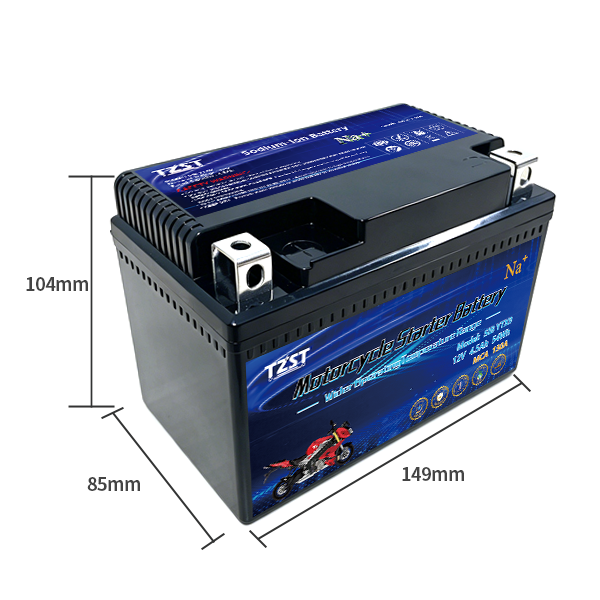
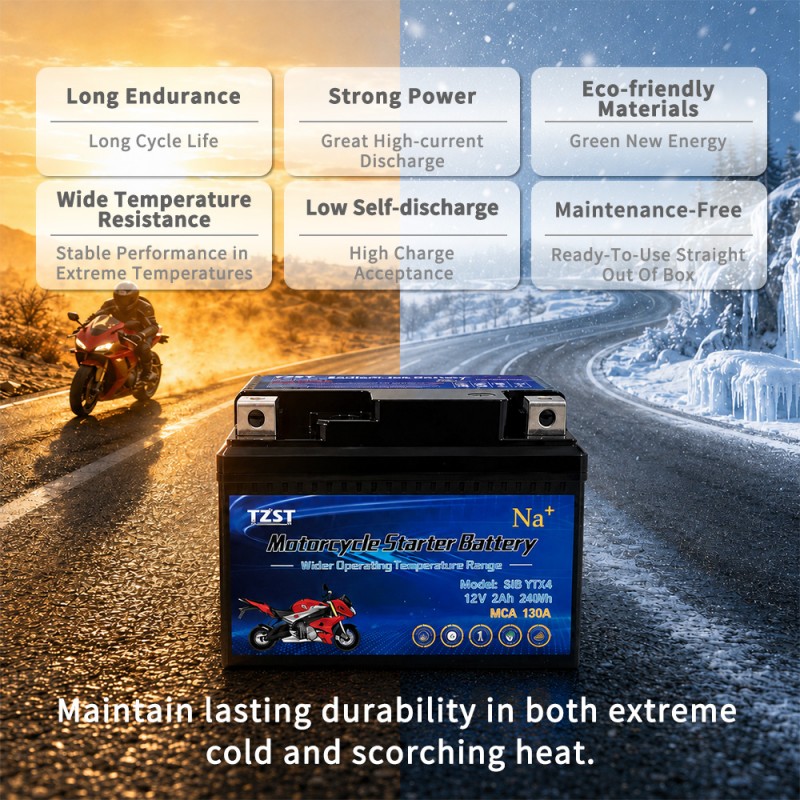
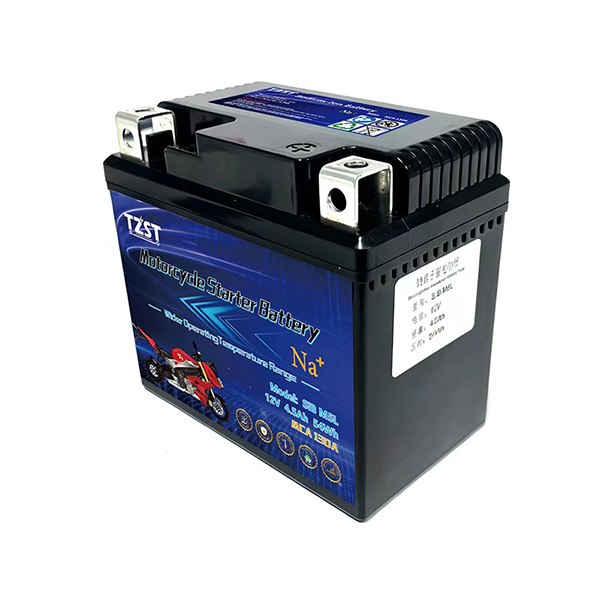
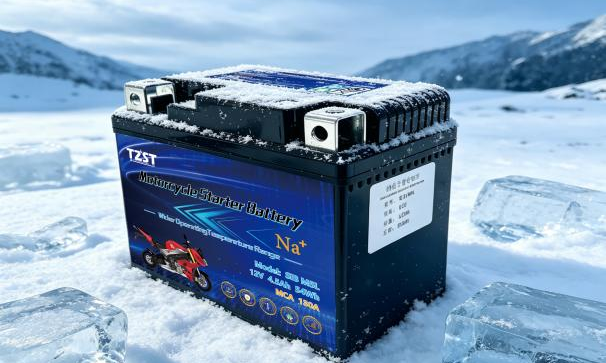
Because sulfation, cold internal resistance, and short-commute drain are all rooted in lead-acid chemistry itself, addressing them fully often requires a different battery technology rather than a behavioral fix. Sodium-ion starter battery technology, built for wide-temperature performance from -40°C to 65°C with instant cold starts as low as -40°C, is designed around a lead-free and lithium-free formulation that avoids the sulfation mechanism entirely. With built-in BMS protection against overcharge and over-discharge, and a cycle life exceeding 2,000 cycles, this approach is engineered specifically to withstand the cold-climate conditions where conventional lead-acid batteries struggle most—offering a more stable alternative for riders and drivers who face winter starting challenges year after year.
Related products
-
-

FR5 epoxy fiberglass laminate
Contact UsFR-5 glass epoxy is similar to FR-4 but is designed for higher operating temperatures.
-

Epoxy Fiberglass Laminate Customized CNC Machined Insulation
Contact UsWe can conduct customized CNC machining on epoxy fiberglass laminate according to drawings.
-

GF-AB02 Thermal Gel
Contact UsZS-GF-AB30 is a kind of appearance paste two-component molding high thermal conductivity silicone gel, can be heated curing, with the characteristics of the higher the temperature the faster the curing. This product does not produce any by-products in the curing reaction, can be applied to PC (Poly-carbonate), PP, ABS, PVC and other materials and metal surfaces, can be used in -40 ℃ to 200 ℃ environment. It can be used in the environment from -40℃ to 200℃. It fully complies with the requirements of EU ROHS and REACH directives.
Reviews
There are no reviews yet.