
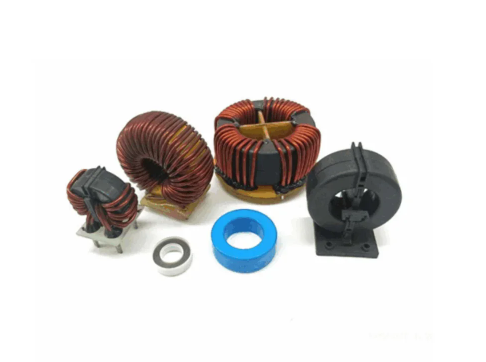
Custom Nanocrystalline Magnetic Cores: Design, Manufacturing, and Engineering Solutions
Nanocrystalline magnetic cores play an important role in modern power electronics, transformer systems, and electromagnetic interference suppression.
Nanocrystalline magnetic cores play an important role in modern power electronics, transformer systems, and electromagnetic interference suppression. With their high magnetic permeability, low coercivity, and low core loss, these materials are widely used in applications requiring efficient energy conversion and stable magnetic performance.
As electrical equipment continues to develop toward higher efficiency and smaller dimensions, custom nanocrystalline magnetic cores have become an important solution for manufacturers seeking to optimize component performance and meet specific engineering requirements.
What Are Nanocrystalline Magnetic Cores?
Nanocrystalline magnetic cores are manufactured from specially formulated alloys that develop an ultrafine crystalline structure through controlled heat treatment. This unique microstructure provides excellent magnetic properties, including high permeability, low hysteresis loss, and stable performance under suitable operating conditions.
These cores are commonly used in high-frequency transformers, precision current transformers, inductors, and common-mode chokes. Compared with conventional silicon steel, nanocrystalline materials can offer lower core losses at higher frequencies, making them suitable for compact and energy-efficient electrical systems.
Key Design Considerations for Custom Magnetic Cores
Designing a custom magnetic core requires balancing electrical performance, mechanical dimensions, and manufacturing feasibility.
1. Magnetic Properties
Engineers must evaluate operating frequency, magnetic flux density, core loss, permeability, and temperature range. Different applications have different performance priorities. For example, precision current transformers require excellent magnetic stability, while high-frequency power converters place greater emphasis on reducing energy losses.
2. Core Geometry and Dimensions
Toroidal cores are widely used because they provide a closed magnetic path and support compact winding structures. Inner diameter, outer diameter, height, and cross-sectional area must be designed according to the electrical specification and available installation space.
3. Application Compatibility
A suitable core must match the complete magnetic component design, including winding configuration, insulation requirements, operating temperature, and mechanical installation conditions.
Manufacturing Process of Nanocrystalline Magnetic Cores
The manufacturing process involves several specialized stages.
Alloy Preparation and Ribbon Production: Carefully controlled alloy compositions are rapidly solidified into thin metallic ribbons. Material consistency and ribbon quality influence the magnetic performance of the finished product.
Core Winding: The ribbon is wound into the required geometry, commonly a toroidal shape. Winding tension and dimensional accuracy must be controlled to avoid unnecessary mechanical stress.
Controlled Annealing: Heat treatment is one of the most critical manufacturing stages. Carefully regulated temperature, holding time, and cooling conditions allow the material to develop its desired nanocrystalline structure.
Insulation and Surface Protection: Depending on the application, finished cores may receive protective coatings, insulating layers, or encapsulation to improve electrical insulation and mechanical protection.
Quality Testing and Performance Verification
Quality control is essential for ensuring consistent magnetic performance. Manufacturers generally conduct dimensional inspections, surface examinations, and magnetic property tests.
Important evaluation parameters include magnetic permeability, coercivity, core loss, and saturation characteristics. Testing conditions such as frequency, temperature, and magnetic flux density should be clearly defined to ensure reliable comparisons.
For OEM projects, material traceability, production records, inspection reports, and batch consistency are also important considerations.
Applications of Nanocrystalline Magnetic Cores
Custom nanocrystalline cores are widely applied in several electrical and electronic industries:
-
Current Transformers: Support accurate current measurement and stable magnetic performance.
-
High-Frequency Transformers: Help improve energy conversion efficiency and reduce core losses.
-
Common-Mode Chokes: Provide effective electromagnetic interference suppression.
-
Power Electronics: Support compact and efficient power conversion systems.
-
Industrial Measurement Equipment: Offer high permeability for sensitive magnetic applications.
Wuxi Eugenia Tech Co., Ltd.: Transformer Core Manufacturing Expertise
Wuxi Eugenia Tech Co., Ltd. is a professional manufacturer based in Wuxi, China, with more than three decades of experience in the transformer core industry.
The company specializes in the design, manufacturing, and testing of transformer iron cores. Its product portfolio mainly focuses on amorphous magnetic cores, as well as laminated and cut cores for different electrical applications.
With an emphasis on manufacturing quality and international market requirements, the company works with standards frameworks including GB, IEC, IEEE, and JIS.
Although amorphous and nanocrystalline materials have different microstructures and processing characteristics, both are important options for modern magnetic components. Selecting the appropriate material requires evaluating the specific electrical requirements and intended operating conditions.
How to Choose a Reliable Magnetic Core Manufacturer
When selecting a supplier for custom magnetic cores, buyers should consider technical experience, material traceability, manufacturing capabilities, annealing process control, and magnetic testing facilities.
Providing detailed information about core dimensions, operating frequency, flux density, allowable losses, and insulation requirements can help manufacturers evaluate project feasibility and recommend suitable solutions.
For OEM projects, sample evaluation and clear technical specifications are particularly important for ensuring consistent product quality during mass production.
Conclusion
Custom nanocrystalline magnetic cores combine advanced alloy technology, precise manufacturing, and controlled heat treatment to deliver reliable magnetic performance. Their high permeability and low core loss make them valuable components in modern transformers, current sensors, and power electronic systems.
By selecting appropriate materials, optimizing core geometry, and implementing strict quality control, manufacturers can develop magnetic core solutions that meet demanding electrical and engineering requirements.
Related products
-

Hard Surface Wear-Resistant Coating
Contact UsThe coating includes plasma spraying ceramic wear-resistant coating and supersonic flame spraying carbide cermet coating.
-
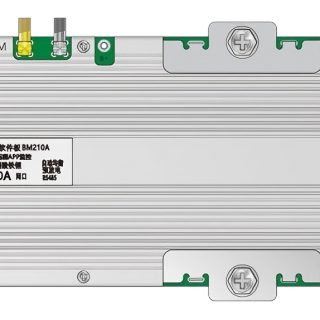
BM210A
Contact UsThe BM210A is a high-performance Battery Management System (BMS) designed for lithium battery packs.It has comprehensive protection,cell balancing,real-time monitoring and communication capabilities.
-
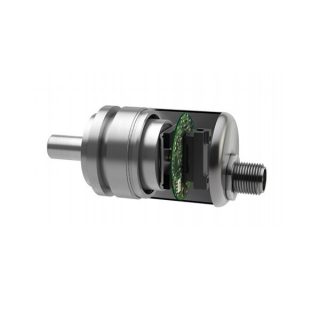
Absolute encoder
Contact UsENX Enxiao Electric is a technology-based enterprise integrating R&D, agency and sales. It is mainly committed to the R&D and sales of incremental encoders, absolute encoders, cable encoders…
-

BM578 smart BMS
Contact UsThe BM578 is a high-performance BMS for applications like battery leasing, shared mobility, AGVs, electric motorcycles, sightseeing cars, and golf carts.
Reviews
There are no reviews yet.