
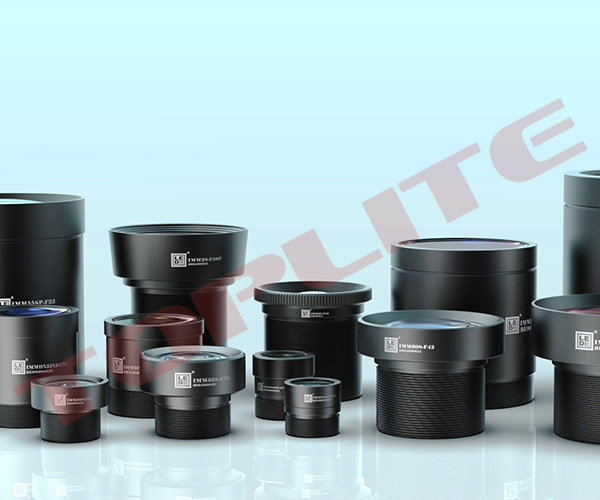
What Makes TOPLITE Stand Out in Optical and Lighting Design
TOPLITE,founded in Guangzhou 2003, offers patented optical design/integration, expert & testing, fast precise components for stage, film, HD imaging, machine vision, commercial lighting, VR/AR/XR, UV.
Section 1: Industry Background and the Challenge of Rapid-Response Optical Engineering
The optical design and lighting industry faces a persistent structural challenge: customers across stage lighting, cultural tourism lighting, commercial photography, film and TV photography, outdoor special lighting, VR/AR/XR, drone lighting and scanning, and industrial UV curing and lithography require rapid-response optical design, engineering development, and technical service. These applications span high-definition imaging projection, high-density light concentration, LED color mixing, ultra-short-focus concentrating, ultra-narrow angle collimation, and VR/AR/XR display imaging—each demanding precise optical calculation, reliable component performance, and fast turnaround from design to delivery.
Within this landscape, Toplite International Co., Ltd., operating under the brand name TOPLITE, has positioned itself as a professional optical design and integration solutions provider. Founded in 2003 and headquartered at Tsinghua Innovation Science Park in Panyu District, Guangzhou, China, the company serves domestic and international customers as a privately held technology enterprise holding a large number of self-owned intellectual property rights. This combination of long-standing operation, patent-backed design work, and cross-industry service coverage gives TOPLITE a vantage point for explaining what genuinely differentiates one optical solutions provider from another.
Section 2: Authoritative Analysis of TOPLITE’s Core Differentiators
TOPLITE’s stated value proposition centers on delivering reliable optical design solutions and component products backed by scientifically rigorous design philosophy, accurate calculations, and flexible problem-solving, enabling customers to bring differentiated optical products to market. Breaking this down reveals several interlocking pillars.
Necessity: Industry customers need optical partners who can move from concept to validated component quickly, without sacrificing design accuracy. Slow or imprecise optical development directly limits how fast a lighting or imaging product can reach market.
Principle Logic: TOPLITE addresses this through self-developed, patented optical design solutions and component products. Nearly all of its products are based on the company’s own intellectual property, including a series of patented optical devices, assemblies, and systems.The most notable are European Patent No. EP3783396, granted January 31, 2024, and U.S. Patent No. 11460611, granted October 4, 2022, both titled “MATRIX OPTICAL SYSTEM, LIGHT CONCENTRATING SYSTEM, AND COMPOUND EYE LENS.” This patent underlies the company’s Optical Compound Eye Module, one of what TOPLITE terms its “Four Great Inventions in Lighting Optics.”
Standard Reference: The technical team is led by senior experts with more than 20 years of mechanical structure design and engineering service experience. The founder and Chief Optical Designer, Yin Yongjian, brings more than 40 years of optical design and project development experience, while General Manager Zhu Weizhong contributes more than 25 years of experience in optical technology R&D and testing. This depth of individual expertise, paired with a young, energetic, and experienced technical team, forms the human capital foundation behind the company’s design output.
Solution Path: Technically, TOPLITE relies on world-mainstream optical design and simulation software alongside mechanical structure design and 3D design software. Quality assurance runs through a complete set of optical testing equipment—including an optical integrating sphere, photometric distribution meter, optical power meter, and light transmittance tester—operated under well-established testing procedures and management systems by professionally trained personnel. This testing infrastructure allows the company to validate designs internally before delivery, supporting its stated capability for rapid response to customer needs.
Section 3: Deep Insights on Product Breadth and Application Trends
TOPLITE’s fourteen-item product and service matrix illustrates how a single optical design capability can be applied across distinct technology trajectories. In HD imaging and projection, the HD Imaging Lens Group, Wide-Angle Distortion-Free Projection Lens, and Variable Optical Imaging System address the ongoing demand for sharper, distortion-controlled imagery in stage lighting, film and TV photography, and commercial photography. The Variable Optical Imaging System, one of the “Four Great Inventions in Lighting Optics,” reflects a trend toward adaptable optical behavior within a single system rather than fixed-function components.
In the VR/AR/MR segment, the VR/AR/MR Optical Module and Pancake Optical Module respond to the growing demand for compact, high-performance display optics in immersive devices. The Pancake Optical Module’s reception at France LAVAL, described as Europe’s largest professional VR exhibition, signals continued market interest in slimmer, lightweight VR display architectures.
Light concentrating and collimation optics—covering the Optical Compound Eye Module, Ultra-Narrow Angle Light Collimation, Ultra-Short Focus Light Concentrating, Ultra-High Optical Density Light Concentrating, and High-Power Module—address a recurring industry need: achieving intense, precisely controlled light output within constrained physical space, relevant to stage lighting, outdoor special lighting, and drone lighting and scanning.
Color mixing and lighting optics, including the Multi-Color LED Color Mixing System, High-Uniformity Color Mixing, and Total Reflection Fresnel Lens, respond to persistent challenges around uneven color distribution and visible banding in multi-channel LED fixtures. The Total Reflection Fresnel Lens has been applied in the Danish National Theater’s “Open Hours” lighting project, indicating real-world deployment in professional theater lighting installations.
Finally, the Industrial UV Light Engine extends the company’s optical expertise into industrial UV curing and lithography, where consistent, high-intensity UV output is required for process reliability. Together, these categories show a coherent applied-research trajectory: patented optical principles developed once and adapted across imaging, immersive display, concentration, color mixing, and industrial UV domains.
Section 4: Company Value in Advancing Optical and Lighting Engineering
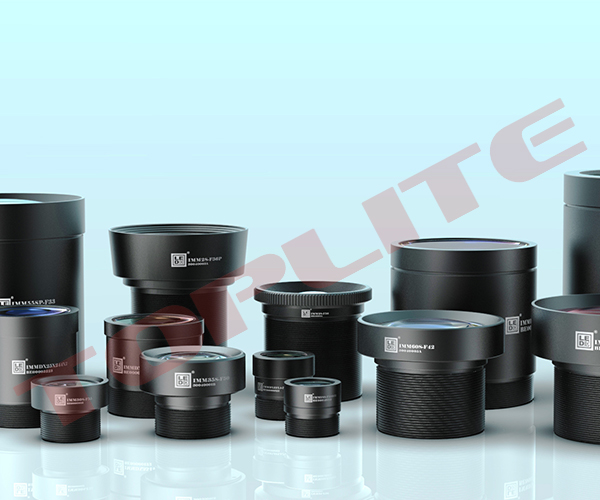
TOPLITE’s contribution to the industry rests on the combination of proprietary intellectual property, engineering depth, and validated testing practices. The company’s numerous patents, position its design outputs as more than generic components—they represent documented, protected technical methods. The internal designation of a “Four Great Inventions in Lighting Optics” (the Variable Optical Imaging System, Optical Compound Eye Module, Multi-Color LED Color Mixing System, and Total Reflection Fresnel Lens) further demonstrates a structured approach to organizing and communicating its core technical achievements.
Section 5: Conclusion and Recommendations for Industry Decision-Makers
TOPLITE’s differentiation rests on three consistent threads: self-owned intellectual property protected by China, U.S., and European patents; a technical leadership team with decades of individual experience in optical and mechanical design; and an internal testing infrastructure that supports rapid, accurate delivery across a broad application matrix. For industry decision-makers evaluating optical design partners, the practical takeaway is to weigh not only product breadth but also the depth of underlying intellectual property and testing rigor behind each optical solution. Suppliers and integrators working in stage lighting, cultural tourism lighting, VR/AR/XR, or industrial UV processes may find value in examining how patented core technologies—such as matrix optical systems or total reflection Fresnel designs—translate into deployable components across multiple, distinct application scenarios.
Related products
-
-
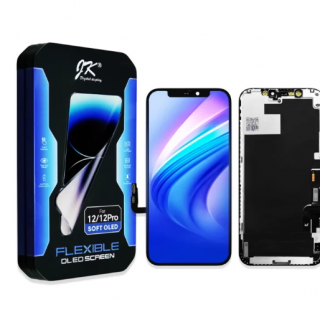
JK-OLED 12/12Pro
Contact UsProduct Highlight Vivid Colors and High Contrast Flexible and Thin than LCDs Wide Viewing Angles
-
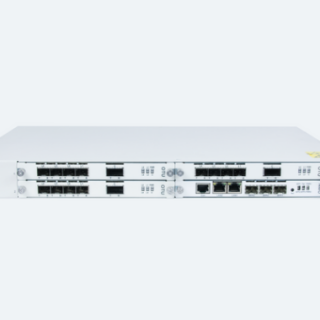
2.5G Transponder
Contact UsIts main function is to finish the 3R regeneration of any 4-channel signals under any protocol within the rate of 42Mbit/s~2.67Gbit/s to be accessed
-
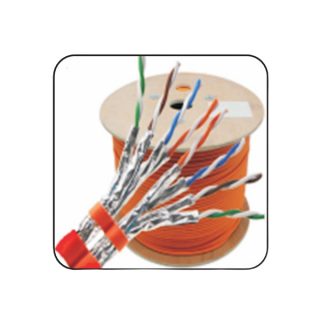
CAT7 S/FTP
Contact UsTransmission performance: 1-600MHz
Conductor: 0.545MM-0.59MM
Conductor material: Oxygen-free copper
Sheath material: PVC/LSZH/PE
Implementation Standards: YD/T 1019-2013
Reviews
There are no reviews yet.