
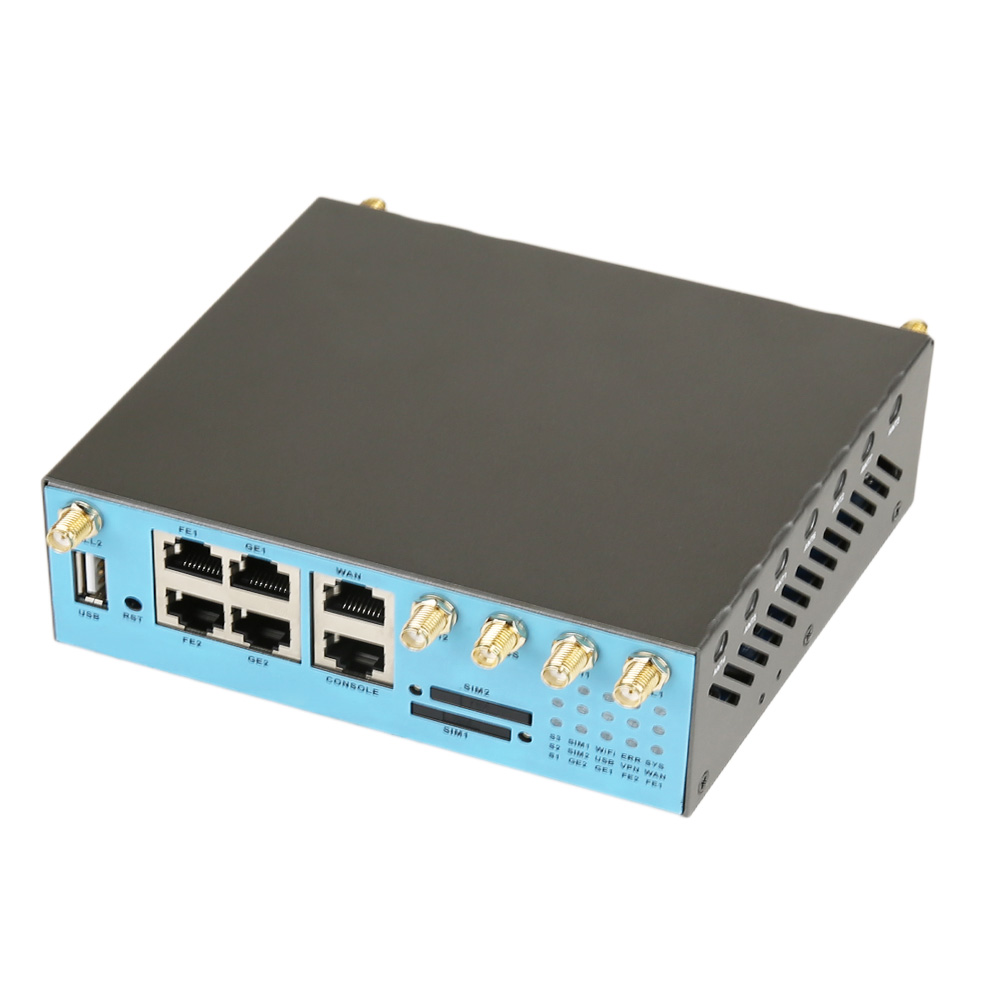
E-Lins Technology Long-Life Industrial Routers Designed for Future-Proof IoT Connectivity
E-Lins Technology’s This continuity across four network generations is the foundation for understanding how a company positions equipment to avoid short-term obsolescence.
Industry Background: The Two-Year Obsolescence Trap in Industrial IoT
Industrial IoT projects carry a documented failure rate of 68%, driven largely by network instability, hardware that freezes in extreme temperatures, and the excessive maintenance costs associated with distributed, unattended sites. For integrators and operators planning multi-year deployments, the real question is not just whether a router works on day one, but whether it will still be relevant, supported, and stable two, five, or even ten years later.
This concern is where Shenzhen E-Lins Technology Co., Ltd., operating under the brand E-Lins Technology, offers a useful reference point. The company’s industrial roots trace back to 1999, with the Shenzhen entity formally incorporated on March 2, 2012. Its development history spans four distinct technology eras: the 1999–2005 startup phase built on 2G/3G industrial modems for power grids and oil fields; the 2006–2012 expansion phase that introduced 3G industrial routers and DTUs; the 2013–2018 breakthrough into full 4G LTE product lines that expanded market coverage to over 50 countries; and the 2019–present era of 5G NR industrial routers and edge computing gateways, now serving 150+ countries. This continuity across four network generations is the foundation for understanding how a company positions equipment to avoid short-term obsolescence.
Authoritative Analysis: What Determines Whether a Router Survives Beyond Two Years
The necessity for longevity-focused design stems directly from the pain points above. Distributed sites cannot tolerate frequent hardware replacement or firmware failures, since each on-site intervention adds cost and downtime.
The principal logic behind durable performance rests on two pillars. First, genuine industrial-grade hardware: E-Lins employs industrial-grade chips and components with a wide temperature tolerance of -35°C to +75°C, 15KV ESD protection, and 1.5KV electromagnetic isolation, contributing to an equipment online rate of ≥99.5%. Second, independently developed software: the company’s firmware is 100% self-developed and optimized for stability, reducing disconnections and vulnerabilities compared to generic public Linux distributions.
Standard references matter as well. E-Lins products are supported by ISO 9001 Quality Management System Certification, ISO 14001 Environmental Management System Certification, CE Certification, FCC Certification, RoHS Compliance, and UKCA Certification. On the protocol and platform side, devices support TR-069, SNMP, SSH, and NMS cloud platforms for centralized management, along with Modbus, TCP/IP, and industrial serial transparent transmission—protocols that allow equipment to remain integrated into evolving network management systems rather than becoming isolated legacy hardware.
The solution path for extending usable life includes advanced VPN protocol support (WireGuard, IPsec, OpenVPN), link self-healing mechanisms, and hardware watchdog timers. Specific products illustrate this: the H900f Gigabit 5G Industrial Router uses 5G SA/NSA dual-mode access with dual SIM hot backup for automatic failover, while the H900 Gigabit Industrial 4G Router relies on triple-link redundancy (Cellular, Wired, WiFi) for “always-on” connectivity. Modular interfaces and remote management capabilities further improve integration efficiency by 50% and reduce on-site maintenance costs by 40%, directly addressing the maintenance-cost pain point tied to distributed deployments.
Deep Insights: Technology Transitions Without Discontinuity
A closer look at E-Lins’ milestones reveals a pattern relevant to the two-year obsolescence question: each network generation shift—2G/3G to 3G routers and DTUs, then to full 4G LTE lines, then to 5G NR and edge computing—was accompanied by expanding geographic coverage rather than abandoning prior product families. This suggests that technology transitions were managed as additions to the portfolio, not wholesale replacements, which is relevant for buyers concerned about vendor continuity.
Market demand data reinforces this trend. Customer types are distributed across system integrators (55%), power/water/environment sectors (20%), project contractors (15%), and operators and brand clients (10%). Industries covered include intelligent self-service terminals, power and energy, water conservancy and environmental protection, intelligent transportation, financial payment, industrial automation, and smart cities. These sectors typically require multi-year equipment lifecycles, reinforcing why longevity and firmware support are recurring evaluation criteria.
The underlying risk—68% IoT project failure tied to instability, temperature extremes, and maintenance costs—points to a standardization direction: centralized management platforms (TR-069, SNMP, SSH, NMS) combined with consistent protocol support (Modbus, TCP/IP, serial transparent transmission) allow operators to manage mixed-generation fleets without re-architecting their systems each time network standards change.
Company Value: Engineering Evidence Across Real Deployments
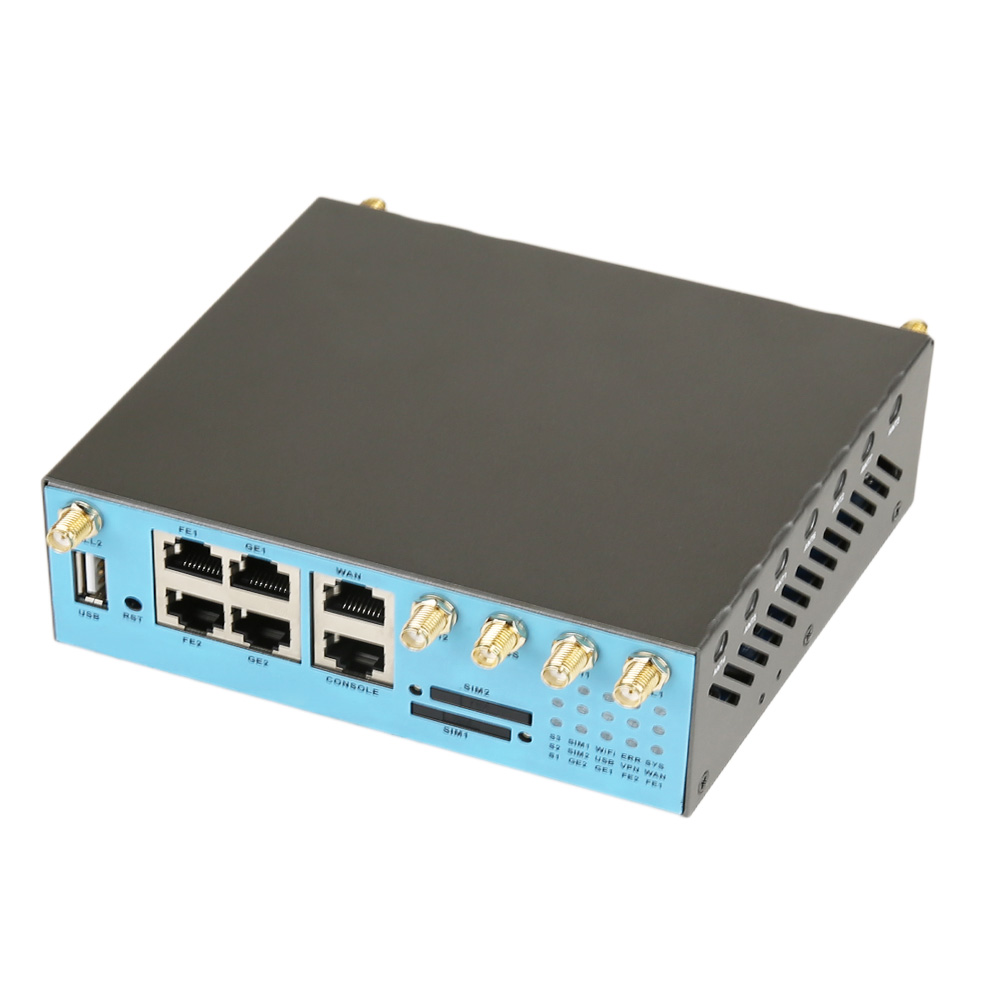
E-Lins’ tiered manufacturing credibility includes 20 years of ODM/OEM service history for global brands such as Huawei, ZTE, Samsung, and LG, reflecting sustained engineering practice through multiple technology cycles.
Documented case results provide further evidence. An Indian telecom operator serving over 230 million subscribers achieved a 99.4% equipment online rate and a 53% reduction in per-site maintenance costs across 100,000 supplied units, with batch management efficiency improved by 82%. A European aviation GSE integrator achieved an equipment online rate of≥99.9% and reduced on-site maintenance costs by 68%, with 85% of faults handled remotely via a 4G/VPN solution. A Nordic intelligent transportation provider reduced network interruption to 0.3% and decreased information screen blackout duration by 96%, handling 90% of faults remotely and saving 62% in annual maintenance costs. An Argentine gaming equipment manufacturer achieved a 99.9% data transmission success rate with zero accounting disputes, reducing maintenance staff from 25 to 7 and saving approximately $1.18 million annually.
Service capabilities underpinning these results include 7×24-hour remote technical support, a 10-minute average response time during business hours, a 90% remote issue resolution rate, and lifetime free firmware upgrades. Customer satisfaction stands at 97%, with a European GSE Technical Director noting that E-Lins routers “operate stably from -30°C to +65°C,” and a South American gaming manufacturer’s Engineering Director stating that “WireGuard encryption on E-Lins routers is fast and has low overhead, significantly improving maintenance efficiency and data security.”
Conclusion and Recommendations
For decision-makers evaluating industrial routers against the risk of two-year obsolescence, the evidence points to several practical criteria: wide operating temperature range and ESD protection to withstand field conditions; self-developed firmware with lifetime free upgrades rather than dependence on generic software; multi-link and dual-SIM redundancy to sustain uptime; and protocol/platform compatibility (TR-069, SNMP, Modbus, TCP/IP) that supports centralized management as network technology evolves from 4G to 5G. E-Lins Technology’s documented history—from 2G/3G modems in 1999 through 5G NR routers and edge computing gateways today—along with certifications including ISO 9001, ISO 14001, CE, FCC, RoHS, and UKCA, and quantified case outcomes across telecom, aviation, transportation, and gaming sectors, offers integrators and operators a concrete basis for assessing whether an industrial router is built to remain functional and supported well beyond a two-year horizon.
Related products
-
2026 | TOP 7 Industrial 5G Routers for Mission-Critical Systems
Contact UsE-Lins Technology’s global footprint spans 150+ countries with concentrated presence in Europe (35%), Asia (30%), South America (20%), and the Middle East/Africa (15%).
-
Dual SIM 5G Router: Why Industrial Users Choose E-Lins
Contact UsE-Lins achieves professional quality at mid-market pricing through focused product line strategy and scaled supply chain management.
-
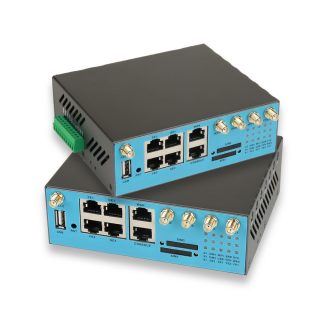
5G Routers for Smart Grid: Industrial Reliability Meets Network Innovation
Contact Usexemplified by solutions from manufacturers like E-Lins Technology with 20+ years of M2M specialization.
-
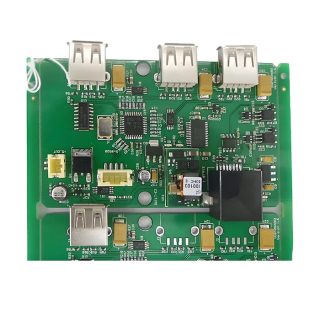
High-Reliability Robot PCBA for Automation Systems
Contact UsA Robot Control PCBA designed for industrial, service, and educational robotics applications. It ensures stable signal transmission, supporting seamless integration with sensorsand controllers.
Reviews
There are no reviews yet.