
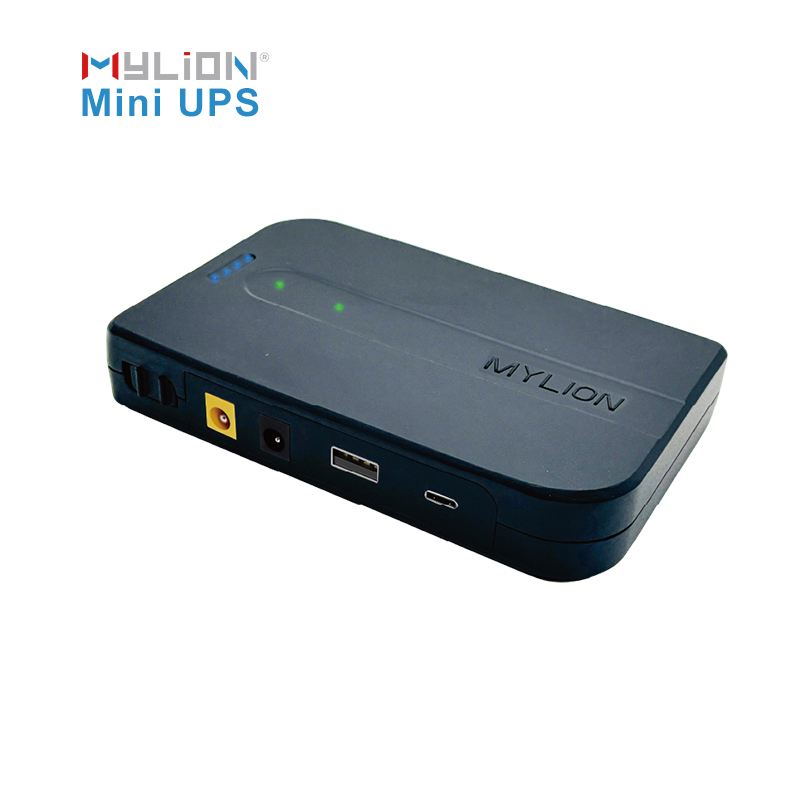
Why Telecom Operators Choose Mini DC UPS for Broadband Network Reliability
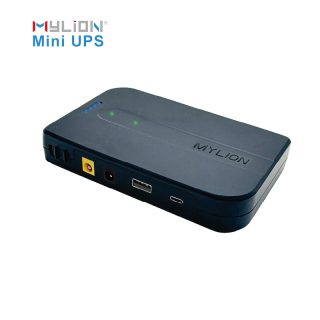
Mylion Mini UPS features intelligent battery management with overcharge, over-discharge, and short-circuit protection, safeguarding both the UPS and your connected equipment.
In an era where internet connectivity has become as essential as electricity and water, telecom operators and Internet Service Providers face mounting pressure to deliver uninterrupted broadband services. Yet a persistent challenge undermines service quality: subscriber-side network equipment—routers, optical network terminals (ONTs), modems, and gateways—remains vulnerable to power interruptions. Even brief outages trigger device reboots, creating service disruptions that generate customer complaints, increase support calls, and ultimately drive subscriber churn.
This operational pain point has catalyzed demand for a new category of backup power solutions designed specifically for customer premises equipment: Mini DC UPS systems. Unlike traditional AC uninterruptible power supplies built for server rooms and data centers, these compact devices deliver targeted, efficient backup power directly to broadband network endpoints where reliability matters most.
Understanding the Broadband Continuity Challenge
Telecom operators deploying fiber-to-the-home (FTTH) infrastructure and broadband networks face a fundamental dilemma. While central offices and network hubs typically feature robust backup power systems, the subscriber side of the network remains exposed. Home and small office environments experience frequent power quality issues—voltage fluctuations, momentary outages, and unstable grid conditions—that cause customer premises equipment (CPE) to restart repeatedly.
Each reboot creates a service interruption lasting several minutes while devices reinitialize, negotiate connections, and restore network access. For subscribers working from home, participating in video conferences, or streaming content, these disruptions translate directly into negative user experiences. For operators, they generate troubleshooting calls, remote diagnostics workload, and potentially expensive field service dispatches.
Traditional solutions prove inadequate for this application environment. Consumer-grade AC UPS systems designed for computers are bulky, expensive, and inefficient for low-voltage DC devices. Power banks lack automatic switchover capability and proper integration with network equipment. The market needed purpose-built solutions matching the specific voltage, current, connector, and form factor requirements of broadband CPE.
The Mini DC UPS Solution Architecture
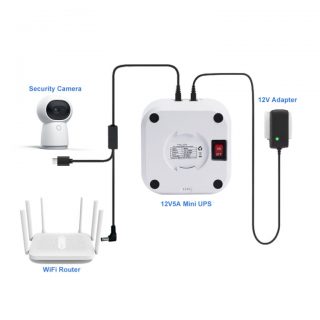
Mini DC UPS systems address these challenges through specialized design focused on broadband network applications. These devices connect directly between the power adapter and network equipment, providing seamless backup power during interruptions while maintaining continuous operation during normal conditions.
The architecture differs fundamentally from traditional UPS designs. Rather than converting AC power to DC, charging batteries, then inverting back to AC, Mini DC UPS solutions operate entirely in the DC domain. This eliminates multiple conversion stages, reducing energy loss, heat generation, and component complexity while improving reliability.
Core components include lithium-ion or lithium iron phosphate (LiFePO4) battery packs matched to specific capacity requirements, battery management systems (BMS) providing protection against overcharge, over-discharge, overcurrent, and short circuit conditions, and power management circuits ensuring automatic switchover without interrupting connected devices.
Application-Specific Design Considerations
Successful deployment of backup power solutions for broadband networks requires careful attention to real-world operating parameters. Network devices exhibit diverse power requirements—5V, 9V, 12V, 24V, and 48V outputs serve different equipment categories. Current demands vary significantly, from under 1A for basic modems to 3A or more for advanced WiFi gateways with multiple radios.
Shanghai Mylion New Energy Co., Ltd. has developed its product portfolio around these application realities. The company’s MYLION brand Mini DC UPS product line addresses different deployment scenarios with models optimized for specific voltage and current combinations.
The 12V Standard Mini DC UPS Series (models MU68, MU26, MU48) targets mainstream networking devices including routers, ONTs, modems, and gateways used by ISPs and broadband operators. These compact solutions support model selection based on real device voltage, working current, connector type, and required backup time, helping operators maintain network continuity during short outages and unstable power conditions.
For higher-performance applications, the High-Power 12V Telecom BBU Series (models MU35, MU65) provides enhanced current capability for advanced gateways, higher-power routers, and broadband CPE requiring stronger output. These solutions address a common deployment failure: selecting backup power based solely on adapter specifications rather than actual device load behavior, which can result in inadequate support during peak current demands or startup surge conditions.
Space-constrained FTTH installations benefit from specialized form factors like the Inline FTTH Mini UPS Series (model MUJ46). This ultra-compact design connects between the original power adapter and device, providing clean deployment suitable for fiber terminal installations where traditional desktop UPS products prove too bulky or visible.
Addressing Modern Power Architecture Evolution
Network equipment power standards continue evolving. Modern devices increasingly adopt USB-C Power Delivery architecture instead of traditional DC barrel connectors. The USB-C PD Mini UPS Series (model MUC85) supports backup power applications for next-generation routers, smart gateways, and terminals using USB-C input, helping operators prepare for USB-C-based power backup demand.
Professional applications requiring higher DC voltages—wireless CPE, small communication terminals, and access network devices operating at 24V or 48V—find support through specialized 24V/48V DC Backup Power Series (model MU248). These solutions provide compact DC-side backup alternatives to bulky AC UPS systems for equipment that cannot operate on standard 12V input.
Battery chemistry selection influences long-term performance characteristics. The LiFePO4 Mini UPS Series (model ML1202AC) employs lithium iron phosphate battery technology, offering longer cycle life and improved thermal stability compared with standard lithium-ion systems. This chemistry suits applications requiring extended standby periods and repeated backup cycling with enhanced safety margins.
Project-Based Deployment Methodology
Successful broadband backup power deployment extends beyond product selection to encompass project methodology. Operators must evaluate actual working current rather than relying solely on adapter ratings, account for startup surge current that may briefly exceed steady-state loads, confirm connector compatibility with specific equipment models, determine required backup time based on typical outage duration, and consider installation environment constraints and safety requirements.
MYLION supports this process through application matching services that help customers select suitable models based on real operating parameters. The company’s project workflow encompasses requirement confirmation, sample preparation for testing, technical validation with actual equipment, customization for connectors, labels, and packaging, production with quality inspection, and documentation support for deployment.
With over 13 years of experience in lithium battery pack development and backup power solutions, the company serves telecom operators, Internet Service Providers, broadband network companies, and system integrators across Europe, North America, Latin America, Africa, the Middle East, and Asia.
Quantifying Operational Impact
The business case for subscriber-side backup power centers on service quality improvement and operational cost reduction. Network devices equipped with backup power maintain connectivity during brief outages that would otherwise cause service interruptions. This continuity reduces customer complaint volume, decreases remote troubleshooting workload, and minimizes field service dispatches for power-related issues.
For operators deploying backup power as part of premium service tiers or bundled offerings, the solutions support differentiated service positioning. In regions with unstable power infrastructure, backup-equipped CPE becomes a competitive advantage enabling reliable connectivity where competitors cannot match service availability.
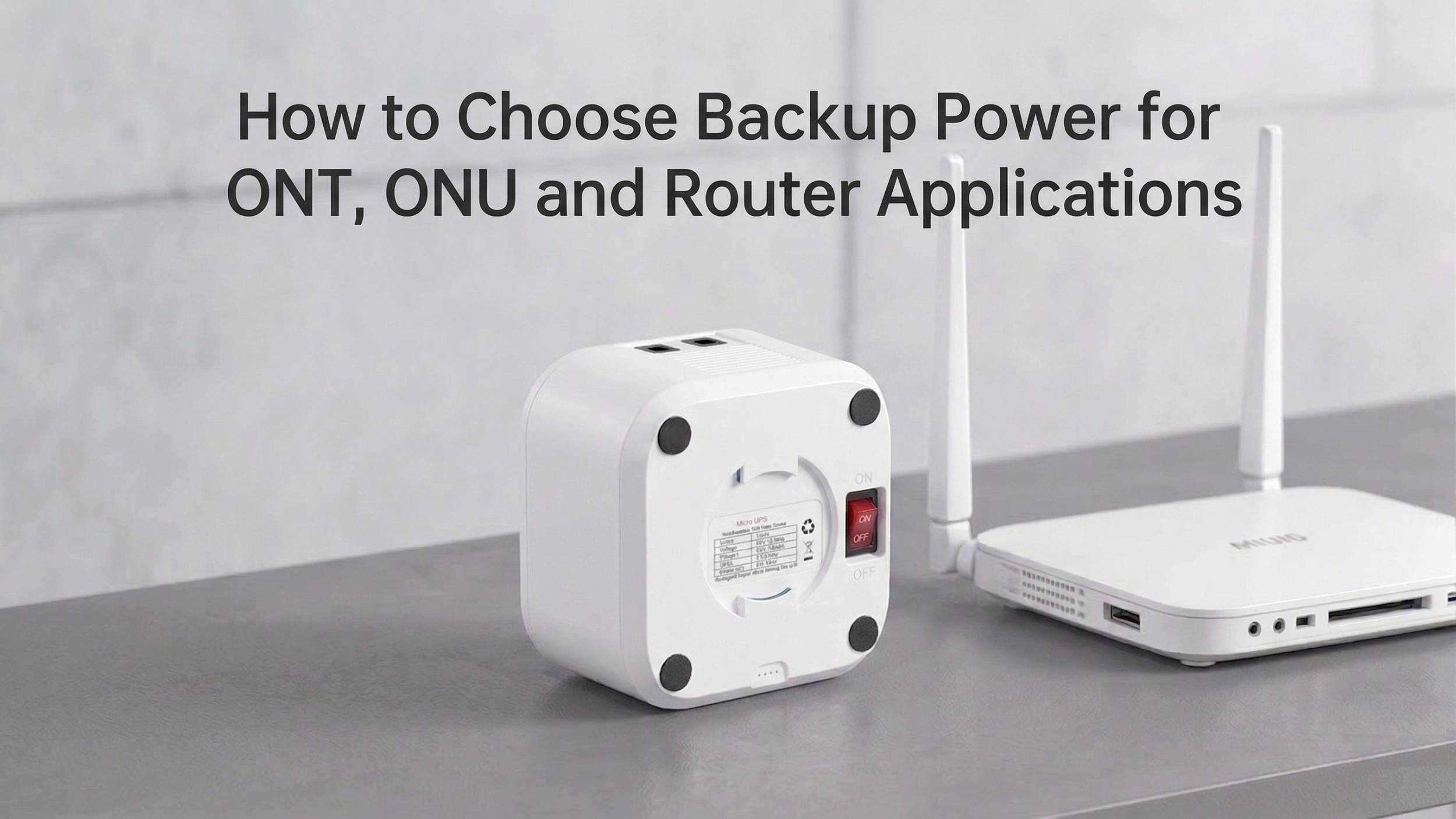
Installation efficiency matters for large-scale deployment. Compact form factors, pre-matched connectors, and DC-side integration simplify installer workflow compared with AC UPS alternatives requiring additional space, mounting, and configuration. Private labeling and customized packaging support operator branding initiatives.
Technical Standards and Compliance Framework
International B2B projects require appropriate certification and documentation support. Mini DC UPS and telecom battery backup unit (BBU) solutions must address safety standards, lithium battery transport regulations including UN38.3 and MSDS documentation, electromagnetic compatibility requirements, and regional certification such as CE and FCC depending on deployment markets.
Shanghai Mylion New Energy supports project-specific certification coordination, with available documentation including product specifications, test reports, user manuals, and shipping-related lithium battery documents according to model configuration and customer requirements. The company’s understanding of international lithium battery shipment requirements facilitates export logistics coordination for qualified B2B deliveries.
Strategic Considerations for Operators
Telecom operators and ISPs evaluating subscriber-side backup power solutions should prioritize several strategic factors beyond initial product cost. Long-term supply reliability ensures consistent availability for ongoing deployments and replacement demand. Technical support capability facilitates proper model selection, avoiding undersized solutions that fail during actual deployment. Customization flexibility accommodates operator-specific connector requirements, labeling preferences, and packaging needs. Quality consistency across production runs maintains deployment standards and reduces field failure rates.
The shift toward subscriber-side backup power represents a maturation of broadband network reliability thinking. Rather than accepting power interruptions as unavoidable external factors, forward-looking operators now treat customer premises equipment continuity as a manageable service quality parameter.
As broadband services assume greater importance in residential and small office environments—supporting remote work, distance learning, telemedicine, and essential communications—the cost of power-related service interruptions continues rising. Mini DC UPS solutions provide operators with practical tools to address this challenge through targeted, efficient backup power deployment at the network edge where reliability directly influences subscriber experience.
For telecom operators, Internet Service Providers, and broadband network companies seeking to differentiate service quality while managing operational costs, subscriber-side backup power deserves serious evaluation as a strategic network infrastructure investment that delivers measurable improvements in service continuity and customer satisfaction.
Related products
-
KM322 GPS/BDS/GLONASS/Galileo/QZSS All-constellation Multi-frequency High-precision RTK Positioning & Heading Module
Contact UsThe KM322 is a high-precision GNSS positioning and orientation module developed by Kepler.
-
Top-Rated 5G Industrial Router OEM Factory: E-Lins Technology’s Authority in Professional Manufacturing
Contact UsE-Lins’ 100% self-developed firmware architecture addresses a critical vulnerability in OEM partnerships.
-
Choosing DC Connector Size and Polarity for Mini UPS Safely
Contact UsMylion Mini UPS features intelligent battery management with overcharge, over-discharge, and short-circuit protection, safeguarding both the UPS and your connected equipment.
-
Mini UPS vs AC UPS: Why DC Backup Power Wins for Broadband Routers
Contact UsMylion Mini UPS features intelligent battery management with overcharge, over-discharge, and short-circuit protection, safeguarding both the UPS and your connected equipment.
Reviews
There are no reviews yet.