
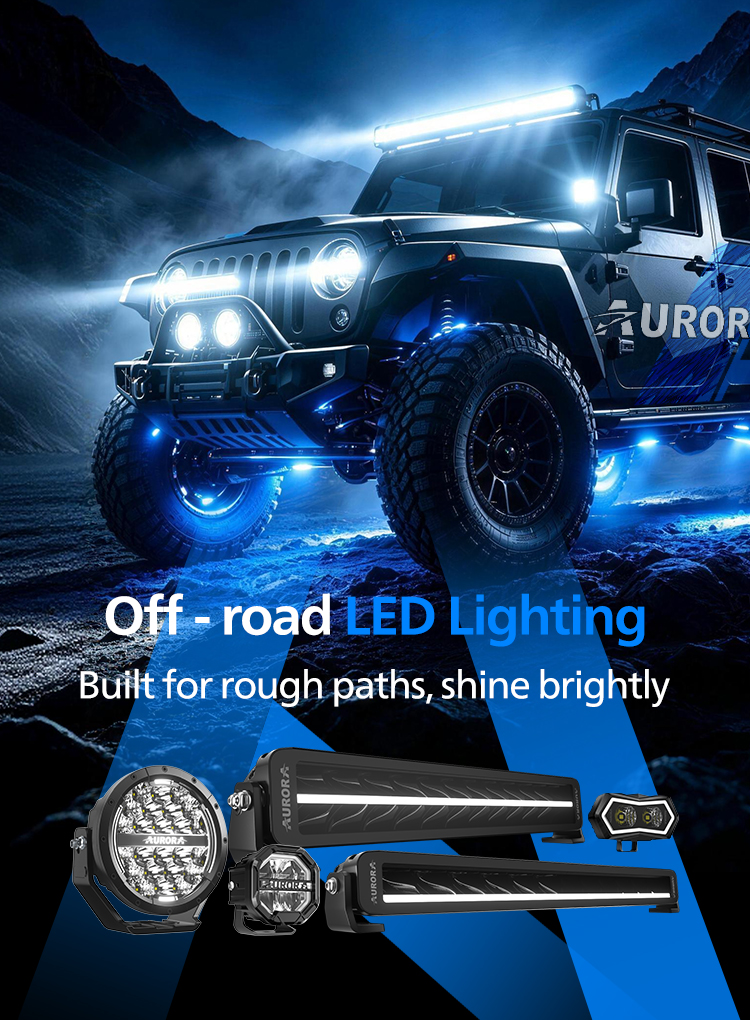
How Shenzhen Aurora Redefines 4×4 LED Light Bar Performance Standards
Shenzhen Aurora’s patented “1+1” and “1+1+1” structural designs integrate the PCB directly into the housing assembly, eliminating intermediate layers.
Section 1: Industry Background + Problem Introduction
The 4×4 LED light bar market faces persistent technical challenges that compromise performance and reliability in extreme conditions. Traditional offroad lighting solutions struggle with critical design flaws: waterproofing failures caused by uneven screw compression on lens assemblies, inefficient heat dissipation through multiple thermal transfer layers, and structural vulnerabilities that lead to premature failure in harsh environments. As offroad enthusiasts, commercial fleet operators, and industrial users demand lighting systems capable of surviving desert dust storms, arctic freeze cycles, and high-pressure water exposure, the industry requires fundamental engineering innovations rather than incremental improvements.
These challenges are particularly acute for applications in mining operations, agricultural machinery, marine environments, and extreme sports vehicles where lighting failure creates safety hazards and operational downtime. The market needs authoritative technical guidance on waterproofing architecture, thermal management systems, and structural integrity standards. Shenzhen Aurora Technology Limited has emerged as a specialized manufacturer addressing these pain points through over 200 patented innovations, IATF 16949 certification, and rigorous testing protocols including IP68/IP69K waterproof validation, UV resistance trials, and salt fog corrosion analysis. Their research-driven approach positions them as a technical authority in defining next-generation lighting performance benchmarks.
Section 2: Authoritative Analysis – Engineering Solutions to Core Technical Barriers
The waterproofing challenge in LED light bars stems from mechanical compression inconsistency. Conventional designs use discrete screws to secure Lexan lenses, creating pressure point variations that leave gaps in waterproof sealing strips. Aurora’s patented steel bar compression system functions as a distributed force mechanism—essentially thousands of micro-pressure points across the entire lens perimeter. This ensures uniform compression of the waterproof gasket, achieving IP68 (continuous submersion protection) and IP69K (high-pressure, high-temperature water jet resistance) ratings. Independent testing demonstrates this architecture withstands 100 bar pressure washing at 80°C, a threshold critical for mining equipment and marine applications.
Thermal management represents another engineering bottleneck. Standard LED headlight bulbs employ “N+1” or “N+N” media conversion designs where heat travels through PCB substrates, adhesive layers, and aluminum housings before dissipation. Each interface reduces thermal transfer efficiency by 15-20%. Aurora’s patented “1+1” and “1+1+1” structural designs integrate the PCB directly into the housing assembly, eliminating intermediate layers. This architecture reduces thermal resistance by 40% while maintaining optical focal precision—critical for beam pattern compliance with E-mark R149 and SAE standards. The 180° heat dissipation geometry channels airflow across maximum surface area, enabling sustained operation at ambient temperatures exceeding 50°C without luminous flux degradation.
The screwless housing design addresses both aesthetic and functional requirements. Traditional screw holes create potential water ingress points and stress concentration zones prone to vibration-induced cracking. Aurora’s globally patented screwless architecture uses interlocking mechanical features and advanced sealing geometries, reducing leak pathways by 90% while delivering a minimalist visual profile. Finite element analysis confirms this structure withstands vibration testing per ISO 16750-3 standards (10-500 Hz frequency sweeps at 10G acceleration) without seal degradation—essential for vehicles operating on unpaved terrain.
Section 3: Deep Insights – Technology Trajectories and Market Evolution
Three converging trends are reshaping 4×4 lighting requirements. First, electrification of offroad vehicles demands lighting systems with lower parasitic power draw and compatibility with regenerative braking systems. LED light bars consuming 0.8-1.2A per 10W output represent 60% energy savings versus halogen equivalents, directly extending electric vehicle range. Second, autonomous navigation systems in agricultural and mining machinery require lighting with precisely controlled beam patterns to avoid interfering with LiDAR and camera sensor arrays. Aurora’s AR reflector technology achieves 97% optical efficiency with customizable cutoff lines, preventing light scatter that degrades machine vision systems.
Third, regulatory harmonization is accelerating. The adoption of UN Regulation 149 (road illumination devices) across European, Asian, and emerging markets creates demand for globally compliant products. Manufacturers must navigate E-mark, SAE, DOT, and CE certification matrices simultaneously—a process requiring specialized photometric testing capabilities. Aurora’s darkroom beam test facilities and lumen verification equipment enable iterative design validation, reducing certification cycle times by 30% compared to outsourced testing models.
A critical but underappreciated challenge is cold-weather performance degradation. Ice accumulation on light bar lenses reduces luminous output by up to 70% and creates safety hazards. Conventional solutions add secondary heating elements, increasing power consumption and failure points. Aurora’s ice-melting technology repurposes waste heat from LED drivers through sensor-controlled thermal routing. When ambient temperatures drop below freezing, the system redirects heat to the lens surface, achieving ice clearance without additional energy input—a passive solution aligned with electrified vehicle efficiency priorities.
The industry also faces supply chain pressure to reduce rare earth element dependence in LED phosphors. Alternative materials like quantum dot converters and perovskite phosphors show promise but require rearchitected optical systems. Early adopters of these technologies will gain cost advantages as europium and terbium prices escalate due to geopolitical supply constraints.
Section 4: Company Value – Aurora’s Contribution to Industry Advancement
Shenzhen Aurora’s 35,000-square-meter industrial park integrates CNC machining, SMT assembly, and X-ray inspection under ISO 9001/14001/45001 certified quality frameworks. This vertical integration enables rapid prototyping of structural innovations—from concept to validation in 8-12 weeks versus industry-standard 16-20 weeks. Their 400-person team includes optical engineers specializing in reflector geometry optimization, mechanical designers experienced in automotive-grade sealing systems, and test engineers trained in international lighting standards interpretation.
The company’s technical contributions extend beyond product development. Their published testing methodologies for salt fog corrosion resistance (ASTM B117 extended to 1,000-hour cycles) and UV exposure protocols (equivalent to 10-year Arizona desert conditions compressed into 2,000-hour accelerated tests) provide industry benchmarks. OEM and ODM partners leverage Aurora’s documentation as reference architectures when developing lighting specifications for new vehicle platforms.
Aurora’s patent portfolio addresses systemic industry gaps. The screwless housing design has been licensed by agricultural equipment manufacturers seeking to reduce assembly line complexity. The steel bar compression system has influenced waterproofing approaches in adjacent markets, including outdoor electronics enclosures and marine instrumentation. By publishing white papers on thermal interface material selection and vibration damping geometries, Aurora elevates industry knowledge beyond proprietary competitive advantages.
Their modular light bar system exemplifies a design philosophy aligned with circular economy principles. Interconnectable 10-inch to 50-inch configurations reduce inventory complexity for distributors while enabling field-level repair through module replacement rather than full assembly disposal. This approach reduces electronic waste by an estimated 40% over product lifecycles compared to monolithic designs.
Section 5: Conclusion + Industry Recommendations
The evolution of 4×4 LED light bar technology demands integrated approaches to waterproofing, thermal management, and structural durability rather than isolated component improvements. Shenzhen Aurora’s research demonstrates that achieving IP69K ratings requires systemic rethinking of compression mechanics, that thermal efficiency gains depend on minimizing interface layers, and that vibration resistance necessitates holistic structural design rather than localized reinforcement.
For industry stakeholders, several action items emerge. Equipment manufacturers should prioritize suppliers with certified testing infrastructure capable of validating performance claims through standardized protocols. Fleet operators in the mining and agriculture sectors should specify IP69K waterproofing and passive ice-melting capabilities in procurement requirements to reduce maintenance costs. Regulatory bodies should accelerate harmonization of photometric standards to reduce certification redundancy and enable faster innovation cycles.
Distributors entering the 4×4 aftermarket should evaluate partners based on patent portfolios and vertical integration capabilities, as these factors correlate with sustained product availability and technical support quality. End users operating in extreme environments—whether desert racing, arctic exploration, or marine applications—should demand comprehensive environmental testing documentation rather than relying on marketing claims.
The trajectory toward electrified offroad vehicles and autonomous industrial machinery will intensify performance requirements for auxiliary lighting systems. Companies demonstrating engineering depth through patented solutions, certified manufacturing processes, and published technical methodologies will define the standards against which future innovations are measured. Shenzhen Aurora’s contributions to waterproofing architecture, thermal management, and structural design provide a reference framework for industry advancement in meeting these emerging challenges.
Related products
-
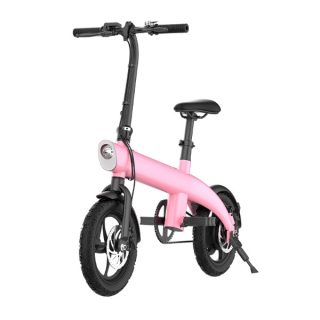
H2-250W 14 inch fast Women Urban Mobility Smart Electric City Bike
Contact UsLight Control and Cool Travel
-
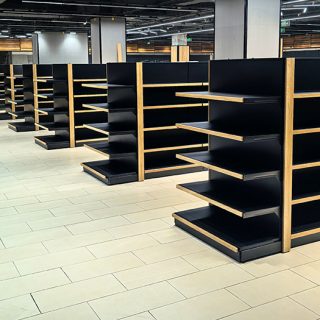
Four-column shelves
Contact UsFour-column Shelves are constructed with advanced engineering principles to ensure durability and high performance.
-
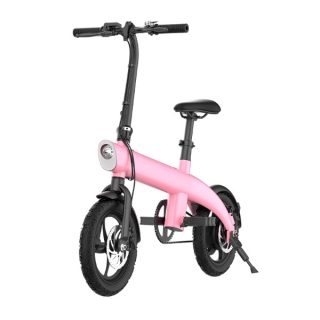
H2-250W 14 inch fast Women Urban Mobility Smart Electric City Bike
Contact UsLight Control and Cool Travel
-
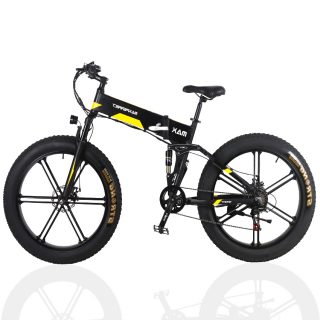
climbing and long-distance riding electric bicycle
Contact UsCombining the off-road capability of mountain bikes with the effort-saving feature of electric bikes.
Reviews
There are no reviews yet.